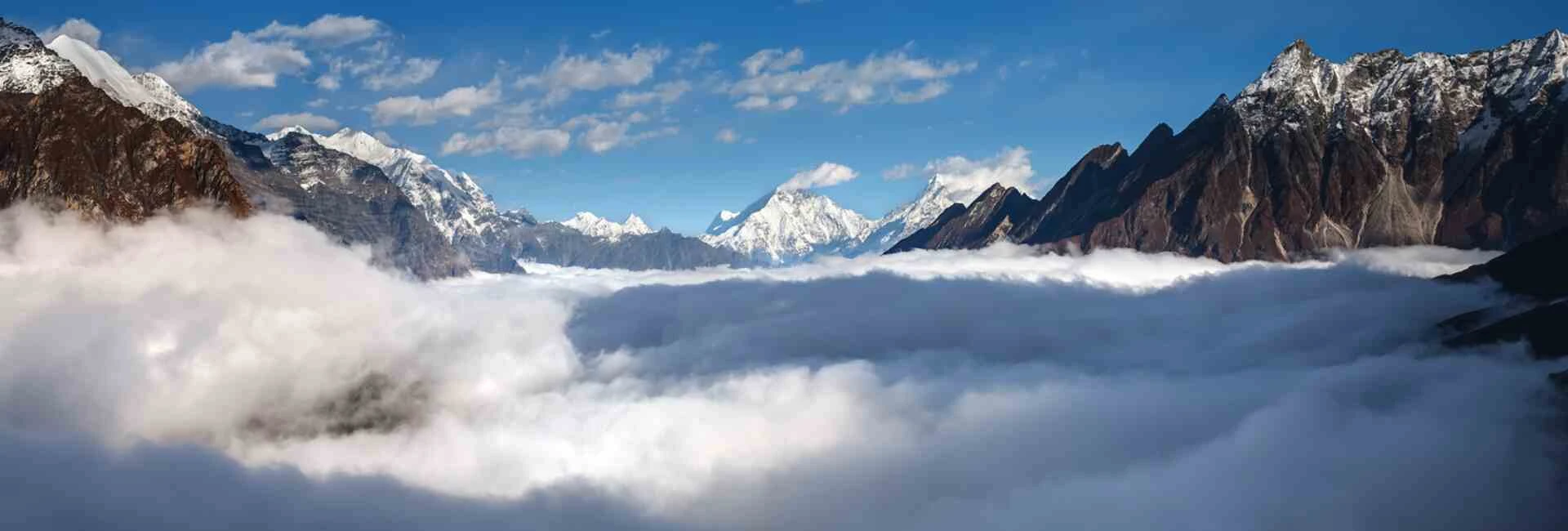
Every year, first-time trekkers ask us the same question: can a beginner really complete the Manaslu Circuit Trek? It is one of Nepal’s great circuits, with deep gorges, Tibetan-influenced villages, and a crossing of the Larkya La pass at about 5,100 m. It is also longer, more remote, and less developed than the treks most people start with. This guide gives a straight answer, based on what the route demands day by day, so you can decide whether it suits you now or whether you should build up to it.
Short Answer: Can a Beginner Do the Manaslu Circuit Trek?
Yes, the Manaslu Circuit Trek is realistic for a fit beginner who prepares properly, but it is not a good first trek for someone who has never hiked several days in a row. You will walk for roughly two weeks, sleep in basic lodges, climb above 4,000 m, and cross a high pass on a long, cold day. If you can train for three to four months, build in extra rest days, and travel with an experienced guide, it is achievable. If you have no hiking history, start with an easier route first (see the options below).
What “Beginner” Really Means on This Trek
The word covers very different people, and the answer changes for each.
The beginner who hikes regularly. You have never trekked at altitude or for many days in a row, but you walk or hike most weekends and are comfortable on hills for five to six hours. This is the traveler who can succeed on Manaslu with a proper training plan and a slow itinerary.
The beginner with little hiking experience. You are active but have rarely carried a pack on steep trails. Manaslu is possible only if you give yourself a long training window, and many guides would suggest a shorter trek first to test how you handle altitude and long days.
The complete newcomer. If you have never done more than a day walk, Manaslu is too big a first step. Starting with a four- to seven-day trek will teach you pacing, packing, and how your body responds to height, and it makes a later Manaslu trip far more enjoyable.
Why the Manaslu Circuit Is Harder Than Most First Treks
Three things set Manaslu apart from beginner-friendly routes such as Ghorepani Poon Hill or Annapurna Base Camp.
Length. A typical itinerary runs 14 to 17 days including the drives at each end, with around 12 to 14 days on foot. Fatigue builds, so a day that feels easy on day three can feel hard on day ten.
Remoteness. The upper valley has fewer lodges, simpler food, limited phone signal, and no quick road access. Medical help is far away, which is why pacing and good decisions matter more here.
The Larkya La crossing. The pass is the highest point on the route and the one day that stops people. It is long, cold, and often windy, and it comes after several nights at altitude.
Trek | Typical length | Highest point | Lodge standard |
|---|---|---|---|
Ghorepani Poon Hill | 3 to 5 days | about 3,200 m | Well developed |
Annapurna Base Camp | 7 to 10 days | about 4,130 m | Well developed |
Everest Base Camp | 12 to 15 days | about 5,360 m | Established, simpler higher up |
Annapurna Circuit | 12 to 16 days | about 5,416 m | Well developed |
Manaslu Circuit | 14 to 17 days | about 5,100 m | Basic in the upper valley |
If you are weighing Manaslu against its more famous neighbor, our comparison of the Manaslu Circuit Trek vs Annapurna Circuit explains the differences in crowds, lodges, and difficulty.
Who Can Do It, and Who Should Wait
Good candidates:
- You hike or walk hills regularly and can handle five to seven hours on your feet.
- You can train for 12 to 16 weeks before departure.
- You have time for rest and spare days, and you do not mind simple food and shared bathrooms.
- You are happy to follow your guide’s pace and decisions, especially at altitude.
Consider waiting or choosing an easier trek if:
- You have never hiked more than a day.
- You have a heart, lung, or blood pressure condition and have not spoken to your doctor about high-altitude travel.
- Your schedule is fixed with no flexibility for weather or a slower pace.
- You dislike cold, basic lodging, or limited washing facilities.
A doctor’s check before booking is sensible for anyone planning to sleep above 4,000 m.
A Beginner’s Walkthrough: The Route Stage by Stage
The trek usually runs from Soti Khola up the Budhi Gandaki valley, over Larkya La, and out through Bimthang to Dharapani. Elevations below are approximate and vary by itinerary, so check them against the plan you book. For the full day-by-day plan, see our Manaslu Circuit Trek itinerary.
Stage | Approx. elevation | What to expect |
|---|---|---|
Soti Khola | 700 m | Start after a long drive from Kathmandu; warm, forested trail |
Machha Khola to Jagat | 930 m to 1,410 m | Gorge walking, suspension bridges, many ups and downs |
Deng to Namrung | 1,860 m to 2,630 m | Cooler air, first Tibetan-style villages and mani walls |
Lho | 3,180 m | First clear views of Manaslu; good acclimatization stop |
Samagaon | 3,530 m | Main rest day; short walks to monasteries or Manaslu base camp area |
Samdo | 3,860 m | Last village before the pass; cold nights begin |
Dharamsala (Larkya Phedi) | 4,460 m | Very basic lodge; short, cold night before the pass |
Larkya La | about 5,100 m | Long crossing, then a steep descent to Bimthang |
Bimthang to Dharapani | 3,590 m to 1,960 m | Long descent to the road; knees and legs tired |
The days that decide success
Namrung to Lho. This is the first real altitude test. The trail climbs steadily and the air thins. Walk slowly, drink often, and notice how you feel, because it sets the tone for the days ahead.
Samagaon rest day. Do not skip it. Many beginners are tempted to save a day, but this rest is what lets your body adapt before Samdo and Dharamsala. Use it for a short, easy hike rather than a hard one.
The night at Dharamsala. The lodge is simple and crowded, the nights are cold, and many people sleep poorly at this height. Pack warm layers and a good sleeping bag, and eat and drink even if you feel little appetite.
Pass day. This is the main challenge, covered next.
The Larkya La Pass Day: What a Beginner Should Expect
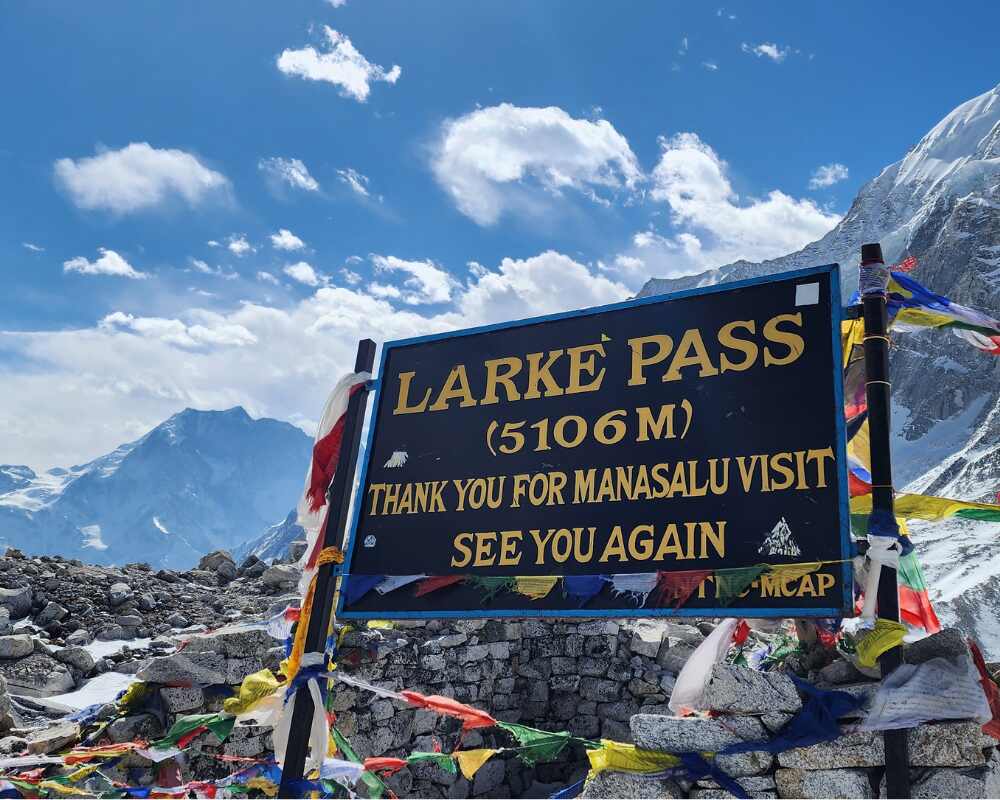
The pass day usually starts very early, often in the dark, so you can cross before the afternoon winds pick up. Expect around eight to ten hours of walking for most groups, with a steady climb, a rocky and sometimes icy top section, and a long, steep descent to Bimthang. The altitude, cold, and length make it the hardest day of the trek, but with good acclimatization and an early start most fit beginners manage it.
A few things help:
- Start early and go slowly. A steady pace you can keep for hours beats bursts of speed.
- Eat and drink on the move. Snacks and warm drinks keep energy up when appetite is low.
- Dress in layers. Mornings are very cold, and you will warm up as you climb.
- Listen to your guide. If weather or conditions look poor, your guide may delay or turn around. This is a safety decision, not a failure.
It is worth planning one or two spare days in your schedule so a weather delay does not force you to rush.
Fitness and Training Plan for Beginners
Most successful first-timers train for three to four months. The aim is stamina on hills with a pack, not speed.
Weeks | Focus | Example |
|---|---|---|
1 to 4 | Build a base | Three walks a week of 45 to 60 minutes, one longer weekend walk |
5 to 8 | Add hills and strength | Stair or hill sessions, squats and lunges, a weekend hike of 3 to 4 hours |
9 to 12 | Add pack weight | Hikes of 4 to 6 hours carrying a loaded daypack, back-to-back days if you can |
13 to 16 | Peak and taper | One or two long days, then ease off in the last week to arrive fresh |
Two habits matter more than any single workout: training on hills (including going downhill, which is hard on the knees) and wearing your trekking boots on long walks so your feet are used to them.
Altitude Sickness: How Beginners Stay Safe
Altitude sickness can affect anyone, regardless of fitness. It happens when you climb faster than your body can adapt. The standard advice above 3,000 m is to increase your sleeping elevation gradually (commonly no more than about 500 m a day) and to take a rest day every 1,000 m or so. A good Manaslu itinerary builds this in, which is why rushing a short version is risky for beginners.
Watch for headache, nausea, dizziness, unusual tiredness, and poor sleep. Mild symptoms mean you should rest and not climb higher. Severe symptoms, such as confusion, loss of balance, or breathlessness at rest, mean you must descend immediately. Tell your guide at the first sign of trouble. Some trekkers discuss preventive medication with a doctor before travel, and that conversation is worth having in advance.
For more detail, read our page on high altitude sickness.
Do Beginners Need a Guide on the Manaslu Circuit?
Yes. The Manaslu region is a restricted area, so you must trek with a licensed guide and obtain the required permits, which are issued for groups of at least two trekkers. For a beginner this is a benefit as well as a rule, because a guide manages your pace, spots altitude problems early, and handles route and weather decisions. Confirm the latest requirements before you travel, as rules can change.
To see exactly what our package covers, check the inclusions on our Manaslu Circuit Trek page.
For costs and the permit list, see our Manaslu Circuit permit cost guide and the overview of Nepal trekking rules.
What Teahouse Life Is Like for a First-Timer
Lodges on the Manaslu Circuit are simple. Expect small twin rooms with thin mattresses, shared bathrooms, and a dining room warmed by a stove in the evenings. Menus lean on dal bhat, noodles, soup, eggs, and potatoes, and prices rise with altitude. Hot showers and device charging are usually extra and not always reliable, and Wi-Fi is limited or absent in the upper villages.
This is part of the trek’s appeal, with quieter trails and a stronger sense of place than busier routes, but beginners used to comfort should be ready for it. A warm sleeping bag, a liner, a power bank, and water purification tablets or a filter make a big difference.
Best Time for a First-Timer
Autumn (roughly late September to November) and spring (March to May) are the usual choices, with clearer skies and more stable weather than the monsoon or deep winter. Autumn is the most popular season, while spring brings warmer days and rhododendron bloom lower down. Whichever you choose, build in spare days for weather. Our guide to the best time to trek in Nepal explains the seasons in more detail.
Gear and Insurance Basics
Beginners often overpack or underpack. Focus on a layering system, a warm jacket, a four-season sleeping bag, broken-in boots, and good socks, and rent the heavy items you will not use again. Our trekking gear guide covers what to buy and what to rent.
Travel insurance must cover trekking to at least 5,000 m, including emergency helicopter evacuation. Check the policy wording, because many standard plans exclude high-altitude trekking. Our travel insurance guide explains what to look for.
For more practical trip details, see the useful information section of our Manaslu Circuit Trek page.
Is the Manaslu Circuit Open Right Now?
The route was disrupted by flooding near Namrung in September 2026, and a temporary bridge later restored access. Conditions in this valley can change quickly after heavy rain, so always check the latest information before you book or travel. We keep our Manaslu Circuit trail status update current, and our team can tell you what we are seeing on the ground.
Making It Easier: How to Plan a Beginner-Friendly Manaslu Trek
- Choose a longer itinerary. More days means gentler daily gains and more acclimatization.
- Add spare days. One or two buffer days protect you against weather and slow recovery.
- Travel in a small group or privately. The pace can be set around you.
- Train early and consistently. Start at least three months out.
- Be honest with your guide. Tell them how you feel every day.
Our Manaslu Circuit Trek itinerary can be adjusted for first-timers, and our difficulty guide goes deeper into the physical demands. For the full route overview, read the Manaslu Circuit Trek complete guide.
Our Verdict: Is the Manaslu Circuit Trek Realistic for Beginners?
For a fit, well-prepared beginner with enough time and a good guide, yes. It rewards you with one of Nepal’s quietest and most beautiful circuits. For someone with no hiking history or no time to train, it is better to start smaller and return when you are ready. The honest test is simple: if you can comfortably walk five to six hours on hills with a pack and you are willing to move slowly and listen to your guide, Manaslu is within reach.
If you would like a plan built around your fitness and schedule, tell us about your trip and we will suggest a beginner-paced itinerary.
Frequently Asked Questions
Is the Manaslu Circuit Trek hard for beginners? It is moderate to challenging. The daily walking is manageable for a fit person, but the length, the altitude, and the Larkya La pass make it harder than most first treks.
How fit do I need to be for the Manaslu Circuit Trek? You should be able to walk five to seven hours a day on hills while carrying a daypack, several days in a row. Training for 12 to 16 weeks is recommended.
Can I do the Manaslu Circuit Trek without prior trekking experience? It is possible but not ideal. We suggest completing at least one shorter trek first so you know how you handle long days and altitude.
How many days does a beginner need for the Manaslu Circuit? Plan for 14 to 17 days, and ask for extra rest or spare days. Shorter versions pack more altitude gain into fewer days, which is harder for beginners.
What if I cannot cross Larkya La? Weather or health can stop a crossing. Your guide will decide whether to wait, delay, or turn back. Spare days in your itinerary reduce the chance of missing the pass.
Do I need a guide for the Manaslu Circuit? Yes. It is a restricted area that requires a licensed guide and permits, with a minimum group size.
Is Manaslu harder than the Annapurna Circuit? They are similar in difficulty on paper, but Manaslu is more remote with simpler lodges, which many beginners find tougher. See our comparison.
When is the best time for a first-timer? Autumn and spring offer the most stable weather. Allow buffer days either way.