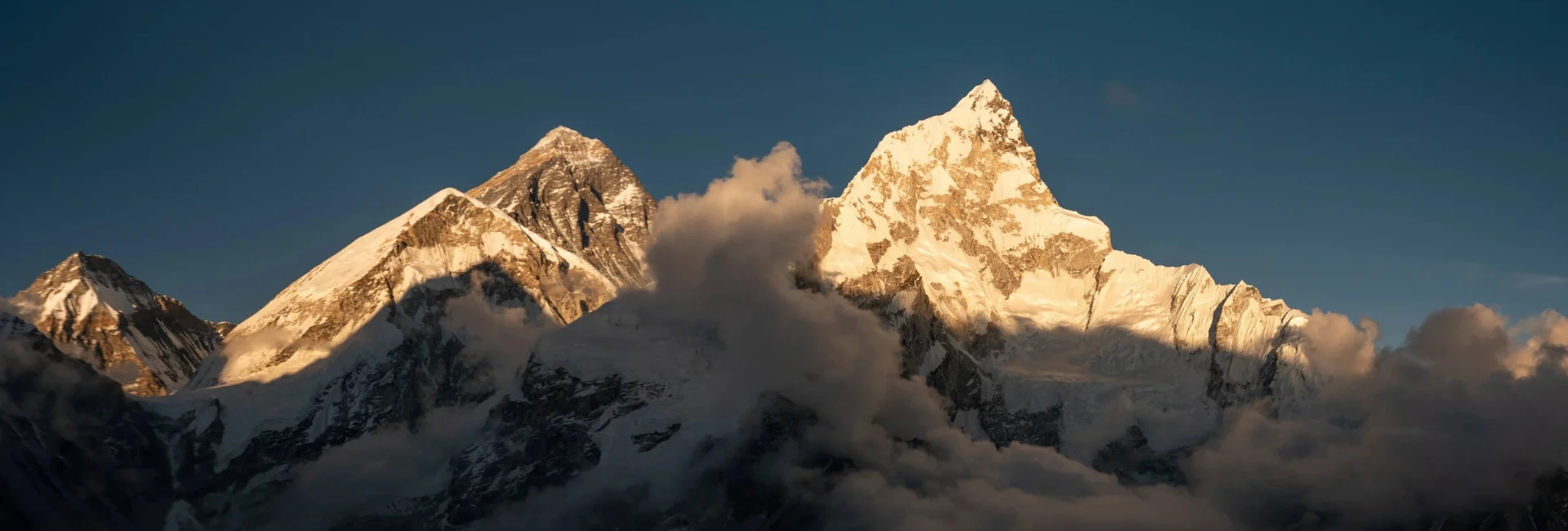
Imagine sitting by a small window of a propeller plane at around seven in the morning, the sun just clearing the horizon, while a long wall of white Himalayan summits turns gold beside you. That is the Everest mountain flight from Kathmandu: a one-hour scenic flight that puts you level with some of the highest peaks on earth, with no trekking, no altitude, and no permits. It is the quickest and most affordable way to see Everest, and for many visitors it is the highlight of a short stay in Nepal.
Because the experience is short and the price varies, travellers have plenty of practical questions. How much does a mountain flight in Nepal cost, and is the price the same for everyone? Which airline should you choose? How do you book it, and what do you need to carry? When is the best time to fly? Most importantly, what will you really see from the window: a towering Everest, or a small dark peak among many? This guide walks through each of these questions in detail, so you can plan with realistic expectations and book with confidence.
What is the Everest mountain flight, and how does it work?
The Everest mountain flight is a sightseeing flight, not a transfer to a destination. You take off from the domestic terminal of Tribhuvan International Airport in Kathmandu, climb to a cruising height that gives a clear view over the foothills, and fly east along the Himalayan range. After about 20 to 30 minutes you reach the Everest region, the aircraft turns, and you fly back along the same line of peaks, so that passengers on both sides of the cabin get a view. You land at the same airport, typically between 7:30 and 8:30 a.m.
The aircraft are small, which is what makes the experience so personal. Every passenger is guaranteed a window seat, and the cabin crew give a short briefing before departure and point out the major peaks during the flight. Most operators also hand out a printed map of the Himalayan skyline so you can match what you see outside with names on paper, and give a flight certificate on landing as a keepsake. Total time in the air is commonly quoted as 45 minutes to one hour, depending on the airline, the day and the weather [confirm].
If you are deciding between ways to see Everest, the flight is the entry-level option. It costs far less than a helicopter tour, which also offers landings near the mountain, and it takes a fraction of the time of a trek. If your real goal is to stand at the foot of the mountain without overspending, the budget Everest Base Camp trek is the better long-term value, and our Everest Base Camp trek cost guide for 2026-27 explains exactly what the overland route costs. The two also work as a pair: the flight shows you the scale of the range in one morning, and the trek lets you walk into it.
How much does the Everest mountain flight cost?
The price of a mountain flight in Nepal depends on three things: your nationality, the airline you fly with, and whether you buy the ticket directly or through an agent. The figures below reflect what operators and travel agents have been publishing recently, so read them as ranges rather than fixed rates, and check the current fare before you pay.
Traveller | Typical price range | What to know |
|---|---|---|
Foreigners (non-Indian) | About USD 200 to 280 per person | Lower figures are usually the airline ticket alone; higher figures often include hotel transfers |
Indian nationals | About INR 11,500 or NPR 13,850 per person | Priced separately from other foreign nationals |
Nepali citizens | About NPR 8,500 to 13,850 per person | A valid citizenship ID is required |
There are several reasons the cost of a mountain flight in Nepal varies so much from one listing to another.
- Airline. Buddha Air, Yeti Airlines and Simrik Air have all been listed as operators, and each sets its own fare and schedule
- Booking channel. Travel agents and online platforms add a margin to the airline fare, usually in return for hotel pickup and drop-off, local support and flexible rebooking.
- Bundled packages. Some operators combine the flight with a Kathmandu sightseeing tour or a cable car ride. The headline price is higher, but it covers a guide and ground transport.
- Currency and nationality. Nepali citizens are quoted in rupees, while foreign visitors are usually quoted in US dollars, so exchange rates can move the figure slightly.
Seen against the alternatives, the Everest mountain flight cost by plane sits at the lowest rung. A helicopter tour is typically several times more expensive, with operators quoting roughly USD 1,000 to 1,500 per person on shared departures [confirm], and our own Everest Base Camp heli tour is listed from about USD 1,350 per person [confirm]. A trek to Everest Base Camp adds permits, guides, porters, lodging and flights on top, so if you are comparing budgets, look at the budget Everest Base Camp trek and read the EBC trek cost breakdown before you decide.
What the ticket usually includes
- The scenic flight itself, about 45 minutes to one hour long
- A guaranteed window seat
- A peak-identification briefing from the cabin crew
- A printed map or brochure of the Himalayan range
- A flight certificate after landing
Hotel transfers, breakfast and airport charges differ between operators, so always read the inclusions list before you confirm a booking.
What you actually see from the flight
Expectations matter here, because the view is spectacular but different from what many people imagine.
A long line of famous peaks. On a clear morning you pass a procession of summits, and travellers commonly report Langtang Lirung, Gaurishankar, Shisha Pangma, Cho Oyu, Lhotse, Makalu and Everest itself. Some operators describe more than twenty named peaks in a single flight, which is why the briefing and the map are genuinely useful.
Everest is real, but it is not the tallest-looking peak. From the aircraft, Everest is roughly 20 miles away. It appears as a dark, pyramid-shaped summit rising just behind the broad walls of Nuptse and Lhotse. Because the nearer peaks are closer, they can look just as large, so do not be disappointed if Everest does not dominate the frame. The cabin crew will point it out, and pilots usually invite passengers to the cockpit in turn for a clearer look.
A window seat, but a shared view. Every seat has a window, yet you are sharing a small cabin with other passengers, so be ready to move quickly for photographs and to wait your turn for the cockpit visit.
Photography tips. Shoot at a slight angle to the window to cut glare, use a fast shutter speed because the aircraft is moving, and keep your lens close to the glass without touching it. Seating preferences vary by operator, so ask the airline which side offers the better view on the outbound leg [confirm].
Best time for a mountain flight in Nepal
The best time for a mountain flight in Nepal is whenever the skies are clearest, which means the dry seasons rather than the monsoon.
- October to November (autumn). The most dependable weather of the year, with crisp air, excellent visibility and the highest demand. This is the peak of the flying season, so book early.
- December to February (winter). Cold on the ground but often remarkably clear in the air, with sharp views and thinner crowds. Early flights are best.
- March to May (spring). Good clarity in the mornings, though haze tends to build through the day. A first-departure flight gives you the best chance of clean views.
- June to September (monsoon). Cloud usually hides the mountains, and delays and cancellations are more common. Avoid this period unless your schedule is flexible.
In every season, choose the earliest departure you can. Cloud builds as the sun climbs, so the first flights around 6:30 a.m. usually have the clearest skies and the best chance of an uninterrupted view of the range.
How to book a mountain flight in Nepal
Booking the flight is simple, and there are three main routes. Which one suits you depends on whether you want the lowest price, the most convenience, or the most flexibility if the weather changes.
- Book directly with the airline. This is often the cheapest way to buy the ticket alone, and it suits travellers who are happy to arrange their own early-morning ride to the domestic terminal.
- Book through a local tour operator or travel agent. The price is usually a little higher, but it normally includes hotel pickup and drop-off, help with rebooking if a flight is cancelled, and someone you can speak to in person in Kathmandu.
- Book through an international travel platform. This is convenient and often comes with free cancellation, but check carefully that the listing matches your nationality category and that the price is not inflated by add-ons you do not need.
Documents you will need
- A valid passport for foreign visitors
- A citizenship ID for Nepali citizens, or a valid ID or passport for Indian nationals where nationality pricing applies
Practical booking tips
- In the October and November peak season, the first morning departures sell out quickly, so book several days ahead.
- Keep one spare day in your Kathmandu itinerary in case a flight is delayed or cancelled for weather.
- Ask how cancellations are handled before you pay. Most operators refund the ticket or move you to another day, but the exact policy varies.
- Confirm whether you are paying in US dollars or Nepali rupees, and whether airport charges are included.
What a typical morning looks like
The whole experience takes around three hours from pickup to return, and most of it happens before breakfast.
- 5:00 to 5:30 a.m. Hotel pickup in Kathmandu, if transfers are included.
- About 6:00 a.m. Check-in, security and boarding at the domestic terminal.
- 6:30 to 7:30 a.m. Take-off and the scenic flight, depending on your departure slot.
- By about 8:30 a.m. Landing, followed by the transfer back to your hotel in time for breakfast.
Mountain flight vs helicopter tour vs trek
The three main ways of seeing Everest suit very different travellers, so it helps to compare them side by side.
Basis | Mountain flight | Helicopter tour | Everest Base Camp trek |
|---|---|---|---|
Time needed | About 1 hour in the air | Half to a full day | About 12 to 14 days |
Budget | Lowest | Much higher | Highest overall |
Landing near Everest | No | Often yes | You walk there |
Weather dependence | High | High | Medium |
Best for | Short trips and tight budgets | Travellers with limited time who want to land | Those who want the full journey |
If budget or time is limited, the mountain flight offers the best value for seeing Everest from the air. If you want to be on the trail itself without paying for extras, the budget Everest Base Camp trek is the most economical way to reach base camp on foot, and the standard Everest Base Camp trek is there if you prefer a fuller itinerary. If you can spend more and want to touch down in the mountains, compare the helicopter tour option. For a line-by-line view of what the overland route really costs, read our Everest Base Camp trek cost guide.
Is the Everest mountain flight worth it?
For most visitors, yes. It is short, relatively affordable and delivers a view that is very hard to get any other way, particularly if you do not have days to spare for a trek. It is less rewarding if you travel during the monsoon, if you expect to feel close to the summit, or if you are hoping for a private, uninterrupted view from a crowded small cabin.
To see departure options and packages, visit our main page on the mountain flight in Nepal. If you have the rest of the day free after landing, a Kathmandu sightseeing tour fits neatly into the same day, and you can browse all of our day tours in one place.
Plan the rest of your Everest trip
- Budget Everest Base Camp trek: the most economical route to base camp on foot
- Everest Base Camp trek cost guide for 2026-27: permits, guides, lodging and extras explained
- Everest Base Camp heli tour: a one-day option with a landing in the mountains
- Everest trekking packages: every Everest-region trek in one place
- High altitude sickness guide: what to know before you gain height
- Travel insurance guide for trekking in Nepal: what your cover should include
Frequently asked questions
How much is the Everest mountain flight in Nepal? For foreigners, expect roughly USD 200 to 280 per person depending on the airline and what the price includes. Indian and Nepali travellers pay lower, separately quoted rates in INR or NPR [confirm all prices].
How long is the Everest mountain flight? About 45 minutes to one hour in the air, flying from Kathmandu to the Everest region and back to Kathmandu.
Will I definitely see Everest? In clear weather you almost always will, but flights can be cancelled and views can be blocked by cloud. Book an early flight and keep a spare day.
Is there a guaranteed window seat? Yes. The aircraft are configured so that every passenger has a window seat.
What is the best time for a mountain flight in Nepal? October and November are the most reliable, with clear mornings also common from December to May. Avoid the monsoon months.
How do I book a mountain flight in Nepal? Book directly with the airline, through a local tour operator, or through an online travel platform, and carry your passport or citizenship ID.
What happens if my flight is cancelled because of weather? Operators typically refund the ticket or move you to another day. Check the policy at the time of booking.
Is the flight suitable for children and older travellers? Generally yes, since there is no strenuous activity, but check each operator's age rules and any restrictions for infants.
Ready to plan your Everest view?
Choose your travel dates, pick a morning departure and book early. If you want help comparing the flight, the helicopter and the trek, start with our mountain flight in Nepal page, then price the overland option with the budget Everest Base Camp trek and the Everest Base Camp trek cost guide. Before you go, check our trekking equipment list, browse the full range of Nepal trekking packages, or ask us to build a tailor-made trip around your dates and budget. Contact us for for you trip!