Nepal's trekking regulations have changed in recent years, and several important updates are now relevant for trekkers planning a trip in 2026. The most important requirements concern licensed guides, TIMS, conservation-area and national-park permits, Restricted Area Permits, and the rules for solo travelers.
If you're planning a trek in Nepal, the requirements depend on the route you choose. Popular routes such as the Manaslu Circuit Trek, Everest Base Camp Trek, and Annapurna Circuit Trek have different permit requirements, while restricted areas have additional regulations. Browse our full range of Nepal Trekking Packages to see all the routes we operate.
This guide explains the current Nepal trekking rules for 2026, including guide requirements, TIMS, trekking permits, solo trekking regulations, permit costs, and what you need to arrange before starting your trek.
Nepal Trekking Rules 2026: Quick Summary
Planning a trek in Nepal in 2026? Here's what to know:
- Licensed guide: Required on many major trekking routes.
- TIMS: Still required on specified trekking routes, including Manaslu, Annapurna and Everest Base Camp routes according to current Nepal Tourism Board guidance.
- Restricted Area Permits: Required for designated restricted regions such as Manaslu, Upper Mustang and Dolpo.
- Solo trekkers: Since March 2026, individual foreign trekkers can obtain Restricted Area Permits without meeting the previous two-person minimum, but a licensed guide and registered trekking agency are still required.
- Guide ratio: In restricted areas, one licensed guide can accompany a maximum of seven trekkers under the March 2026 changes.
- Permits: Requirements and fees vary by trekking region and season.
Mandatory Guide Rule in Nepal 2026
A licensed trekking guide is mandatory on many of Nepal's major trekking routes. Under the revised TIMS provisions, trekkers on specified routes must be accompanied by a licensed trekking guide and obtain a TIMS card through a government-registered trekking agency.
Routes covered by the requirement include major trekking areas such as Manaslu, Annapurna, Everest,Langtang,Kanchenjunga,Makalu,Mustang and Dolpo. The exact requirements depend on the trekking route and the protected area it passes through.
For trekkers, this means you should check the current guide and permit requirements before starting your trek rather than relying on older travel blogs or information from previous trekking seasons.
A guide requirement does not necessarily mean that you have to join a large group. You can arrange a private trek with your own licensed guide through a registered trekking agency.
Solo Trekking in Nepal 2026: What Has Changed?
Solo trekking in Nepal needs an important clarification: being a solo traveler does not mean you can trek without a guide.
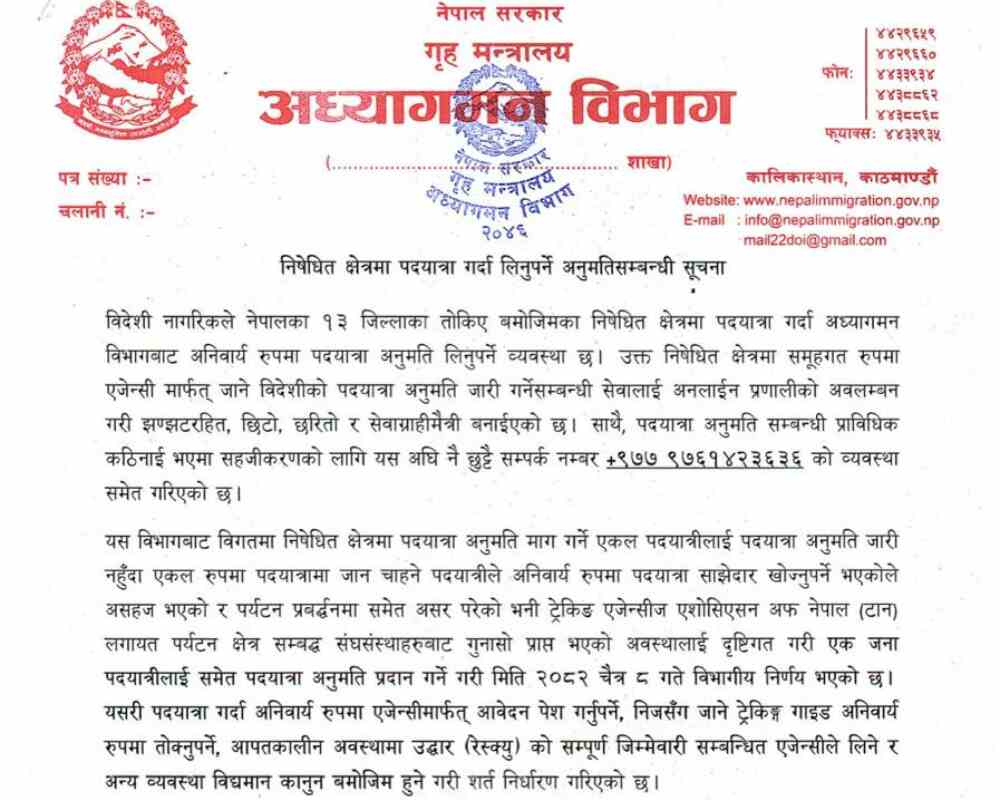
In March 2026, Nepal's Department of Immigration revised the rules for Restricted Areas and removed the previous minimum requirement of two foreign trekkers for obtaining a Restricted Area Permit. This means an individual foreign traveler can now obtain a permit for a restricted-area trek.
However, the guide requirement remains. Solo trekkers must still arrange their trek through a registered trekking agency and be accompanied by a licensed trekking guide.
The 2026 update also introduced a guide-to-trekker ratio for restricted areas: one licensed trekking guide can accompany a maximum of seven trekkers. Groups larger than seven require additional guides.
Therefore, "solo trekking is allowed" should not be interpreted as "unguided trekking is allowed." You can travel as a solo client, but you still need to comply with the guide and permit requirements for your route whether that's the Manaslu Circuit, Upper Mustang, or another restricted area.
Permits Required for Trekking in Nepal
Nepal trekking permits vary depending on the region, conservation area and whether the route passes through a Restricted Area. Some treks require a conservation-area or national-park entry permit, while restricted routes require an additional Restricted Area Permit (RAP).
The following are some of the major requirements relevant to trekkers in 2026:
| Trekking Region | Main Permit / Requirement |
|---|---|
| Manaslu Circuit Trek | MCAP + Restricted Area Permit + TIMS |
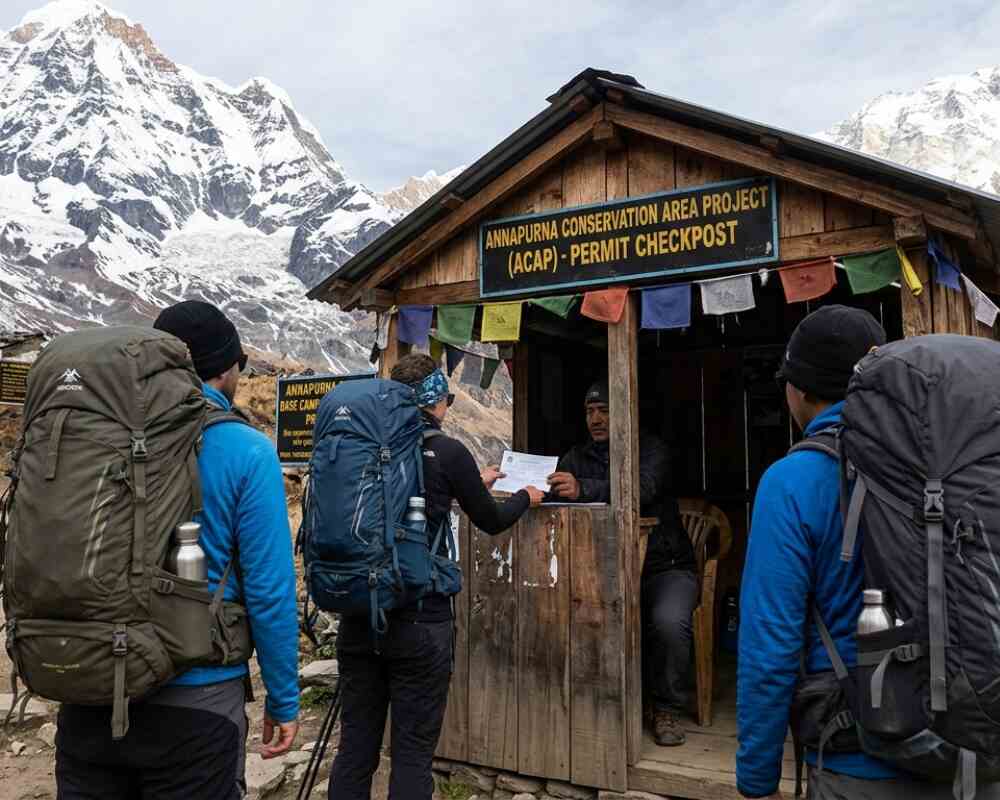
| Annapurna Circuit Trek | ACAP + TIMS |
| Everest Base Camp Trek | Sagarmatha National Park Entry Permit + Khumbu Pasang Lhamu Rural Municipality fee + applicable TIMS requirements |
| Langtang | Langtang National Park Entry Permit + applicable TIMS requirements |
| Upper Mustang | Restricted Area Permit + ACAP + applicable trekking requirements |
| Kanchenjunga | Restricted Area Permit + applicable conservation-area/TIMS requirements |
| Dolpo | Restricted Area Permit + applicable national park/conservation permits |
The Nepal Tourism Board's current TIMS information specifically lists Manaslu Circuit, Annapurna Circuit and Everest Base Camp among routes requiring a guide and TIMS.
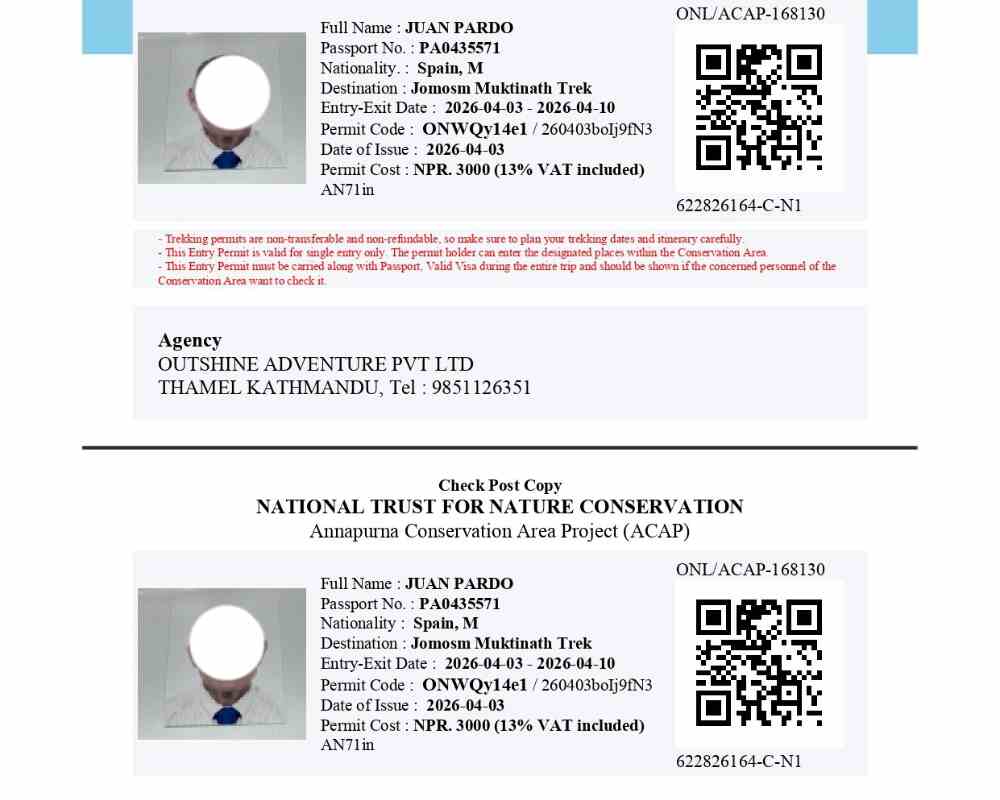
Manaslu Circuit Trek: Guide and Permit Requirements
The Manaslu Circuit Trek is one of Nepal's regulated trekking routes and requires several permits before entering the trekking region.
Trekkers need the Manaslu Conservation Area Permit (MCAP), a Restricted Area Permit (RAP), and the applicable TIMS requirements. The Nepal Tourism Board lists Manaslu Circuit Trek among the routes where a licensed guide and TIMS card are required.
| Route | Restricted Area Permit |
|---|---|
| Manaslu Circuit | September–November: USD 100 per person/week + USD 15/day beyond one week. December–August: USD 75 per person/week + USD 10/day beyond one week. |
These are the current Department of Immigration figures for the Gorkha Manaslu restricted area.
Since March 2026, an individual foreign trekker can obtain a Restricted Area Permit without finding a second trekker to form a group. However, the trek must still be arranged through a registered trekking agency with a licensed guide.
The Manaslu Circuit also requires the Manaslu Conservation Area Permit (MCAP) and applicable TIMS requirements. Your trekking agency normally arranges these permits before you begin the trek.
Planning a Manaslu trek? See our complete Manaslu Circuit Trek Permit & Cost guide for a full breakdown of permits, pricing and preparation for 2026/2027. Wondering if you're fit enough for it? Our Expert Guide Perception on Manaslu Circuit Trek Difficulty covers the altitude, terrain and daily walking hours so you know what to expect.
Everest Base Camp Trek: Guide and Permit Requirements
The Everest Base Camp Trek, along with the Gokyo and Three Passes routes, requires the Sagarmatha National Park Entry Permit and the Khumbu Pasang Lhamu Rural Municipality fee, in addition to the applicable TIMS requirements. The Nepal Tourism Board currently lists Everest Base Camp among the routes requiring a licensed trekking guide and TIMS card.
If you're planning your trip around your budget, see our Everest Base Camp Trek Cost guide for a detailed breakdown of accommodation, meals, permits, guides and other expenses.
Annapurna Circuit Trek: Guide and Permit Requirements
The Annapurna Circuit Trek, along with Annapurna Base Camp, Poon Hill and Mardi Himal, falls under the Annapurna Conservation Area, which requires the ACAP entry permit and applicable TIMS requirements. The Nepal Tourism Board currently lists the Annapurna Circuit among the routes requiring a licensed trekking guide and TIMS card.
Comparing trekking budgets, or just planning your Annapurna trek? Our Annapurna Circuit Trek Cost guide breaks down 2026/2027 pricing by group size, season, and what's included versus what you'll pay for separately. If you're still deciding between regions, our Manaslu vs. Annapurna Circuit comparison lays out how the two routes stack up on cost, crowds, and logistics. And once you've settled on Annapurna, our Thorong La Pass guide covers the altitude, difficulty, and gear you'll need for the highest point of the route.
Is TIMS Required for Trekking in Nepal in 2026?
The Trekkers' Information Management System (TIMS) is still part of Nepal's trekking permit system. The current system uses an electronic TIMS card, and the Nepal Tourism Board states that trekkers on specified routes must carry a TIMS card and be accompanied by a licensed trekking guide.
TIMS requirements depend on the trekking route. The Nepal Tourism Board's current list includes the Manaslu Circuit Trek, Manaslu–Tsum Valley Trek, Tsum Valley Trek, Annapurna Circuit Trek, Everest Base Camp Trek, Langtang routes, Kanchenjunga routes and several other major trekking routes.
For TIMS-covered routes, the card is arranged through a government-registered trekking agency. The current Nepal Tourism Board information lists the TIMS fee as NPR 1,000 for SAARC-country applicants and NPR 2,000 for other nationalities.
Because trekking regulations and permit systems can change, travelers should confirm the latest requirements with their trekking agency and the relevant government authority before departure.
Nepal Trekking Permit Costs 2026
Permit costs vary by region, season and permit type. Restricted Area Permits, in particular, change with the season the table below shows the current figures for the Manaslu region as an example of how seasonal pricing works.
| Route | Restricted Area Permit |
|---|---|
| Manaslu Circuit | Sept–Nov: USD 100/week + USD 15/day beyond one week. Dec–Aug: USD 75/week + USD 10/day beyond one week. |
For conservation-area and national-park permits (ACAP, Sagarmatha National Park, Langtang National Park), fees are generally fixed and do not change by season, but they should still be confirmed with your trekking agency before departure, since government fee schedules can be revised.
How to Arrange Trekking Permits in Nepal
The process for obtaining trekking permits depends on the route.
For Restricted Areas, foreign trekkers must arrange permits through a registered trekking agency. The Department of Immigration states that trekking permits for designated restricted areas are issued through listed trekking agencies.
For routes requiring TIMS, the trekking agency arranges the electronic TIMS card and submits the required trekker, guide and route information.
Trekkers should generally provide:
- Passport copy
- Valid Nepal visa or required visa information
- Passport photographs where required
- Travel insurance details where required by the route or agency
- Trekking itinerary
Your trekking agency should confirm the exact documents required for your route before permit processing begins.
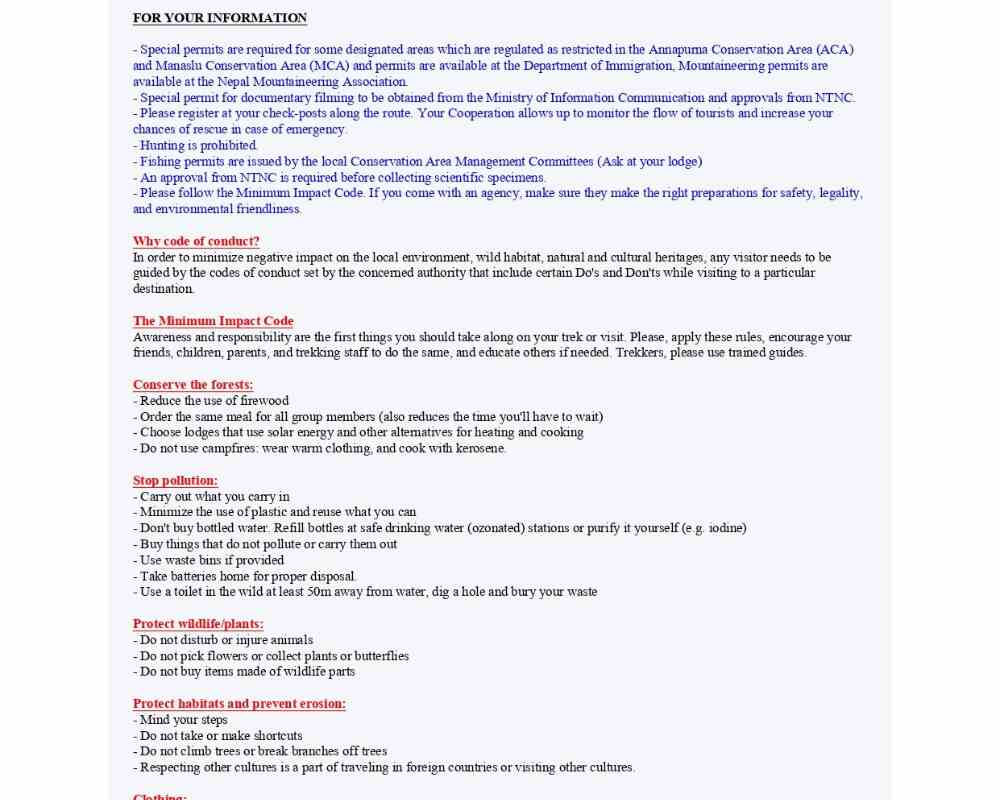
What Happens If You Trek Without the Required Guide or Permit?
Trekking without the required guide or permits can cause serious problems at checkpoints and may result in you being stopped, denied access to the route, or facing penalties under the applicable regulations.
In Restricted Areas, trekking permits are issued through registered trekking agencies and trekkers are required to follow the conditions attached to their permits.
The safest approach is simple: arrange the correct permits and licensed guide before beginning your trek rather than relying on outdated information or inconsistent enforcement on the trail.
What Treks Can You Do Without a Guide?
Not every walk or hike around Nepal requires a licensed trekking guide.
Short day hikes and walks outside the trekking routes and protected areas covered by Nepal's trekking regulations may be undertaken independently. Examples can include certain hikes around Kathmandu, Pokhara and other accessible areas. Our roundup of Best Trekking Spots in South Asia covers several lesser-known options worth exploring, and if you're new to trekking altogether, our Easy Treks in Nepal for Beginners guide is a good starting point.
However, the rules are route-specific. Before starting an independent hike, check whether the route enters a national park, conservation area or Restricted Area and whether TIMS or a licensed guide is required.
For established trekking routes such as Manaslu Circuit Trek, Annapurna Circuit Trek and Everest Base Camp Trek, check the current guide and TIMS requirements before departure. The Nepal Tourism Board currently lists these routes among those requiring a licensed guide and TIMS.
Travel Insurance for Nepal Trekking
Travel insurance is strongly recommended for trekking in Nepal, particularly for high-altitude and remote routes where medical treatment and evacuation can be expensive.
If you're trekking at high altitude, choose a policy that specifically covers:
- High-altitude trekking
- Emergency medical treatment
- Helicopter evacuation
- Search and rescue
- The maximum altitude of your trek
Always check the policy wording before purchasing insurance. Coverage can vary significantly between policies, and some standard travel insurance plans exclude high-altitude trekking or helicopter evacuation.
Things to Know Before Booking Your Trek
- Confirm whether your chosen route requires TIMS, a Restricted Area Permit, or both.
- Book through a government-registered trekking agency; this is required for TIMS and Restricted Area Permits alike.
- Check seasonal permit pricing in advance, especially for Manaslu and other restricted regions where fees change between peak and off-peak seasons.
- Pack right for the altitude and season our Essential Trekking Gear for the Himalayas guide covers what to buy versus rent.
- Time your trip around the right season; see our Best Year to Trek in Nepal guide for a season-by-season breakdown.
- Arrange travel insurance that specifically covers high-altitude trekking and helicopter evacuation.
- Double-check requirements close to your departure date, since Nepal's trekking regulations have changed more than once in recent years.
Nepal Trekking Rules 2026 FAQs
Is a guide mandatory for trekking in Nepal in 2026? A licensed trekking guide is mandatory on many of Nepal's major trekking routes. The Nepal Tourism Board currently lists routes in the Manaslu, Annapurna, Everest, Langtang, Kanchenjunga, Makalu and other regions where trekkers must be accompanied by a licensed guide and carry TIMS.
Can I trek solo in Nepal in 2026? You can travel as a solo trekking client, but that does not mean you can trek without a guide. In March 2026, Nepal removed the previous two-person minimum for Restricted Area Permits, allowing individual foreign trekkers to obtain permits. A licensed guide and registered trekking agency are still required for restricted-area treks.
Can I trek the Manaslu Circuit alone? You can now arrange a Manaslu trek as an individual traveler without finding another trekker to meet the previous minimum group requirement. However, the Manaslu region remains regulated, so you still need the required permits, a registered trekking agency and a licensed guide.
Is TIMS still required in Nepal? Yes. TIMS remains required on specified trekking routes. The current Nepal Tourism Board guidance lists Manaslu Circuit, Annapurna Circuit, Everest Base Camp and several other routes among the areas requiring a licensed guide and TIMS.
How much is the Manaslu Restricted Area Permit? For Gorkha Manaslu, the current Restricted Area Permit costs USD 100 per person per week from September to November and USD 75 per person per week from December to August. Additional daily charges apply when the stay exceeds one week.
Do I need a guide for Everest Base Camp? The Nepal Tourism Board currently lists Everest Base Camp among the routes where trekkers must be accompanied by a licensed trekking guide and carry a TIMS card.
Do I need a guide for the Annapurna Circuit? Yes. The Nepal Tourism Board currently lists the Annapurna Circuit among the routes requiring a licensed trekking guide and TIMS card.
Conclusion
Nepal's trekking rules for 2026 come down to a few consistent themes: a licensed guide is required on most major routes, TIMS remains part of the permit system for those routes, and restricted areas require additional permits and now allow solo applicants following the March 2026 changes. Requirements still vary by region, so the safest approach for any trek whether it's Manaslu, Everest Base Camp, Annapurna or elsewhere is to confirm the current rules with a registered trekking agency before you go.
Planning your next adventure in Nepal? Explore our Nepal Trekking Packages 2026/2027 Guide to compare routes, itineraries and guided trekking options, or browse the Outshine Adventure blog for more planning guides.