Bhutan exists in the imagination as a place of myths. The nation, known as Drukyul or "the realm of the Thunder Dragon," occupies a geography nestled precariously between the vast expanse of Tibet to the north and the Indian subcontinent to the south. Yet beyond the mythology and metaphor lies a genuine destination where ancient Buddhist traditions remain alive, where architectural splendor reflects centuries of cultural continuity, and where travelers encounter landscapes of extraordinary beauty preserved from the industrialized world's sprawl. Bhutan tours offer access to this remarkable kingdom, combining cultural immersion, spiritual engagement, and natural beauty in journeys designed for genuine understanding rather than checkbox tourism.
Bhutan's preservation of its unique character despite increasing global connectivity represents perhaps the most significant aspect of contemporary travel to the region. With a population of just over 600,000 scattered across 47,000 square kilometers of territory ranging from subtropical lowlands to frigid mountain peaks, Bhutan has resisted the development patterns that transformed neighboring regions. This deliberate preservation guided by the concept of Gross National Happiness prioritizing cultural and environmental wellbeing over economic growth creates a destination fundamentally different from mass-market tourism centers. Outshine Adventure's Bhutan tours connect travelers with this distinctiveness through carefully structured cultural and adventure itineraries reflecting the nation's authentic character.
The Geographical and Cultural Context
Understanding Bhutan's position geographically helps explain its cultural distinctiveness. Hemmed between Tibet's plateau heights and India's sprawling plains, Bhutan occupies a narrow strip of territory incorporating dramatic elevation changes from subtropical river valleys at 100 meters to peaks exceeding 7,500 meters. This topographical compression creates extraordinary climatic and ecological diversity. Dense forests transition rapidly from rhododendron thickets to alpine pastures; rivers carve through deep valleys; mountains rise dramatically from cultivated agricultural land.
The nation's biological wealth reflects this environmental diversity. Bhutan protects over 60% of its territory as forest, supporting endemic species found nowhere else on Earth. The country's 2,000-plus bird species, diverse mammal populations including Bengal tigers and red pandas, and plant life ranging from subtropical orchids to alpine wildflowers create an ecological treasure significantly greater than its modest geographic size. For nature enthusiasts, this biodiversity represents extraordinary value concentrated habitat diversity typically requiring travel across entire continents in other destinations.
Culturally, Bhutan's position as a crossroads between the Indian subcontinent and the Tibetan plateau created a unique synthesis of influences. Buddhist philosophy from Tibet permeates Bhutanese spirituality, while Indian artistic and architectural traditions influenced design aesthetics. The Bhutanese people developed a distinct cultural identity synthesizing these influences while maintaining fiercely protective boundaries against external cultural homogenization. Traditional dress (the gho for men, the kira for women), architectural styles, artistic traditions, festival practices, and spiritual beliefs remain remarkably intact despite modern pressures.
The principle of Gross National Happiness, adopted as Bhutan's development philosophy in the 1970s, explicitly prioritizes cultural preservation, environmental conservation, and equitable development over pure economic expansion. This philosophical framework manifests practically through architecture restrictions (all buildings must incorporate traditional Bhutanese design elements), education policies emphasizing Dzongkha language and cultural studies, and limitations on tourism volume foreign visitors require licensed guides and must book through approved tour operators, limiting the uncontrolled visitor influx that often damages cultural preservation efforts.
The Four Bhutan Tour Options: Matching Duration to Interest
Outshine Adventure offers four distinct Bhutan tour packages accommodating various timeframes and interests, ranging from intensive cultural weekends to comprehensive multi-week explorations. Each itinerary follows the philosophy that genuine cultural understanding requires more than rapid site visitation real engagement with people, places, and traditions demands time, patience, and guided insight.
The 4 Nights 5 Days Bhutan Tour serves as the entry-level offering, priced at US$999 and designed specifically for travelers with limited vacation time who still want meaningful Bhutan engagement. This package concentrates on Bhutan's western valleys the most accessible regions and home to the capital, major monasteries, and iconic cultural sites. Participants fly into Paro, explore Thimphu's governmental and cultural institutions, venture to Punakha's valley landscapes and significant monastery, and return to Paro for the ascent to Tiger's Nest Monastery. Despite its brevity, the itinerary provides substantial cultural introduction: interaction with licensed guides offering deep contextual knowledge, visits to active monasteries and government buildings, encounters with traditional architecture and arts practices, and direct observation of Bhutanese spiritual life.
The Yul Tour, extending to eight days and priced from US$2250, provides deeper regional immersion. The additional time allows exploration beyond the western concentration, incorporating central Bhutan's less-visited valleys and lesser-known monasteries. "Yul" translates as "country" in Dzongkha, reflecting the tour's emphasis on understanding Bhutan comprehensively rather than visiting famous landmarks. This extended timeframe permits longer stays in individual locations, more extensive hiking and cultural engagement, and visits to communities with less tourist exposure genuine encounters with local life beyond the well-trodden visitor circuit.
The Shangri-La Tour, offering ten days at US$2750, represents comprehensive western and central Bhutan exploration. The name references the legendary Himalayan kingdom described in Western literature, evoking the sense of discovery and wonder many experience in Bhutan. This duration allows for multiple days in key regions, higher-altitude hiking through forests and mountain passes, and interaction with monastic communities during spiritual practices.
The Central Bhutan Tour provides the most extensive offering at eleven days with pricing from US$2995 and possesses the highest user reviews among Outshine Adventure's Bhutan offerings. This comprehensive journey penetrates regions most foreign tourists never access, focusing on central Bhutan's valleys, monasteries, and cultural sites while minimizing western region repetition. Participants encounter landscapes of spectacular beauty with minimal foreign visitor presence, interact with communities maintaining traditional lifestyles, and gain genuine immersion in Bhutanese culture beyond standard tourist exposure.
The selection depends entirely on individual circumstances and interests. Time-constrained travelers seeking cultural introduction benefit from the five-day option's efficiency. Those able to dedicate 10-11 days gain the comprehensive understanding that transforms Bhutan from an exotic destination into a place of genuine meaning and connection.
Experiencing Bhutan's Sacred Architecture: The Dzongs
Bhutan's architectural character centers on structures called dzongs fortress monasteries combining military, governmental, and spiritual functions within single complex structures. These buildings represent the pinnacle of Bhutanese architectural aesthetics and engineering intricate wooden carvings, vibrant painted decorations, and sophisticated structural systems reflecting centuries of refined technique.
Each dzong occupies strategic locations, typically positioned at valley confluences or elevated ridges overlooking inhabited areas. Historically, dzongs provided defensive positions against regional conflicts; contemporarily, they serve as administrative centers and active monastic institutions. This dual function means dzongs remain lived-in religious and governmental spaces rather than museum artifacts monks continue daily prayers and rituals; government offices conduct business; festivals celebrate spiritual calendar milestones within their courtyards.
The Tashichho Dzong in Thimphu represents the most prominent dzong and serves as Bhutan's national seat of power. This massive structure, painted in traditional colors with intricate wooden details, houses government offices and the throne room of Bhutan's king. Visitors walk through courtyards surrounded by monks conducting daily activities, observe architectural details refined through centuries, and gain perspective on how spiritual and governmental functions integrate within Bhutanese culture. The experience transcends sightseeing it represents participation in living spiritual and political structures.
The Punakha Dzong, constructed in 1637, occupies Punakha valley's confluent rivers and holds exceptional historical significance. This dzong served as Bhutan's capital before governmental seat shifted to Thimphu; it remains the winter residence of Bhutan's spiritual leader (Je Khenpo) and witnesses major national events and religious ceremonies. The setting surrounded by fertile valley landscape and reflecting in river waters creates visual drama complementing the architectural splendor.
Smaller dzongs encountered on extended tours reveal local governance and spiritual practices less obviously spectacular but no less meaningful than major state structures. Simtokha Dzong, the oldest dzong in Bhutan, sits overlooking Thimphu valley and combines defensive architecture with intimate spiritual spaces. Drukgyel Dzong, positioned in Paro valley with dramatic mountain backdrop, provides perspective on Bhutanese history and the relationship between fortress structures and landscape geography.
The Taktsang Monastery: Bhutan's Most Iconic Spiritual Site
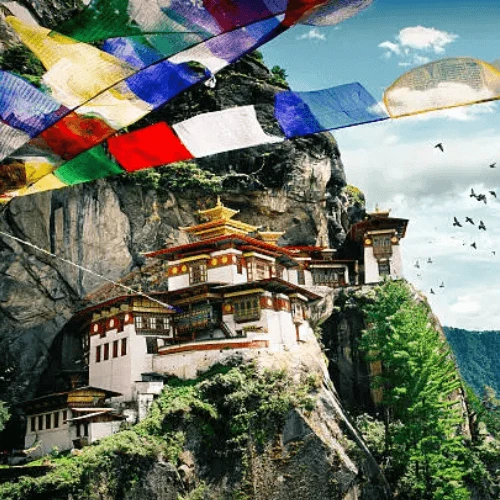
The Taktsang Monastery (Tiger's Nest Monastery) represents Bhutan's most instantly recognizable landmark a complex of temples and residences seemingly impossible positioned on a vertical cliff face 1,000 meters above Paro valley. This monastery holds extraordinary significance in Bhutanese Buddhist tradition, believed to be where Guru Padmasambhava, Buddhism's founder figure in Bhutan, meditated in the eighth century. The monastery's dramatic setting transforms spiritual pilgrimage into physical adventure, making it accessible to trekkers of varying abilities while maintaining genuine spiritual significance.
The hike to Taktsang begins near Satsam, approximately 2,650 meters elevation, and climbs steeply through pine forests to the cafeteria platform at 2,940 meters roughly 300 meters elevation gain over approximately 1.5 hours of walking. The cafeteria provides panoramic views of the monastery from outside, offering photographic perspectives and rest points for those unable or unwilling to continue higher. A further hour of climbing ascends to the monastery itself, navigating narrow passages carved into cliff faces with chains providing handholds on steeper sections. The final portions involve entering the monastery complex, observing the inner temples, and experiencing the spiritual atmosphere pilgrims have accessed for centuries.
The hike's combination of physical challenge and spiritual reward distinguishes Taktsang from simple sightseeing. The effort required to reach the monastery substantial enough to require genuine commitment but achievable for persons of reasonable fitness creates visceral understanding of pilgrimage as spiritual discipline. Arriving at the monastery after physical exertion, breathless from altitude and effort, and experiencing the spiritual ambiance within creates multi-sensory engagement impossible through passive observation.
The descent, contrary to expectations, often proves more challenging than the ascent steep downhill sections test knee and ankle stability, requiring focus and deliberate pacing. Local guides offer ponies for uphill segments (though the final monastery sections require walking), and tea houses at intermediate points provide rest opportunities. The entire outing typically requires 4-5 hours substantial time investment but manageable within a single day's schedule.
Cultural Immersion: Beyond the Monastery Tour
While monasteries and dzongs constitute landmark attractions, genuine cultural understanding emerges through less dramatic encounters. Bhutan's cultural tours deliberately incorporate time in traditional villages, local markets, artisan workshops, and ordinary community spaces where contemporary Bhutanese life unfolds.
Traditional Bhutanese farmhouses represent living architecture preserving centuries-old building techniques. These structures, typically three stories tall with elaborately decorated wooden windows and door frames, showcase engineering principles suited to Bhutan's climate and available materials. The ground floor houses livestock (yaks, cattle, chickens), providing heat that rises through the living quarters above; the second floor accommodates family living spaces; the top floor stores agricultural products and animal fodder. Walking through occupied farmhouses, observing the integrated animal-human-agricultural systems, and watching inhabitants conduct daily activities within these traditional spaces provides understanding of cultural practices impossible to achieve in museums or monastery visits.
The Arts and Crafts School in Thimphu demonstrates how Bhutan preserves artistic traditions through formal education. Artisans learn centuries-old techniques for painting thangkas (religious artworks), sculpting wooden figures, creating traditional textiles, and executing the intricate painted designs adorning dzongs and religious structures. Observing artisans at work steady hands executing minute details with brushes the width of human hairs, artists mixing pigments using traditional methods, young students learning techniques from master craftspeople reveals the human dedication sustaining cultural traditions.
Handicrafts emporia throughout Bhutan showcase economic systems supporting traditional artistry. Purchasing handwoven textiles, wooden carvings, painted religious objects, or ceremonial items directly supports artisan communities maintaining these traditions. Many tour operators emphasize community-based tourism approaches where portions of tour fees directly benefit local communities through employment, infrastructure development, or educational support.
Markets in Thimphu and other towns provide unmediated cultural observation. Watching Bhutanese shoppers selecting produce, artisans selling crafted goods, monks purchasing ceremonial items, and tourists and locals negotiating shared market spaces reveals contemporary cultural texture beyond formal tour sites. Markets capture authentic interaction, genuine commerce, and real cultural practice.
Bhutanese Cuisine and Culinary Traditions
Food represents a significant cultural expression often overlooked in tourism. Bhutanese cuisine reflects geographic limitations, cultural traditions, and spiritual practices. Bhutan's high altitude and valley topography create agricultural conditions suitable for specific crops buckwheat, wheat, barley, rice (in lower valleys), and abundant vegetables including the famous chilies fundamental to Bhutanese cooking.
Ema Datshi, the national dish combining chilies and cheese (often with added vegetables), illustrates Bhutanese cultural values. The dish's heat chilies so spicy that first-time participants often struggle represents Bhutanese philosophy that food should challenge and awaken the palate. The communal sharing of dishes, eating with hands from shared platters, and the informal dining atmosphere reflect cultural priorities emphasizing community over individual consumption.
Red rice, a staple grain, contains nutritional and cultural significance. Unlike white rice refined to remove bran, red rice retains the outer layers, offering greater nutritional density. Bhutanese preference for red rice over the white rice common in neighboring countries reflects cultural choices prioritizing nutrition over appearance a metaphor for broader Bhutanese values.
Bhutanese meals typically include alcohol, often in the form of ara (distilled grain spirit) or Chang (fermented grain beer). These beverages feature in social gatherings, spiritual ceremonies, and everyday hospitality. Sharing alcoholic drinks represents cultural greeting and relationship-building practice. For visitors unaccustomed to high-alcohol content or strong flavors, the experience provides visceral cultural engagement distinct from sanitized tourism experiences.
The butter tea tradition, imported from Tibet, reflects cultural exchange while becoming distinctly Bhutanese. The salty, fatty tea an acquired taste for most Westerners sustained people through Bhutan's harsh winters and remains central to hospitality. Being offered butter tea represents genuine welcome; refusing represents rejection of cultural engagement.
Seasonal Considerations and Festival Timing
Bhutan's festival calendar, rooted in Buddhist lunar calendar rather than Western dates, determines optimal travel timing for culturally engaged tourism. Major festivals (Tsechus) occur in different valleys throughout the year, featuring masked dances (cham), religious processions, and community celebrations. Attending a Tsechu provides extraordinary cultural insights hundreds or thousands of community members gathering in traditional dress, participating in spiritual and festive activities, creating vibrant cultural expression.
The spring season (March-May) offers pleasant temperatures, blooming rhododendrons in mountain regions, and festival celebrations including Paro Tsechu (April) and Thimphu Tsechu (October). Autumn (September-November) provides clear skies, excellent visibility for mountain viewing, and cultural calendars featuring major festivals. Winter (December-February) brings cold temperatures and potential snow in higher elevations but offers clear skies and fewer tourists. Monsoon season (June-August) brings rain and cloud cover, limiting mountain visibility, though the landscape blooms with green vegetation and fewer tourists populate tourist sites.
The selection of tour duration and timing interconnects. Extended tours accommodate festival attendance; shorter tours target specific seasons optimizing weather and visibility. First-time visitors with limited time typically benefit from autumn travel combining favorable weather with reduced rainfall and comfortable hiking temperatures.
Practical Preparation and Logistical Considerations
Bhutan requires visitors to book through licensed tour operators independent tourism remains prohibited. This regulation, while limiting traveler spontaneity, ensures quality control, direct community economic benefit, and environmental protection through visitor volume limitations. Outshine Adventure's licensing ensures legitimate operations meeting Bhutan's standards.
Visa processing requires approximately two weeks, typically handled by tour operators through Bhutan's Immigration Office. A visa fee of US$50 applies, processed through tour operators as part of booking procedures. International airfares to Paro (via Druk Air, the national airline, typically connecting through Bangkok or Delhi) require separate booking but coordinate with tour schedules.
Physical preparation depends on selected tour duration and itinerary. The five-day tour involves moderate hiking (Taktsang ascent represents the most strenuous activity) accessible to persons of reasonable fitness. Extended tours incorporating high-altitude passes or longer trekking require stronger preparation. The Yul Tour and Central Bhutan Tour sometimes involve passes exceeding 3,000 meters elevation, requiring adequate fitness and acclimatization.
Packing requires consideration of Bhutan's climate variability temperature swings between sunny and shaded areas, altitude changes affecting thermal comfort, and seasonal weather patterns. Layering systems, quality hiking footwear, sun protection, and weather-resistant outerwear prove essential.
Combining Bhutan Tours with Other Regional Adventures
Many travelers combine Bhutan tours with complementary regional experiences. The geographic proximity of Nepal (accessible via flights from Bhutan to Nepal) creates opportunities for multi-country South Asian journeys. Some travelers extend Bhutan visits with Nepal Trekking options, experiencing Himalayan adventure across multiple nations. Others combine Bhutan's cultural focus with Luxury Trekking experiences emphasizing comfort and refined cultural engagement.
Bhutan tours pair effectively with Bhutan Trekking options for travelers seeking more intensive hiking. The Laya Gasa Trek and Jumolhari Base Camp Trekking provide multi-day mountain experiences incorporating dramatic scenery alongside cultural immersion. Bhutan Cultural Trekking specifically emphasizes cultural engagement alongside hiking, combining both dimensions into comprehensive experiences.
For travelers combining multiple regions, Outshine Adventure coordinates complex itineraries incorporating Nepal, Tibet, and Bhutan into comprehensive Himalayan journeys. The Essential Travel Checklist and Complete Travel Insurance Guide for Trekking in Nepal apply to multi-country travel, protecting travelers across regional boundaries.
Why Choose Outshine Adventure for Bhutan Exploration
Outshine Adventure's distinctive approach emphasizes cultural depth and local insight over rapid site visitation. The company recognizes that Bhutan requires engagement rather than consumption genuine understanding demands time, guided perspective from knowledgeable locals, and willingness to slow down and observe carefully. This philosophy distinguishes Outshine's Bhutan tours from standardized international operator offerings following identical itineraries with minimal adaptation to individual interests.
The company's commitment to responsible tourism practices ensures that visitor presence benefits Bhutan's communities and environment rather than creating exploitative dynamics common in mass tourism. Local guide employment, community-based hospitality, and environmental respect remain central to tour operations.
The flexibility to customize itineraries allows tailoring experiences to specific interests whether archaeological focus, spiritual engagement, natural history emphasis, or cultural immersion. The four standard offerings serve as foundation frameworks adaptable to individual preferences and timeframes.
Conclusion: The Thunder Dragon Awaits
Bhutan represents a destination genuinely distinct from contemporary global travel patterns. The nation's preservation of cultural traditions, environmental protection, and explicit rejection of growth-at-all-costs development models create a destination speaking to travelers seeking authentic engagement over superficial tourism consumption. The Thunder Dragon's realm rewards thoughtful exploration time spent understanding rather than rushing through, engagement with people rather than exclusive focus on landmarks, and appreciation for how traditional practices continue within modern contexts.
Whether experiencing the spiritual power of Taktsang Monastery clinging to cliff faces, observing traditional craftsmanship in artisan workshops, tasting fierce chilies in farmhouse meals, or watching morning prayers in active monasteries, Bhutan engages the whole traveler intellectually, spiritually, aesthetically, and physically. These tours offer not merely information about another country but genuine transformation through direct cultural encounter.
Begin your Thunder Dragon journey today. Contact Outshine Adventure to discuss which Bhutan tour matches your timeframe and interests, or customize your perfect Bhutanese itinerary.
Explore complementary options through Bhutan Trekking for more active adventures, or combine with Nepal Trekking for comprehensive Himalayan exploration. Review Essential Travel Checklist and Responsible Tourism principles ensuring meaningful, respectful engagement with Bhutan's remarkable culture and environment.

 based on 5 reviews

