.webp)
By Som Kusum Majhi, Lead Trekking Guide, Outshine Adventure
I'm Som Kusum Majhi, and I've spent much of my career walking the Manaslu Circuit with trekkers from all over the world. Over the years, people tend to ask me the same handful of questions, So, I wanted to put down what I actually tell my groups, the lessons pulled straight from the trail, not from a brochure.
Is the Manaslu Circuit Trek Difficult?
The honest answer is yes, but not in the way most people expect.
The Manaslu Circuit is not technically demanding in the way a climbing expedition is. There are no fixed ropes, no vertical sections, no glacier crossings requiring advanced skills. What makes it difficult is a combination of factors that accumulate over the course of the trek: sustained altitude above 3,500m for multiple consecutive days, long walking hours, remote terrain with limited facilities, and a final pass crossing at 5,160m that tests everything your body has built up over the preceding two weeks.
By the time most trekkers reach the Larkya La, they have already been walking for 12 consecutive days. The fatigue is real and cumulative. That's what the Manaslu Circuit demands more than anything else not a single moment of extreme physical output, but sustained endurance across the whole journey.
Which Single Day Do Most Clients Find Hardest?
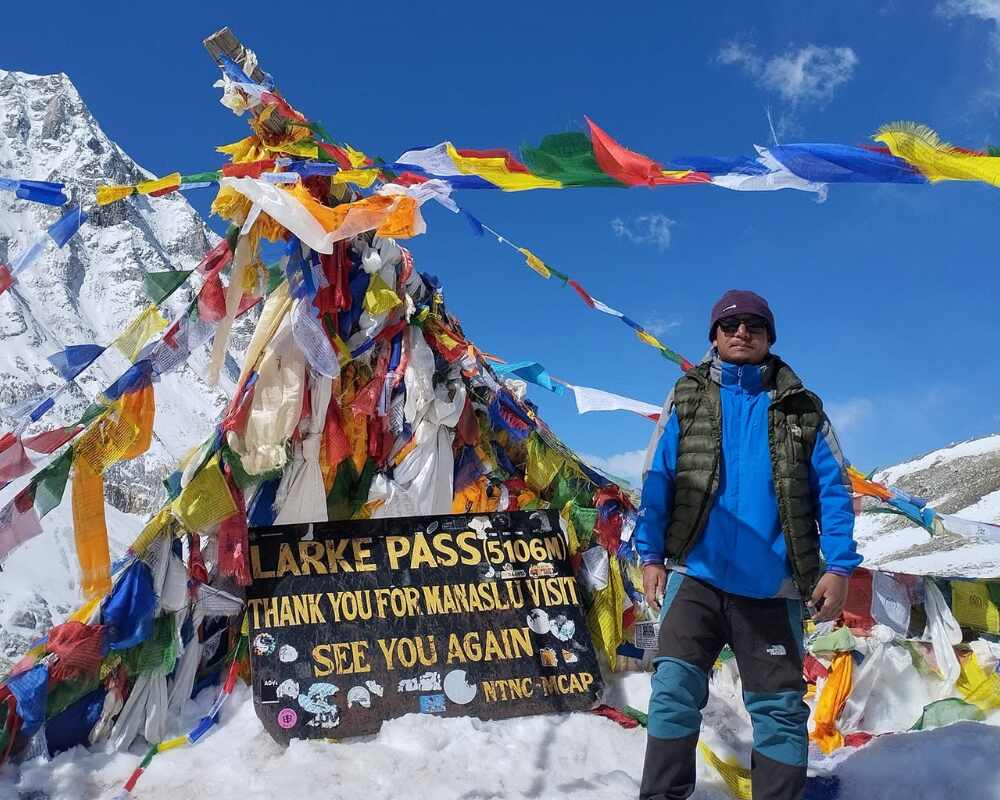
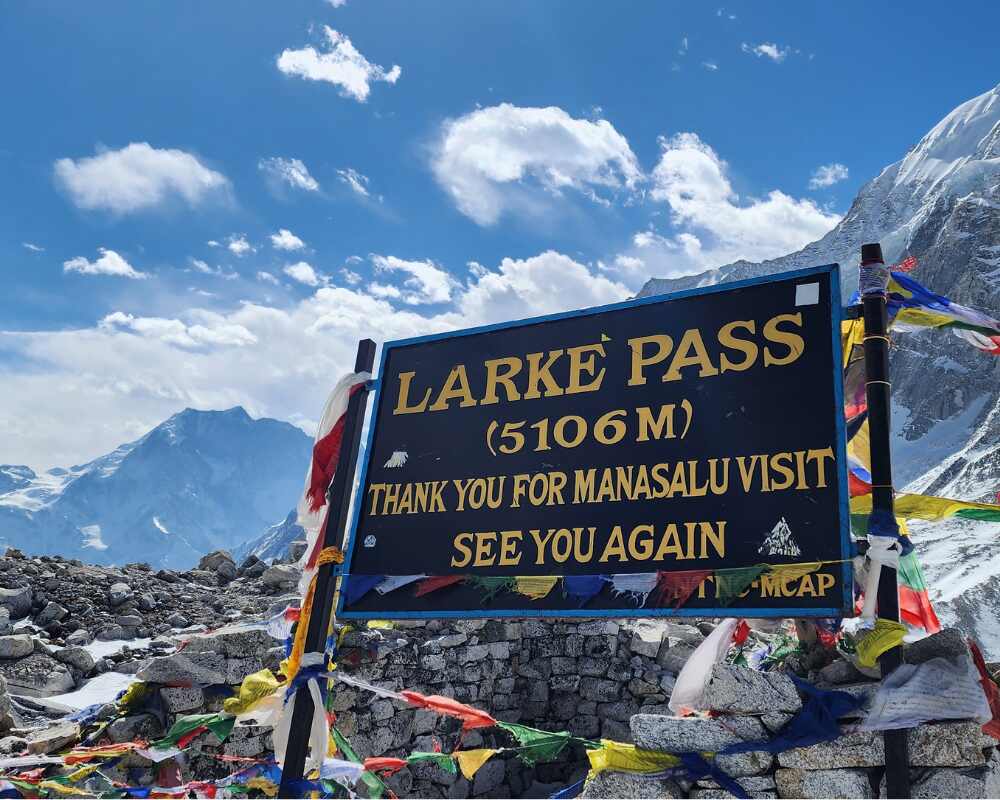
Based on my many years of guiding experience, I would say that the most challenging day of the Manaslu Circuit trek is the day we cross Larke Pass. However, the difficulty is not caused by just one factor there. It is a combination of high altitude, long hours of walking, challenging terrain, cold temperatures, and unpredictable mountain weather.
We cross Larke Pass at an altitude of approximately 5,160 metres. At that elevation, the amount of oxygen is significantly lower, and by that point trekkers have already accumulated a certain level of physical fatigue. The weather can also change very quickly. The morning may begin with clear and pleasant conditions, but higher up the wind can become strong, snowfall may begin, and sections of the trail can become icy.
Is It Just About Fitness?
In my opinion, however, the greatest challenge is how an individual's body responds to altitude. Even a physically very fit person can struggle at high altitude, while someone with average fitness may cross the pass comfortably if they have acclimatised properly.
That's why we always tell our travellers one important thing: you do not cross Larke Pass by forcing your body, you cross it by listening to your body.
What Happens If Someone Cannot Continue?
In our groups, it is generally very rare for a traveller to have abandoned the trek before reaching Larke Pass. However, after working in high altitude environments for many years, we understand one important fact i.e. every person's body responds differently to altitude.
According to our actual records, 0.001% of our travellers have been unable to complete the trek before crossing the pass. In such cases, the reason may include acute mountain sickness (AMS), extreme fatigue, health-related problems, or injuries. For me, what matters most is not simply whether a traveller crosses the pass or not, what matters is whether we are able to bring that person home safely.
If a traveller's physical condition does not allow them to continue, we never tell them "you must go on no matter what." In the mountains, sometimes turning back is the best and the safest decision.
What Time Do You Leave Dharamsala, and What Happens If a Group Leaves Late?
Normally, we prepare to leave Dharamsala between 3 and 5 AM. The exact departure time may vary slightly depending on weather conditions and the condition of the group. We start early not simply to reach the pass quickly. An early start gives us a better chance of travelling during the more stable part of the morning, provides sufficient daylight, and allows enough time to complete the long descent safely after crossing the pass.
If the group is delayed, our first step is to understand why. Is someone experiencing a health problem? Are there symptoms of AMS? Is the entire group moving more slowly than expected? We then adjust the pace and manage rest breaks accordingly. However, if the delay creates a significant risk of worsening weather or reaching difficult terrain after dark, the guide must make a decision based on the safety of the travellers.
There is one thing we must always remember in the mountains we can make a schedule, but the mountains have their own rules.
"Once You're Over the Pass, Is the Hard Part Done?"
After crossing Larke Pass, many trekkers think that now the difficult part is over, but the reality is that crossing the pass is only half of the challenge. The descent can vary considerably depending on the weather and season. You may encounter snow in some sections, ice in others, loose rocks and scree, as well as steep descents in certain areas. When there has been snowfall, the trail can become slippery. If ice has formed, extra caution is necessary.
Therefore, we recommend that trekkers have good quality trekking boots and trekking poles, and depending on conditions, appropriate equipment such as crampons. The long descent can also put significant pressure on the knees and legs. That's why I always tell travellers: do not rush after crossing the pass. Your body is already tired, and when you are fatigued, even a small mistake can lead to a serious problem.
Food and Water on Pass Day
On the route towards Larke Pass, regular and reliable access to hot food is extremely limited. Therefore, we advise our travellers to have a proper breakfast before leaving Dharamsala early in the morning, and to carry sufficient snacks with them. Depending on the season, there may be some temporary tea houses or refreshment points operating along the route, but we do not build our trekking plan around them. Based on our experience, it is not good preparation to start the pass-crossing day assuming we will find food somewhere along the way.
Travellers should carry sufficient water and high-energy snacks such as energy bars, chocolates, nuts, dry fruits, or other lightweight sources of energy.
"If I've Completed Everest Base Camp, Will Manaslu Feel Easy?"
This is a very important question. In my experience, even someone who has successfully completed the Everest Base Camp Trek can struggle on the Manaslu Circuit. The experience of Everest Base Camp Trek and the Manaslu Circuit is not exactly the same. Manaslu presents a different type of challenge because of the altitude of Larke Pass, long trekking days, remote terrain, and unpredictable mountain weather.
At the same time, it is also not correct to say that someone who could not complete EBC cannot complete Manaslu. I have seen situations where someone who appeared to have average fitness successfully crossed the pass because they had good acclimatisation and strong mental preparation, while someone who was extremely fit struggled with altitude.
Therefore, I look at fitness and trekking readiness in three areas physical fitness, altitude adaptation, and mental strength. When these three elements are well balanced, the chances of successfully completing the Manaslu Circuit are much higher.
Rescue Readiness
The safety of our travellers is always our first priority. So far, none of our groups has required helicopter evacuation. However, in high-altitude environments, helicopter rescue operations also depend on weather conditions, visibility, and suitable landing conditions. Therefore, it is not enough to think about rescue only after an emergency occurs.
Our main objective is to manage the trek in a way that reduces the need for emergency rescue in the first place. Proper acclimatisation, regular health monitoring, adequate hydration, and paying close attention to the behaviour and condition of each traveller are all important preventive measures.
I always tell fellow guides: being able to call a helicopter is not what makes someone a good guide. The real skill of a professional guide is recognising a problem before it becomes serious.
Common Misconceptions About Manaslu Difficulty
In my experience, many travellers underestimate altitude. Some people think, "I'm fit, I exercise every day, therefore altitude will not affect me." But in the mountains, physical fitness and altitude adaptation are two different things. Another common misconception is that only the Larke Pass day is difficult. In reality, by the time trekkers reach the pass, they have already been walking for several consecutive days, and fatigue has gradually accumulated in their bodies.
Therefore, the Manaslu Circuit is not simply about crossing the high mountain pass. It is a journey of gradually adapting your body to increasing altitude, conserving your energy, and maintaining the right pace day after day. Travellers must learn to listen to their bodies. Symptoms such as headaches, nausea, unusual fatigue, or disturbed sleep should not simply be dismissed as a normal trekking problem. At high altitude, even small symptoms can be important warning signs.
"What's Our Actual Success Rate?"
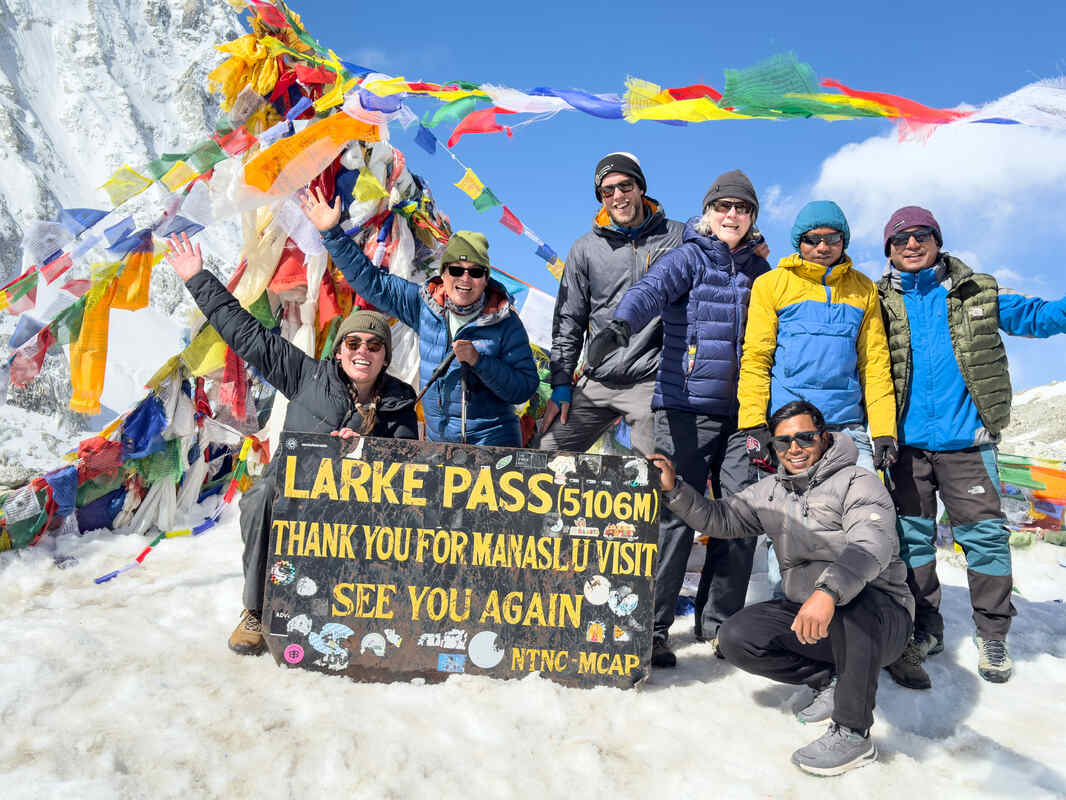
I would like to answer this question based entirely on our actual records. According to our company's official trip records, Outshine Adventure has successfully operated more than 100 Manaslu Circuit trek groups to date. For us, a successful group does not simply mean that every traveller reached Larke Pass. True success means that our travellers completed their journey safely and returned home safely. That is the standard we value most.
According to our actual trip records, our Larke Pass crossing success rate has so far been 100%. This figure is based on the actual number of travellers who attempted to cross the pass and the number who successfully completed the crossing. However, I want to make one thing very clear, our goal is not simply to claim a 95%, 98%, or 100% success rate. Sometimes a traveller's health condition does not allow them to continue, and we may have to turn them back. We do not consider that a failure. In fact, being able to make the right decision at the right time is an essential part of professional guiding.
Final Thoughts
In the mountains, the greatest achievement is not simply being able to say, "I crossed the pass." The greatest achievement is being able to say, "I respected the mountains, listened to my body, followed my guide's advice, travelled safely, and returned home safely." Therefore, from our perspective, safety rate is more important than success rate.
That's why we do not see the Manaslu Circuit simply as a trekking package. We see it as a responsible relationship between the traveller and the mountain.
Plan Your Manaslu Circuit Trek
Ready to take on the Manaslu Circuit? View our full Manaslu Circuit Trek packages from US$830 per person, including a licensed guide, all permits, and daily acclimatisation support throughout the route.
Also useful before you go: