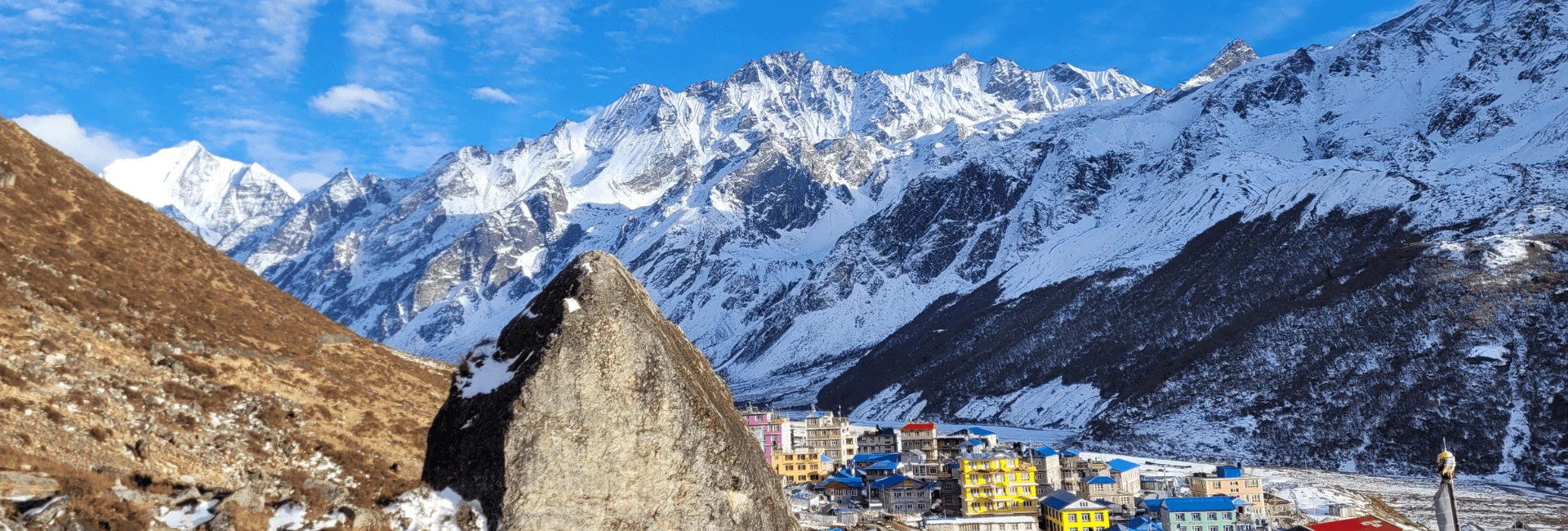
The Langtang Valley Trek is a beautiful place to go in the Himalayas, just north of Kathmandu inside Langtang National Park. They call it the "Valley of Glaciers" because it has snow-covered mountains like Langtang Lirung and Dorje Lakpa, clean rivers, high meadows, and thick forests. The Langtang Valley Trek has a lot of beauty; you can learn about the local culture, and the walking is not too hard, so it is great for people who are new to trekking and for people who have done it before.
When you are walking on the trail, you can see wildlife that lives in the Himalayas, like monkeys, musk deer, Himalayan black bears, red pandas, and many kinds of birds, including the monal, which is the national bird of Nepal. If you get up early in the morning or walk on parts of the trail, you are more likely to see these animals, which is great for people who love nature.
The Langtang Valley is where the Tamang villages live, and their way of life is similar to Tibetan traditions. When you are trekking, you will see monasteries, prayer flags, stone walls with prayers on them, and fields with crops and yaks eating grass. The local teahouses are very welcoming; they serve food, and you can learn about what life is like in the villages. Compared with popular routes like the Everest Base Camp orAnnapurna Base Camp treks, Langtang Valley offers a quieter and less crowded alternative, yet equally spectacular scenery.
The trek goes from the part of the valley to Kyanjin Gompa, which is 3,740 meters high, and you will pass by the Yala Cheese Factory lakes in the mountains and the Langsisa pastures, which are 4,084 meters high and have glaciers and amazing views. If you want to, you can also climb Kyanjin Ri to see the Himalayan range from all sides.
The best time to go trekking is from March to May and from September to December because the weather is nice and the views are really beautiful. The Langtang Valley Trek is an experience because you can make your own schedule, the scenery is amazing, there is a lot of wildlife, and the local people are very friendly, so it is a trip you will never forget in theLangtang Valley.
Why Choose the Langtang Valley Trek
Many trekkers choose the Langtang Valley Trek because it provides an authentic Himalayan experience without requiring long travel times or extremely high altitudes. The trail begins with a scenic drive from Kathmandu to the small town of Syabrubesi, which serves as the gateway to Langtang Valley. From there, the trek follows the Langtang River through dense forests and gradually climbs toward the high mountain valley.
One of the most appealing aspects of this trek is its diversity. The lower sections of the trail pass through beautiful forests where birds and wildlife are commonly seen, while the upper valley opens into wide alpine landscapes surrounded by glaciers and towering peaks. Each day reveals new scenery and unique cultural encounters.
Another reason the Langtang Valley Trek stands out is the cultural experience. The Tamang communities living in this region share a heritage closely connected to Tibetan Buddhism. Prayer wheels, mani walls, monasteries, and colorful prayer flags appear frequently along the trail, creating a spiritual atmosphere that adds meaning to the trekking journey
Culture and Local Life in Langtang
The people living in Langtang Valley belong primarily to the Tamang ethnic group. Their traditions, language, and religious practices share strong connections with Tibetan culture. Throughout the trek, visitors can observe monasteries, prayer wheels, chortens, and stone walls engraved with Buddhist mantras.
Hospitality is an important part of local life in the mountains. Trekkers staying in traditional teahouses often experience warm welcomes and home-cooked meals prepared by local families. This cultural interaction makes the journey more meaningful and provides insight into daily life in the Himalayas.
Wildlife and Nature in Langtang National Park
The trekking route passes through Langtang National Park, one of Nepal’s most important protected areas. The park covers a wide range of ecosystems, from subtropical forests to alpine environments.
Wildlife in the region includes rare and fascinating species such as the red panda, Himalayan black bear, musk deer, and Himalayan tahr. Bird enthusiasts may also encounter a variety of colorful Himalayan bird species along the trail.
The forests are especially beautiful during spring when rhododendron flowers bloom across the hillsides, creating vibrant colors throughout the landscape.
Langtang Valley Trek Difficulty
The Langtang Valley Trek is considered a moderate trekking route. It does not require technical climbing skills, but trekkers should be prepared for several days of walking at increasing altitudes.
The highest point of the trek is usually the viewpoint hike to Tserko Ri, which reaches an elevation of approximately 4,984 meters. Proper acclimatization and a steady walking pace are important for enjoying the trek safely.
Most people with good physical fitness and preparation can complete the trek successfully.
Food and Accommodation
Accommodation along the Langtang trekking route is mainly provided by traditional mountain teahouses. These lodges offer simple but comfortable rooms and warm meals prepared with locally available ingredients.
Typical meals include rice, lentils, vegetables, noodles, soups, potatoes, and Tibetan bread. Many lodges also serve international trekking dishes such as pasta and pancakes. Hot drinks like tea, coffee, and ginger lemon honey are commonly available.
Staying in these family-run lodges provides an authentic experience and helps support local communities in the region.
Culture and Local Life in Langtang
The people living in Langtang Valley belong primarily to the Tamang ethnic group. Their traditions, language, and religious practices share strong connections with Tibetan culture. Throughout the trek, visitors can observe monasteries, prayer wheels, chortens, and stone walls engraved with Buddhist mantras.
Hospitality is an important part of local life in the mountains. Trekkers staying in traditional teahouses often experience warm welcomes and home-cooked meals prepared by local families. This cultural interaction makes the journey more meaningful and provides insight into daily life in the Himalayas.
Langtang Valley Trek: a quieter side of the Himalayas that feels more real
And not everybody loves crowds, which is where the Langtang Valley trek really shines. Very close to Kathmandu, easily reachable, but once on the trail gives a feeling of not crowded and very commercial.
Indeed, this is one of the reason many trekkers chose Langtang; simpler in fact, less cluttered, less people and include more direct connection with mountains and village life.
.webp)
 based on 8 reviews

-1.webp)