-(1280-x-720-px)-(6-x-4-cm)-(1000-x-800-px)-(1920-x-650-px)-(1000-x-800-px)-(1920-x-800-px)-(1000-x-800-px)-(1920-x-800-px)-(1280-x-800-px)-(1000-x-800-px)-(1920-x-650-px)-(1000-(convert.io-(13).webp)
Every NMA-classified trekking peak in Nepal i.e. Island Peak, Mera Peak, Lobuche, Pisang, Yala, and the rest requires a climbing permit on top of the region's standard trekking and conservation permits. Fees vary sharply by peak and by season, and a licensed climbing guide is mandatory for all of them. This guide breaks down the full permit structure for the 2026/2027 climbing seasons for Nepal's most-climbed trekking peaks, what else you need besides the climbing permit, and whether you can arrange any of it yourself.
What Is a "Trekking Peak" in Nepal?
Trekking peaks are mountains classified by the Nepal Mountaineering Association (NMA), generally under 7,000m, that can be climbed with moderate technical skill and without a full expedition permit from the Department of Tourism. They sit in a separate, simpler licensing category than 8,000m giants like Everest or Manaslu.
The five most popular are:
- Island Peak (6,189m, listed as 6,160m by the NMA)
- Mera Peak (6,470m)
- Lobuche East (6,120m)
- Pisang Peak (6,091m)
- Yala Peak (5,732m)
Each sits within an established trekking region i.e. Everest, Annapurna, or Langtang, so the approach follows well-maintained trails with teahouse accommodation before transitioning to tented camps and glacier terrain near the summit.
What Permits Do You Need for Peak Climbing in Nepal?
A trekking-peak climb in Nepal requires several separate pieces of paperwork, not one:
- NMA Climbing Permit — the peak-specific climbing royalty, issued by the Nepal Mountaineering Association
- Regional trekking/conservation permit for the approach — Sagarmatha National Park permit for Island Peak, Mera Peak, and Lobuche; ACAP for Pisang Peak; Langtang National Park permit for Yala Peak
- TIMS card, where applicable to the approach route
- A licensed climbing guide — mandatory for all NMA trekking peaks. This is a permit requirement, not just a safety recommendation.
What Is Each Permit For, and Why Does It Matter?
A trekking-peak climb in Nepal isn't covered by a single piece of paperwork. Four separate requirements stack on top of each other, each covering a different part of the trip:
NMA Climbing Permit
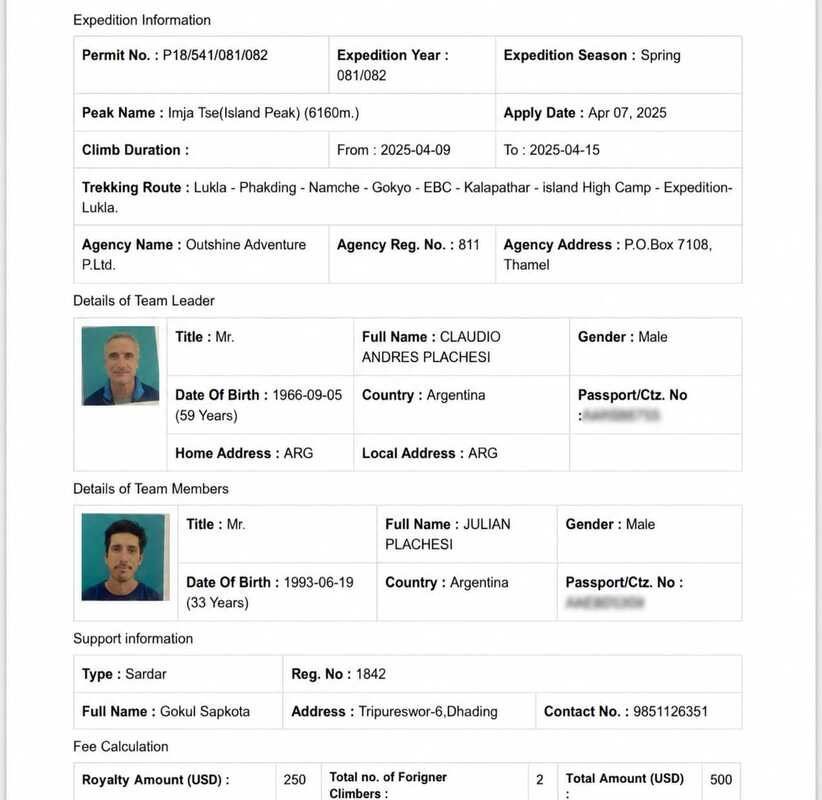
This is the actual climbing royalty, the fee that gives you legal authorization to attempt the summit itself. It's issued by the Nepal Mountaineering Association, not the government directly, because the NMA is the body Nepal's Department of Tourism has delegated authority to, for peaks in the "trekking peak" category (generally under 7,000m). The fee funds the NMA's management of these routes, and it's peak-specific and season-specific you're paying for the right to climb that mountain in that season, not a general climbing license. Without it, you have no legal basis to go above base camp for a summit attempt, even if you already hold every other permit for the region.
Regional Trekking/Conservation Permit
This is a completely separate fee that covers the approach trek, not the climb. It exists because the trail to any of these peaks passes through a protected area, a national park or conservation area and the fee funds park management, ranger staffing, trail maintenance, and conservation work in that region. You'd need this permit even if you were just trekking through the area with no intention of summiting anything. Which one applies depends on where the peak sits: Sagarmatha National Park permit for Island Peak, Mera Peak, and Lobuche; ACAP (Annapurna Conservation Area Permit) for Pisang Peak; Langtang National Park permit for Yala Peak.
TIMS Card
The Trekkers' Information Management System card is essentially a safety and tracking registration it logs who's on the trail, which route they're on, and who their agency is, so authorities and rescue teams can locate trekkers if something goes wrong. It's not peak-specific; it applies to the trekking approach generally and is required (or in some cases bundled into the regional permit) depending on the route.
A Licensed Climbing Guide
This isn't a piece of paper you carry, but it functions as a permit requirement rather than a suggestion. NMA regulations mandate that trekking-peak climbs be led by a certified guide the permit itself is effectively conditional on having one. The reasoning is straightforward: these peaks involve glacier travel, fixed ropes, and crevasse risk that inexperienced climbers routinely underestimate, so Nepal ties the legal right to climb to having qualified supervision on the mountain.
NMA Climbing Permit Costs 2026 (By Peak and Season)
The NMA revised its trekking-peak royalty fees in September 2025, and the updated rates remain in effect through 2026. Here's the current fee structure per person:
Trekking Peak | Height | Spring (Mar–May) | Autumn (Sep–Nov) | Winter (Dec–Feb) | Summer/Monsoon (Jun–Aug) |
| Yala Peak | 5,732 m | Royalty Free (USD 0) | Royalty Free (USD 0) | Royalty Free (USD 0) | Royalty Free (USD 0) |
| Island Peak (Imja Tse) | 6,160 m | USD 350 | USD 175 | USD 175 | USD 175 |
| Mera Peak | 6,470 m | USD 350 | USD 175 | USD 175 | USD 175 |
| Lobuche East Peak | 6,120 m | USD 350 | USD 175 | USD 175 | USD 175 |
| Pisang Peak | 6,091 m | USD 350 | USD 175 | USD 175 | USD 175 |
Yala Peak is exempt from the NMA climbing royalty altogether peaks under 5,800m carry no fee but climbers still need the standard Langtang region trekking permits.
Since these rates are reviewed periodically by the NMA, it's worth confirming the current fee schedule with your agency before you finalize your budget.
Do You Need a Separate Trekking Permit as Well as the Climbing Permit?
Yes. The NMA climbing permit only covers the summit attempt itself. You still need the standard regional trekking/conservation permits for the approach, exactly as any trekker in that region would:
- Everest region (Island Peak, Mera Peak, Lobuche): Sagarmatha National Park entry permit + local rural municipality entry fee
- Annapurna region (Pisang Peak): ACAP (Annapurna Conservation Area Permit)
- Langtang region (Yala Peak): Langtang National Park entry permit
Permit Rules You Need to Know
Beyond just paying the fees, a handful of hard rules govern how these permits actually work in practice:
- Permits are non-transferable and non-refundable. Once an NMA climbing permit is issued in your name for a specific peak and season, it can't be moved to another climber, another peak, or another season if your plans change.
- The permit only covers a single attempt window, not unlimited tries. It's tied to the trip dates in your application, not an open-ended right to climb that peak whenever you like.
- You must carry the physical permit on the mountain. Liaison officers or NMA-affiliated checkpoints can request proof of a valid permit at base camp or along the route.
- Group size affects paperwork, not eligibility. Whether you're climbing solo-with-guide or as part of a larger group, every climber still needs their own individual NMA permit, there's no shared or per-team-only royalty.
- The guide requirement isn't optional at any experience level. Even climbers with prior 6,000m+ experience elsewhere still need a licensed Nepali guide to hold a valid trekking-peak permit, it's a legal condition of the permit, not a beginner safeguard.
How to Get Your Peak Climbing Permit in Nepal : Step by Step
In practice, the process looks like this:
- Choose your peak and season — this determines which NMA fee bracket and which regional trekking permit you'll need.
- Book through a government-registered trekking agency — since individuals can't apply directly, this is the mandatory first step, not an optional convenience.
- Submit your documents — passport copy, passport photos, and proof of high-altitude/rescue insurance go to the agency, who compiles the application.
- The agency applies to the NMA on your behalf — they submit the climbing permit application along with the relevant regional trekking/conservation permit application.
- Permits are issued before you fly to Nepal or shortly after arrival — depending on the agency and route, some permits are processed in Kathmandu once you land.
- You receive your guide assignment — your licensed climbing guide is confirmed as part of the same booking, since the permit and the guide are tied together.
- Carry your permit documents on the trek — your guide typically holds and presents these at checkpoints along the route.
Because this whole process runs through the agency rather than a government counter you visit yourself, most of what a solo trekker would call "the permit process" happens invisibly on the operator's side before you even land in Kathmandu.
Can I Get Peak Climbing Permits Myself, or Do I Need an Agency?
No. A licensed climbing guide is mandatory for all NMA trekking peaks, and the NMA permit must be applied for through a government-registered trekking agency it cannot be issued directly to an individual climber.
Outshine Adventure arranges the NMA climbing permit, the regional trekking permit, and provides a licensed climbing guide as part of every peak climbing package. Climbers do not need to visit any permit office themselves.
What Documents Do You Need for Peak Climbing Permits?
- Passport copy (valid minimum 6 months)
- Passport-sized photos (minimum 2)
- Travel/rescue insurance covering high-altitude climbing and helicopter evacuation
- Trekking agency letter (provided by your operator)
Best Season for Peak Climbing in Nepal and How It Affects Permit Cost
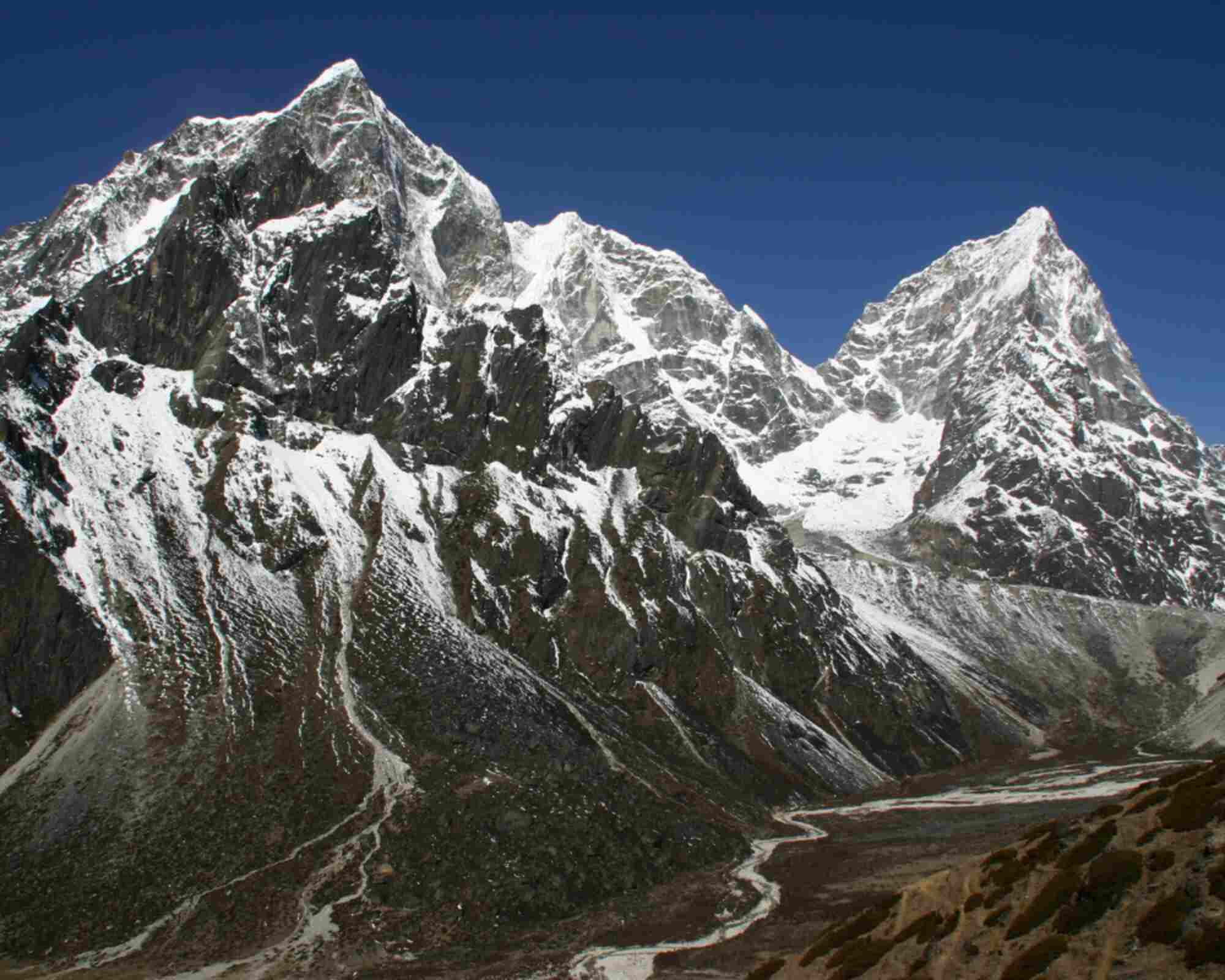
Spring (March–May) and autumn (September–November) are the standard climbing seasons. Spring brings stable weather after winter; autumn offers clear, post-monsoon visibility and firm snow underfoot both make for the safest summit conditions.
Winter and summer/monsoon carry a lower NMA royalty (USD 175 vs USD 350), but that's not a straightforward saving. Winter means extreme cold at altitude, and monsoon season brings poor visibility along with higher avalanche and rockfall risk. The lower permit fee reflects the trade-off in difficulty and safety, not a bargain climbing window.
Total Permit + Package Cost for Nepal's Main Trekking Peaks 2026
| Peak | Region | Duration | Difficulty | Package Price From |
| Yala Peak | Langtang | 15 days | Beginner | US$1,375 |
| Mera Peak Above Base Camp | Everest | 2 days | Moderate | US$733 |
| Island Peak | Everest | 16 days | Moderate | US$1,900 |
| Mera Peak | Everest | 18 days | Moderate | US$2,050 |
| Lobuche Peak | Everest | 20 days | Moderate - Hard | US$2,150 |
| Pisang Peak | Annapurna | 23 days | Moderate | US$2,099 |
All NMA climbing permits, regional trekking permits, and guide fees are included in Outshine Adventure's package price for each of these no separate permit cost on arrival.
Which Peak Should You Choose?
- First-timers with no crampon or ice axe experience → Yala Peak Climbing — the easiest approach, and exempt from the NMA royalty
- Climbers who've done EBC or similar and want a genuine summit → Island Peak Climbing or Mera Peak Climbing
- Climbers with prior glacier experience wanting a harder technical challenge → Lobuche Peak Climbing
- Climbers already doing the Annapurna Circuit → Pisang Peak Climbing; same route, added summit, See our Pisang Peak Climbing Guide: Cost, Itinerary, and Difficulty for the full details.
- Limited time but want a taste of climbing above 6,000m → the Mera Peak Above Base Camp package
Still not sure which peak fits you best? Check out our guide to the best peaks for beginners in Nepal or, our head-to-head on Mera Peak vs Island Peak if you're torn between the two most popular options.
Ready to plan your climb? View our Peak Climbing in Nepal packages — all permits, guides, and logistics included, from US$733 per person.