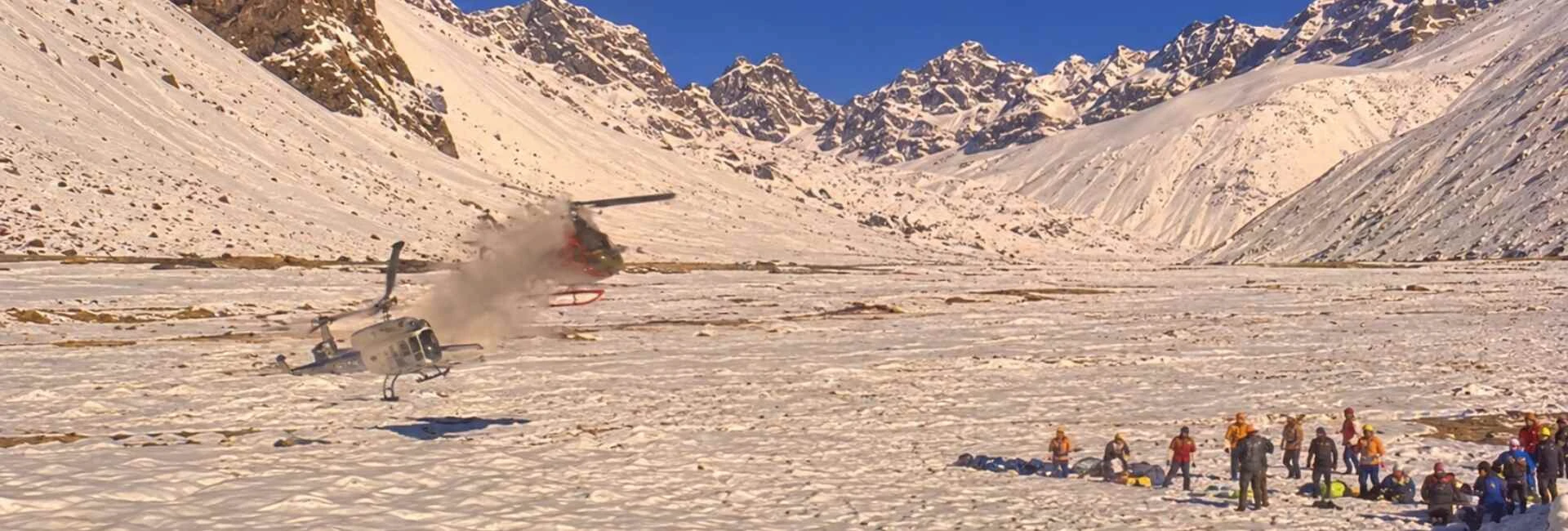
On the morning of Tuesday, 3 November 2026, two helicopters collided while preparing to land at the Pheriche helipad in Nepal’s Solukhumbu district. The incident took place on the classic trail to Everest Base Camp, in the middle of the autumn trekking season, when the Khumbu is at its busiest. It has caused deep concern among trekkers, their families, mountain professionals and the wider travel community.
At Outshine Adventure, we work in this region throughout the year. Our guides, porters and partners live and work along these trails, so news like this affects us directly. Our thoughts are with the family of the person who lost their life and with everyone injured or affected. This article sets out what has been confirmed, what remains unknown, the wider context of helicopter operations in the Himalayas, and what travellers can do to prepare well.
Summary of the Incident
- Date and time: Tuesday, 3 November 2026, at around 8:15 a.m. local time
- Location: Pheriche helipad, Khumbu Pasang Lhamu Rural Municipality, Solukhumbu district
- What happened: Two helicopters collided as they approached to land, and both came down on the icy ground
- Operators: Fishtail Air and Air Dynasty
- Casualties: One person killed and others injured, according to authorities
- Status: Rescue operations were carried out, and an investigation is underway
What Happened at Pheriche
According to the Civil Aviation Authority of Nepal, the two helicopters collided at the helipad shortly after 8 a.m. Video circulating from the scene appears to show the rotor blades of the two aircraft making contact moments before landing. Both helicopters then crashed onto the icy ground.
The two aircraft were on different kinds of missions:
- The Fishtail Air helicopter was carrying passengers who had earlier been rescued from elsewhere in the Everest region. Company representatives said the passengers on board were tourists.
- The Air Dynasty helicopter was reportedly carrying only cargo.
Local administration officials confirmed the accident took place in the area near the Everest Base Camp trekking route. The location is roughly 250 kilometres from Kathmandu by road, though helicopters cover the distance far faster.
Casualties and the Rescue Response
Police and district officials confirmed that one foreign national died and that others were injured. Initial reports identified the deceased as an Indian tourist and the injured person as a New Zealander. The injured person has been rescued. Some early reports gave slightly different figures for the injured, which is common in the first hours after an incident in a remote area. Final numbers will be clearer once authorities complete their assessment.
A rescue helicopter from another Nepali operator reached the site soon afterwards, and rescue and medical efforts continued on the ground. Responders in the Khumbu face difficult conditions, including altitude, cold, uneven ground and limited infrastructure, and their quick response deserves recognition.
The People Involved
The passengers
Both passengers were on board the Fishtail Air helicopter.
- Vasanth Kumar Balaramaramadu, a 47-year-old Indian national, died in the collision. According to police, his body was taken to a hospital in Lukla.
- Shailesh Krishna Patel, a New Zealand resident of Indian origin, was injured. He was airlifted to Kathmandu and admitted to Mediciti Hospital for treatment.
Police have said the exact number of passengers on the two helicopters is still being confirmed.
The pilots
Both pilots are Nepali, and both were injured:
- Captain Rabindra Prajapati of Fishtail Air
- Captain Prajwal KC of Air Dynasty
Both were given emergency medical assistance and then taken to Kathmandu for further treatment. The extent of their injuries has not been publicly detailed.
Why Pheriche Is Important
Pheriche sits at roughly 4,371 metres above sea level in the Khumbu Valley. It is a key stop on the Everest trekking, usually reached after acclimatising in Namche Bazaar and Dingboche. Many trekkers spend a night or two here as part of their altitude preparation.
The village is also known for its high-altitude medical post, which treats trekkers with altitude sickness and other mountain illnesses. Because of this, Pheriche has long served as a gathering point for evacuations. In past emergencies, injured people from higher up the valley have been flown down to Pheriche for treatment. The helipad there is therefore an important part of the region’s emergency response, and it is regularly used for rescue flights, medical transfers and supply deliveries.
Why Helicopters Matter in the Himalayas
Helicopters are a critical tool in Nepal’s mountains. In a region with few roads and steep, remote terrain, they perform several vital roles:
- Emergency evacuation: moving sick or injured trekkers and climbers quickly to lower altitude or to hospitals in Kathmandu
- Supply and cargo transport: carrying food, fuel, equipment and building materials to high-altitude communities and lodges
- Search and rescue: reaching people stranded by weather, avalanches or landslides
- Tourism:scenic and charter flights, and trekking support flights
- Mountaineering logistics: supporting expedition teams and base camp operations
Nepal is home to eight of the world’s fourteen highest mountains, including Mount Everest, and attracts thousands of foreign trekkers and climbers every year. Helicopters have become an essential link between those visitors and the medical care and logistics they may need.
Why Flying in the Everest Region Is So Demanding
Aviation in the Khumbu is among the most challenging in the world, and the reasons are well understood by pilots and aviation specialists:
- High altitude: Thin air reduces engine power and rotor efficiency, leaving less margin for error, especially when landing and taking off.
- Rapidly changing weather: Clouds, wind and snow can develop quickly in the valleys, sometimes within minutes.
- Complex terrain: Narrow valleys, steep slopes and few alternative landing sites limit options when conditions change.
- Busy airspace during peak season: Autumn and spring bring heavy traffic from rescue, cargo and tourist flights, often concentrated at a small number of helipads.
- Small landing areas: Helipads in remote villages are compact and shared by multiple operators, which demands close coordination.
Mid-air collision is itself one of the key operational safety risk areas identified by Nepal’s aviation regulator in its national safety planning. That makes the cause of this incident an important question for the investigation.
What Is Still Unknown
At the time of writing, the cause of the Pheriche collision has not been officially established. Authorities are expected to investigate, and the findings will matter greatly for the aviation community. Questions investigators will typically examine include:
- Landing procedures and coordination between the two aircraft
- Communication between pilots and with any ground personnel
- Weather and visibility at the time
- The condition of the helipad and surrounding area
- Operational practices at busy high-altitude helipads
We do not speculate on causes. We will update this article when official information is released.
Is It Still Safe to Trek in the Everest Region?
This is the question we hear most often after incidents like this one. Our honest answer is that the Everest region remains one of the most rewarding and widely travelled trekking destinations in the world, and the vast majority of trips are completed safely every season. Most of the risks trekkers face on the Everest Base Camp route relate to altitude and weather rather than aviation, and these can be managed with good planning. For more on staying safe while travelling in the country, read our Nepal travel safety and security guide.
At the same time, incidents like this are a sobering reminder that mountain travel carries real risk. Preparation, realistic expectations and the right support team all make a difference.
Practical Safety Advice for Trekkers
1. Choose an experienced, licensed trekking operator.
Local knowledge, trained guides, strong safety protocols and good relationships with rescue providers are essential. Ask any operator how they handle emergencies, communication and evacuation. You can learn why travellers choose to trek with us and read more about our company.
2. Carry comprehensive travel insurance.
Your policy should cover high-altitude trekking (at least up to 5,500 metres for Everest Base Camp), emergency helicopter evacuation and medical treatment. Read the exclusions carefully and keep a copy of your policy details with you. Our complete travel insurance guide for trekking in Nepal explains what to look for.
3. Build flexibility into your itinerary.
Flights, weather and trail conditions can change. Allow buffer days at both ends of your trip so that delays do not push you to take risks. If you want a plan built around your own dates and pace, we can create a tailor-made trip.
4. Prioritise acclimatisation.
Ascend gradually, include rest days, stay hydrated and learn the early signs of high altitude sickness. Good acclimatisation lowers the chance that you will need an emergency evacuation in the first place.
5. Know the evacuation plan before you go.
Ask your operator how evacuation works, who authorises it and how communication is maintained in areas with limited mobile coverage.
6. Listen to your guide.
Experienced guides make conservative decisions for good reason, whether it is about weather, pace or your health.
7. Stay informed.
Follow updates from official aviation and tourism authorities and stay in touch with your operator before and during your trek.Our trekking information page is a good place to start your preparation.
8. Respect weather and flight decisions.
If a flight is delayed or cancelled, it is almost always for a good reason. Patience is part of mountain travel.
Our Commitment at Outshine Adventure
The safety of our guests, guides and porters is our first priority. We continue to monitor the situation closely and stay in contact with local partners and authorities in the Khumbu. If you have already booked a trip with us, our team will keep you informed of any relevant developments. If you are planning a journey to the Everest region, we are happy to talk through your itinerary, your concerns and the preparation that will help you travel with confidence. Please contact us any time.
Frequently Asked Questions
When and where did the helicopter collision happen?
On Tuesday, 3 November 2026, at around 8:15 a.m. local time, at the Pheriche helipad in Solukhumbu district, on the trail to Everest Base Camp.
How many people were killed or injured?
One person was killed and others were injured, according to authorities. Reports indicate the deceased was an Indian tourist and that a New Zealand national was rescued with injuries.
Which helicopter companies were involved?
Fishtail Air and Air Dynasty, both Nepali operators.
What were the helicopters doing at the time?
One was carrying rescued passengers, and the other was reportedly carrying cargo only.
What caused the collision?
The cause has not been officially determined. An investigation is underway.
Where is Pheriche and why is it significant?
Pheriche is a village at about 4,371 metres in the Khumbu Valley, on the Everest Base Camp trekking route. It has a high-altitude medical post and is a common point for evacuations.
Are Everest Base Camp treks still going ahead?
Trekking in the region continues, as it is peak season. Check with your trekking operator for the latest conditions and any operational changes. You can view our Everest Base Camp trek or talk to our team directly.
Is helicopter evacuation insurance necessary for the Everest region?
Yes. We strongly recommend insurance that covers emergency evacuation and medical treatment at altitude. See our travel insurance guide for details.
How can I choose a safe trekking company in Nepal?
Look for licensed operators with experienced guides, clear emergency procedures, good reviews and transparent communication about insurance, evacuation and itinerary flexibility.