By Ang Tendi Sherpa,
I grew up hearing about Namche before I understood what it actually was, and long before I understood that it would one day be the place where I watch every trekker's body tell them, for the first time, that they've left sea level far behind.
My father talked about walking down from our village with a doko basket loaded on his back, potato, dried chili, trading it for salt and goods that had come over the high passes from Tibet. My grandmother talked about caravans. Yaks loaded with wool. Men she knew by name, arriving after days on the trail. The whole town smelling of woodsmoke, livestock, and the particular cold that settles into a mountain bowl at dusk.
By the time I was old enough to guide trekkers up that same trail myself, Namche had grown bakeries, gear shops, guesthouses with hot showers. On the surface, it looks like a different place entirely. Underneath, it hasn't changed nearly as much as people assume.
This is my honest guide to Namche, not as a checklist stop on the Everest Base Camp trek, but as two things at once: the cultural capital of my people, and the first place on the trail where your body and your itinerary both have to slow down and pay attention to altitude.
A Town Built Into the Mountain
A Bowl Carved Into the Hillside
Round the bend past the suspension bridge below Jorsale, two days on foot from the Lukla flight that starts every one of these treks, and most people stop walking without meaning to.
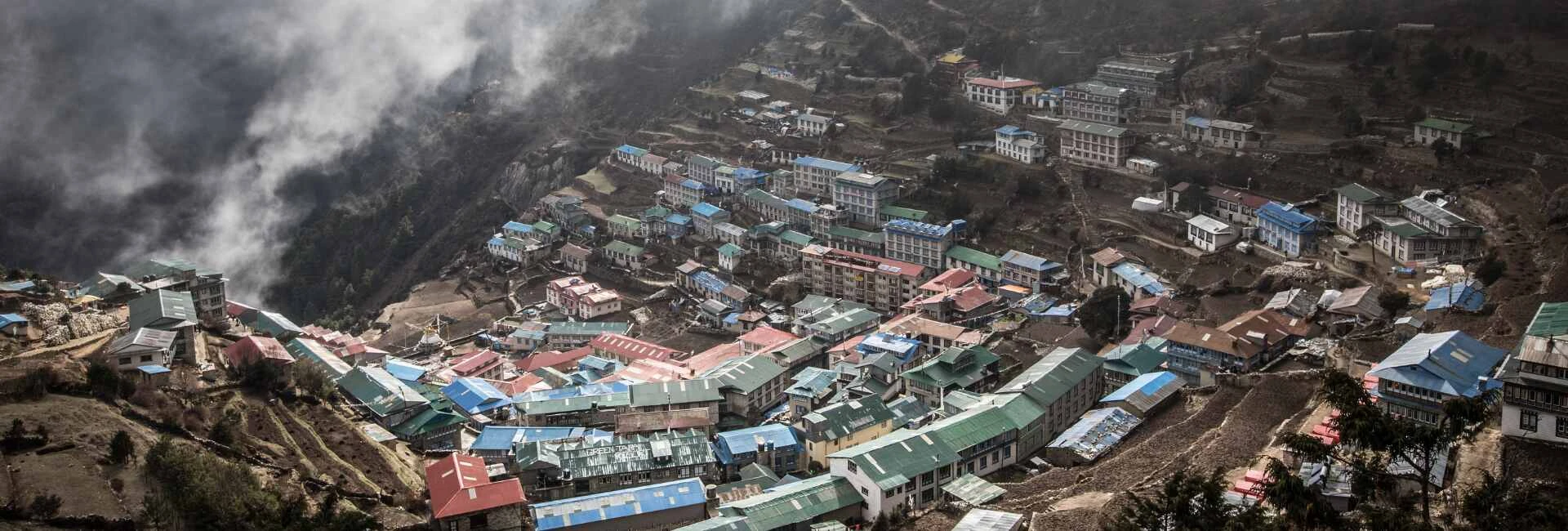
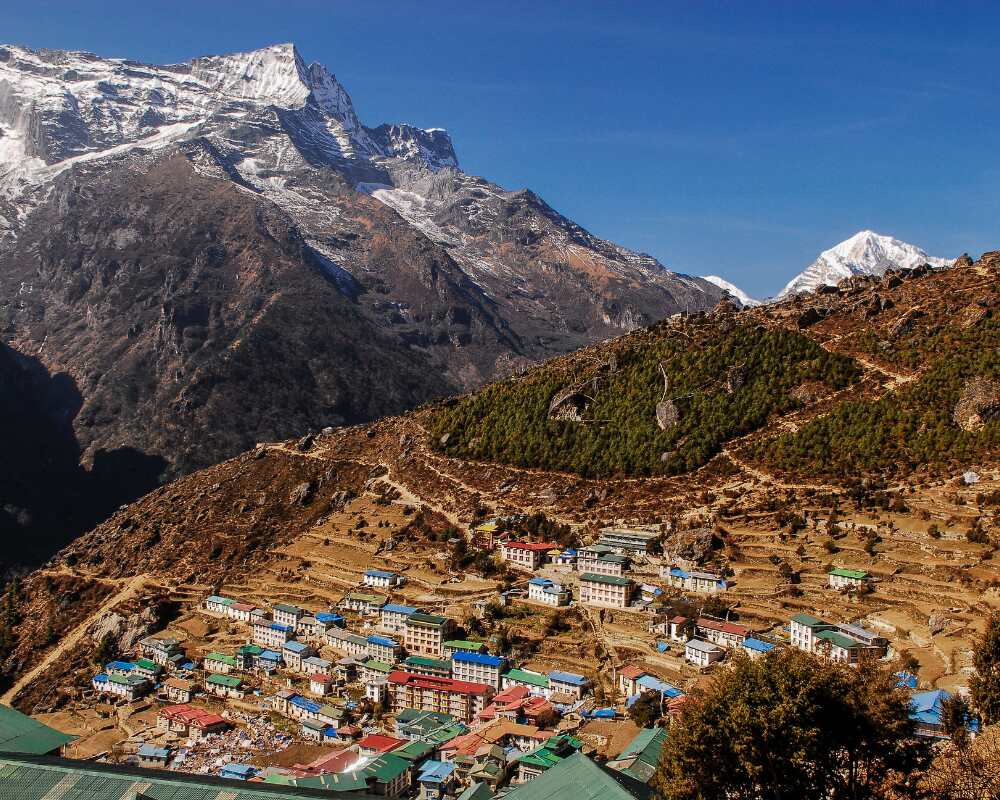
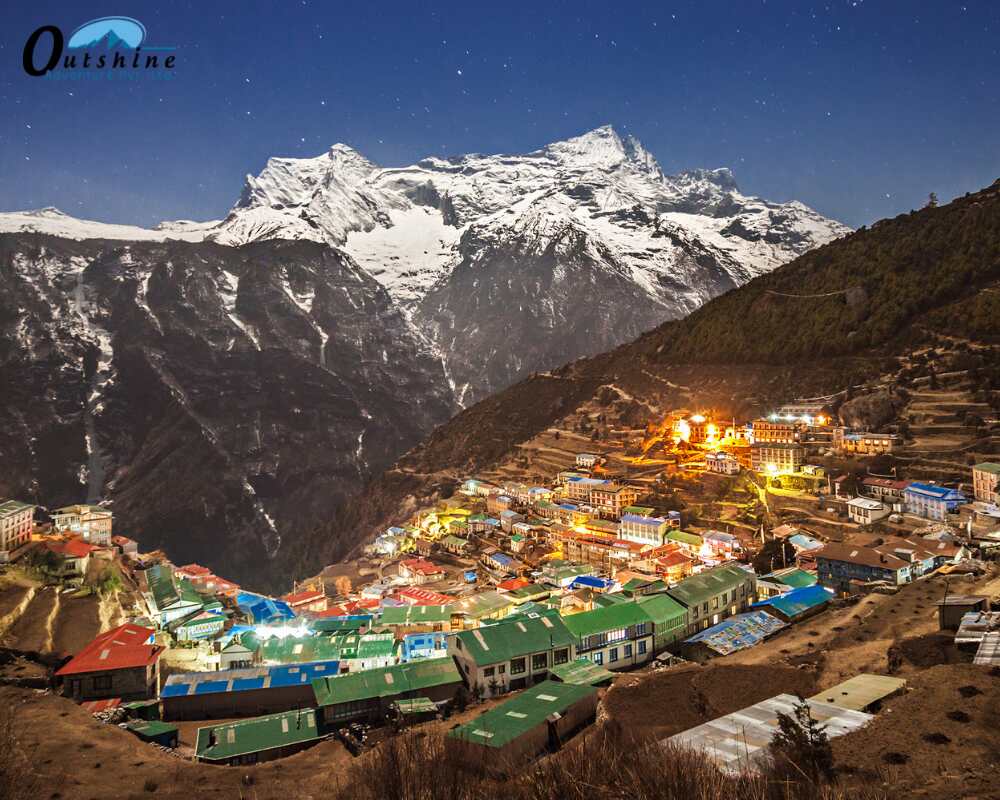
I still do it myself, honestly, even now, after more trips through this valley than I could accurately count. Namche sits inside a natural amphitheater, a horseshoe-shaped bowl carved into the hillside, houses stacked in tiers up both slopes like seats around a stage. Stone rooftops climb the curve in uneven rows, prayer flags strung between them, pine forest behind, and across the valley Kongde Ri standing as the view nearly every window in town seems to have been built to face.
Why the Shape Isn't an Accident
That shape isn't an accident. It's the entire reason Namche exists.
The bowl sheltered the settlement from the wind funneling down the valley. There was a dependable water source. And, most importantly for my ancestors, who built their lives around movement rather than farming alone, it sat exactly at the crossing point of two very different trade routes:
- Salt, wool, and livestock, coming down from Tibet over the Nangpa La pass, a route my great-grandfather's generation would have known on foot, in weather that would stop most modern trekkers cold.
- Grain, rice, and manufactured goods, coming up from the lower Khumbu and the markets of Kathmandu further still.
Namche sat at the meeting point of those two economies. The natural place where goods, currencies, and languages changed hands, long before a single foreign trekker had ever set foot on this trail.
That trading identity never really left. It just changed clothes. Where my grandfather's generation bartered salt for grain, today's Namche trades gear rental for summit dreams, bakery pastries for altitude comfort, satellite wifi for the simple ability to tell family back home you're okay. Same hillside. Same instinct for commerce. Different century.
Where the Sherpa People Actually Came From
I should explain something most trekkers never get told clearly: "Sherpa" isn't just an occupation, and it wasn't always the name of a people who lived in this valley at all.
My ancestors migrated into the Khumbu from the Kham region of eastern Tibet, most historians place it somewhere around the 1500s, crossing the Nangpa La pass with their yaks and their Buddhist faith and settling in this high, narrow stretch of valley because it was one of the few places at this altitude where barley and potato could actually be grown, and where yak herding could sustain a community through the winter. The name Sherpa comes from the Tibetan words shar and pa, "people from the east," a literal description of where we'd come from, not a job title. It only became shorthand for "mountain guide" much later, once foreign expeditions arrived and needed local people who already knew how to move safely at altitude, and Sherpas turned out to be extraordinarily good at exactly that.
That history matters here specifically because Namche became the administrative and religious center of that migration almost immediately. It's where trade consolidated, where the biggest gompa in the lower valley eventually stood, and where Sherpa identity as a distinct Himalayan culture, separate from the Tibetan Buddhism it grew out of, but never fully separate from it either, really took shape over the following centuries. Everything else in this piece, the market, the museum, the whole rhythm of the town, sits on top of that five-hundred-year foundation.
Getting Around Namche on Foot
Walking the town itself takes some getting used to, physically. There's no flat ground anywhere inside Namche's boundaries; every path is stone stairs or sloped cobbled lane, switching back on itself as it climbs the bowl. Lodges sit at different elevations within the same small town, so walking from your guesthouse to a bakery for breakfast can leave you more winded than you'd expect this early in a trek. I've had clients notice this before the acclimatization day even starts. Namche itself is a small, gentle warning of what altitude does to ordinary movement, stairs included.
The main square sits roughly at the center of the bowl. Gear shops, bakeries, pharmacies, ATMs, guesthouses, the market itself: nearly everything radiates outward and upward from that one point, which is part of why the town never feels as large as its population suggests. Dense, compact, built entirely around foot traffic. It always has been.
Older buildings here are stacked stone with timber framing, roofs once covered in wooden shingles weighted down with stones, before corrugated tin became the practical, weatherproof standard. Many of the newer guesthouses have simply grown upward, adding floors to keep pace with trekking demand rather than expanding outward into a hillside that leaves no room to expand into. Climb high enough on either side of the bowl and you'll find older family homes, quieter, further from the main path, where daily life still looks close to what it did before trekking arrived here in any real numbers.
The Saturday Market: Still the Real Thing
Older Than the Trekking Trade
Time your itinerary around a Saturday if you can. The weekly market is the oldest continuous tradition in this town, older, by generations, than any lodge or bakery lining the main path, and it has almost nothing to do with trekking tourism.
It existed long before any of us in the Khumbu were guiding foreigners for a living. It'll carry on, in some form, long after trekking tourism eventually changes shape again, the way everything here does.
Who Comes, and From Where
Before dawn, before most trekkers have even stirred in their sleeping bags, people start arriving:
- Down from Khumjung and Khunde, on the ridge above town, carrying goods on their backs the way they always have.
- Up from the lower Solukhumbu villages, a longer, harder walk than most visitors realize.
- Across from the Tibetan side, a smaller number of traders still making that old journey, echoing the salt-and-wool exchange my grandmother used to describe.
By mid-morning, the square is full. Vegetables piled in uneven mounds. Dried goods wrapped in cloth. Yak meat hung and sold in cuts. Cheap imported clothing, kitchenware, thermoses, plastic sandals. Produce carried up in the same style of woven doko basket people have used here longer than anyone can date precisely.
Locals do their actual weekly shopping, haggling in Sherpa and Nepali, catching up on news from a village an entire valley away. This isn't staged for visitors with cameras. It's simply how this part of the world still restocks itself.
What I tell people, every time: walk through it slowly. Buy something small even if you don't need it. Just watch, without rushing to the next thing on the itinerary. You'll see more of how the Khumbu actually functions in that one crowded hour than in a week of trekking past villages from the outside.
It's noisy in a way the rest of the trek generally isn't. Crowded, elbow to elbow in places. It smells like the mountains and woodsmoke and yak butter tea all at once, one of the very few places left on this route where the old trading-post version of Namche moves underneath the modern trekking-hub version, both operating in the same square at the same time.
The timing says something too, if you think about it. Saturday has been market day for as long as anyone in my family can trace back, and trekking itineraries through the Khumbu still bend around it in small ways, whether operators plan for it deliberately or not. Porters and lodge owners restock for the week ahead on this day. Prices on certain staples shift depending on what's come down from Tibet, what's climbed up from lower villages.
Not a Show Staged for Visitors
I've seen trekkers assume the market exists for them, some kind of cultural performance timed to tourist season. It genuinely isn't. It would happen on exactly this schedule whether a single foreigner walked through it or not, the same as it did decades before trekking tourism existed at all. That's precisely what makes it worth seeing. You're not watching a recreation. You're watching the thing itself, still running on its original schedule.
Beyond produce and household goods, look for the informal stalls selling items that don't show up in the gear shops along the tourist path: hand-woven wool, prayer beads, incense, small religious objects meant for local households rather than souvenirs. If you're curious, ask. Most sellers are used to trekkers wandering through by now, and a genuine question usually gets a genuine answer, not a sales pitch. That's been my experience for years, and it's part of why I still walk the market myself even when I'm not technically working.
Why Your Rest Day Here Isn't Optional
The Principle: Climb High, Sleep Low
This is the part I most want trekkers to actually understand, not just schedule around.
Namche sits at roughly 3,440 meters, and it's where nearly every reputable itinerary builds in a mandatory acclimatization day. I've had clients ask, more than once, whether they can skip it, push on early because they're feeling strong that morning, save a day off the total trip. I tell them the same thing every time, no exceptions: this isn't a flexible sightseeing day you can trade away for convenience. It's the day your body physiologically needs to catch up to the altitude you've already gained.
Climb high, sleep low.
That's the whole principle, stated simply. Living it is harder than saying it.
Your body adapts to reduced oxygen far more effectively when you gain altitude actively during the day, walking, exerting yourself, forcing lungs and blood to work, but return to sleep at a lower elevation than the highest point you reached. Sleep too high, too fast, without that daily cycle of stress and recovery, and you've opened the door to serious altitude sickness. Namche is usually the first place on this entire trek where that risk stops being an abstract line in a safety briefing and starts becoming something trekkers can actually feel in their own bodies.
If you want the mechanics behind why this matters, and the specific warning signs to watch for in yourself and your trekking companions, it's genuinely worth reading our detailed guide on high altitude sickness before you arrive. Better to know exactly what you're watching for before you need that knowledge, not while trying to remember it under pressure at altitude.
In practice, the "rest day" isn't restful at all. It's a working day for your lungs and blood, dressed up as leisure. The standard structure: a half-day hike up to somewhere noticeably higher, then back down to sleep in Namche again that same night, at the same lower elevation you started from.
Why Namche, Specifically, Is the Right Place for This
People sometimes ask why the acclimatization day sits here and not somewhere else on the route. There's a real answer, and it comes down to elevation math as much as convenience.
Lukla sits at around 2,860 meters. By the time you reach Namche, two days later, you're already at roughly 3,440 meters, a gain of about 580 meters in two days of walking. That's right at the edge of what most trekking medicine guidelines consider a safe daily gain once you're above 3,000 meters, and it's exactly the point where a body that's felt completely fine so far can start to fall behind without an extra day to catch up. Push straight on from here without pausing, and the altitude keeps climbing faster than most people's bodies can genuinely keep pace with, symptoms don't always show up immediately, which is part of what makes this stretch of the trail deceptive.
Namche also happens to sit in the one spot on the route with enough elevation range around it to make a proper acclimatization hike possible without a long, exhausting day. Everest View Hotel and Khumjung both let you gain several hundred meters of genuine altitude exposure and come back down within a few hours, rather than committing to a full trekking day the way you would higher up the trail, where the villages sit further apart and the terrain gets rougher. Few other stops on the entire circuit offer that same combination: a comfortable, well-supplied base town with a real, walkable high point directly above it.
There's also a practical safety layer that's easy to overlook. Namche is close to Khunde, home to the Kunde Hospital, originally built with support from Sir Edmund Hillary's foundation in the 1960s and still one of the more capable medical posts in the entire region. It's not a coincidence that the town best positioned for a controlled altitude test also sits near one of the few places in the Khumbu with real medical infrastructure if something does go wrong. Combine the elevation profile, the terrain, and that safety net, and Namche isn't just a convenient place to schedule a rest day. It's genuinely the best-positioned town on the entire trail for the job.
Two Ways to Spend the Day
Option one: Everest View Hotel.
Roughly 3,880 meters, a steady and fairly demanding climb through rhododendron forest and open switchbacks. On a clear morning (mornings here are far more reliable than afternoons, when cloud tends to roll up the valley) this is where many trekkers catch their first real, unmistakable glimpse of Everest itself, alongside Ama Dablam's sharp ridge and the broad shoulder of Lhotse. I won't pretend the view isn't part of the appeal. It is, and it's a good one. But the altitude gain is the actual point. Go up, breathe harder than the distance alone would suggest, sit and let your body register the thinner air, have a tea if the hotel's open, then come back down.
Option two: Khumjung.
A gentler route through pine forest to a village that feels like Namche's quieter, older cousin. No market bustle, no rows of gear shops, just stone field walls, potato terraces, a slower pace. Khumjung has its own monastery, home to what local tradition holds is a genuine yeti scalp relic, kept behind glass and shown to visitors for a small donation. Make of that what you will, it's part of the living folklore of this region regardless. It's also where Sir Edmund Hillary funded and helped build a school after the 1953 Everest ascent, one of several lasting projects that grew out of his long relationship with this region. For me, Khumjung has always felt like a preserved version of the Khumbu, close enough to reach on a single acclimatization walk, far enough removed to show something genuinely different from the town you just left.
Either route does the same physiological job. Choose based on what you want out of the day: a dramatic first look at Everest, or a quieter cultural detour through a working village.
A Few Rules I Give Every Group
A few things I tell every group before this day, because they matter more than people expect:
- Start early, before midday cloud typically rolls in and swallows the views. Mornings are clearer, especially earlier in the season.
- Go slower than you think you need to. This isn't a day to prove fitness; pushing hard somewhat defeats the physiological purpose.
- Drink more water than feels necessary. Dehydration compounds altitude symptoms, and it's easy to under-drink up here without noticing.
- Say something if you feel off. A mild headache or unusual fatigue is common and not automatically alarming, but pattern matters more than any single symptom, so mention it to your guide rather than quietly pushing through.
And the rest day doesn't have to mean only the hike. Once you're back in town, wander it properly, without the pressure of reaching the next lodge before dark. That's when the bakeries earn their reputation. Several in Namche turn out genuinely good cinnamon rolls and apple pie, a small, slightly surreal comfort at 3,440 meters that most trekkers don't expect and remember fondly afterward. It's also a fair window to sort out any last gear needs before heading into colder, more expensive territory. Namche has the widest selection of trekking shops on the entire route, genuine and counterfeit gear sitting side by side on the same shelves, and prices only climb from here, which is worth knowing if you're tracking spend against our full Everest Base Camp Trek Cost Guide.
Sherpa Culture Museum
What's Inside
Weather turns, or you just want a lower-effort way to spend part of the afternoon? The Sherpa Culture Museum sits on a ridge above town, worth the short uphill walk even in good weather, let alone bad.
It covers Everest mountaineering history specifically from the Sherpa side, a perspective that doesn't always get equal billing in expedition accounts written by foreign climbers. Inside, you'll find:
- A room of climbing equipment and artifacts spanning several decades of expeditions, from early wooden-shafted ice axes and canvas tents to more recent gear.
- Displays on traditional Sherpa clothing and household life, before roads, electricity, and trekking tourism arrived.
- Religious practices tied to Tibetan Buddhism as it's lived here specifically, not as a generalized version.
- Photographs documenting how this region has visibly changed, decade by decade, since the 1950s.
For me, walking through it feels a little like seeing my own family's history laid out with formal museum labels attached, the specific tools my uncles actually used, the customs my grandmother practiced without ever thinking of them as noteworthy, now presented as documented cultural heritage rather than the unremarkable texture of daily life.
The View, and What Else Is Up There
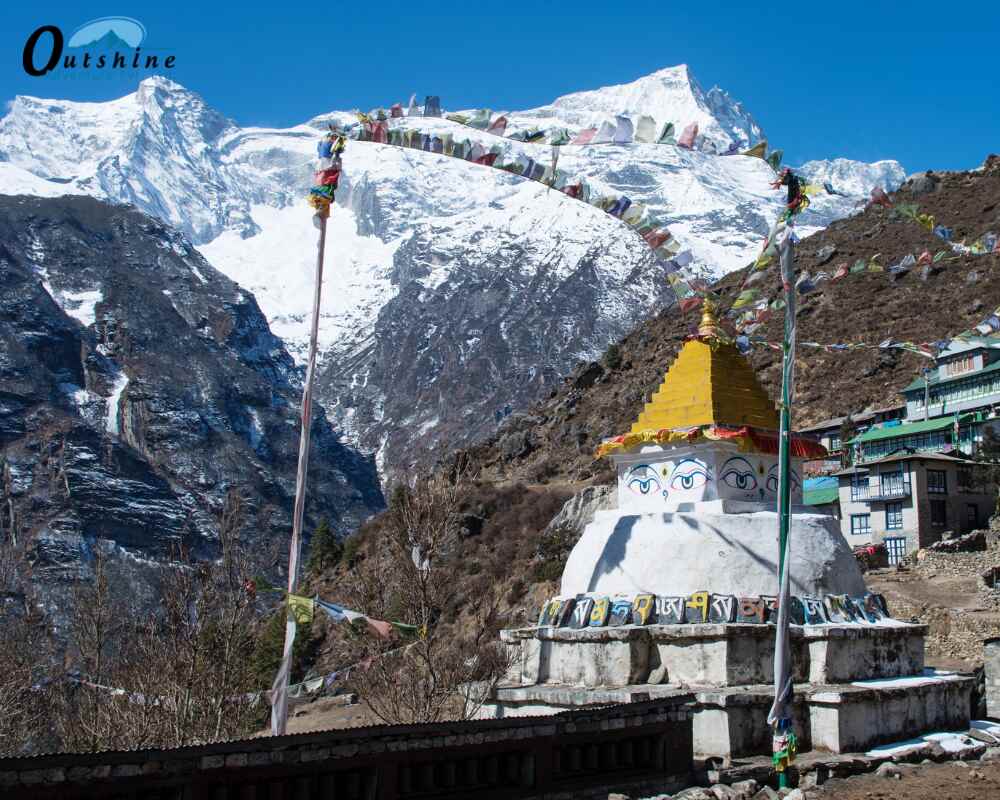
The building sits at a small vantage point worth the walk on its own merits, exhibits aside. From the museum grounds you get one of the better unobstructed views of Namche laid out in its full horseshoe shape below, along with a clear look toward Thamserku and Kongde Ri, cloud cover permitting. I sometimes send trekkers up there just for that view, and they generally come back saying it was worth it regardless of what they thought of the exhibits.
There's a smaller, often-overlooked exhibit nearby covering the region's natural environment, the flora and fauna of Sagarmatha National Park, including the snow leopards, musk deer, and Himalayan tahr that share this landscape, rarely seen but genuinely present in the surrounding forest and cliffs. A useful complement to the human history in the main building, and it takes only a few extra minutes. Between the two, you leave with a reasonably complete picture of both the people and the place, more than most rest-day activities on this trek manage in a single stop.
Where the Trek Actually Begins to Feel Real
The First Signs of Altitude
I tell most of my groups some version of the same thing once we've settled into Namche for the night: everything before this point was warm-up.
Namche is where the trek genuinely starts to feel real. And for the great majority of trekkers, it's also where altitude starts to feel real for the first time, often in ways they weren't fully expecting, whatever they'd read beforehand.
A slight headache that won't quite go away. Shortness of breath on stone stairs that wouldn't have bothered them a few days earlier. A night of unexpectedly restless sleep. That's usually the first appearance of altitude on this route, and it's not automatically a bad sign; it's your body registering, honestly and directly, that you've crossed a real physiological threshold. It's exactly why the structured rest day exists here, rather than being pushed higher up the trail where the margin for error narrows considerably.
The Hinge Point of the Itinerary
Namche is, in a very literal sense, the hinge point of the whole itinerary. Everything before it is about steadily reaching altitude. Everything after it is about carefully managing it.
That shift changes how you should think about the rest of your trek, mentally as much as logistically. The pace slows. Distances that would register as nothing at sea level start demanding real, deliberate effort. The days ahead, through Tengboche and its monastery, on to Dingboche, then Lobuche, and eventually Everest Base Camp itself, all depend directly on the adjustment your body begins making right here, over these two nights. For the full route breakdown and how each stage builds on the pattern that starts in Namche, our complete Everest Base Camp trek guide walks through the entire itinerary stage by stage in more detail than I can fit into one piece, including our Budget Everest Base Camp Trek itinerary, for travelers who want the same route and support on a leaner package.
I've noticed, over years of guiding, that Namche marks a psychological shift as much as a physical one. Up to this point, most trekkers move at something close to their normal pace, chatting freely, taking the walking somewhat for granted. After Namche, conversation on the trail tends to get quieter, spaced out, punctuated by more frequent water breaks and a noticeably slower cadence uphill. That's not a bad thing. It's simply the trek settling into the rhythm it'll hold for the rest of the way to base camp. Trekkers who expect Namche to be a brief overnight stop, rather than the reset it actually is, tend to struggle more in the days that follow. Mostly because they never mentally downshifted the way their body needed them to.
The Last Stop With Full Infrastructure
It's worth saying plainly, too: Namche is the last point on the trail with what most people would recognize as full modern infrastructure. Reliable wifi in most guesthouses. ATMs. A proper pharmacy. Bakeries with genuine variety. Shops broad enough to replace nearly any piece of gear you've forgotten or damaged on the walk in. Above Namche, all of that thins out steadily with every day of elevation gained. I don't say that as a warning, more as one more reason the rest day here is worth using well rather than rushing through. It's your last real chance for a genuinely comfortable, well-stocked stop before the trail gets simpler, colder, and considerably more remote.
Home Ground
For me, though, Namche has always been more than a turning point on an altitude chart or a line item in an itinerary. It's home ground: the town my family traded through for generations before trekking tourism existed, the market my relatives still walk down to on Saturdays, the amphitheater of stacked stone rooftops that tells me I'm back in the Khumbu no matter how many times I've left this valley and returned to it. When I bring trekkers through, I'm not only managing an acclimatization schedule on a spreadsheet. I'm showing them the specific place that shaped how I understand these mountains in the first place, long before I ever thought of myself as a guide. You can read what past trekkers have said about that experience in our client reviews.
That's the spirit we build every trip around at Outshine Adventure: a trek through the Khumbu should feel guided by someone who belongs to it, not just someone who's memorized the trail, which is exactly why an expert Outshine guide like me leads you through Namche in person rather than leaving you to figure out its rhythms from a printed itinerary. It's the same philosophy behind how our company operates across every route we run, not just this one. If Everest isn't the only Himalayan trip on your mind, our other featured trips across Nepal follow the same idea: local guides, real routes, no shortcuts on acclimatization. Take the rest day seriously, even when you're feeling strong enough to want to skip it. Walk through the Saturday market if your itinerary allows it, and don't rush it. And while you're standing in that crowded square, look around: you're standing in a trading post that's been doing exactly this, in one form or another, for centuries. Long before any of us arrived, and long after most of us will have gone home.
.webp)