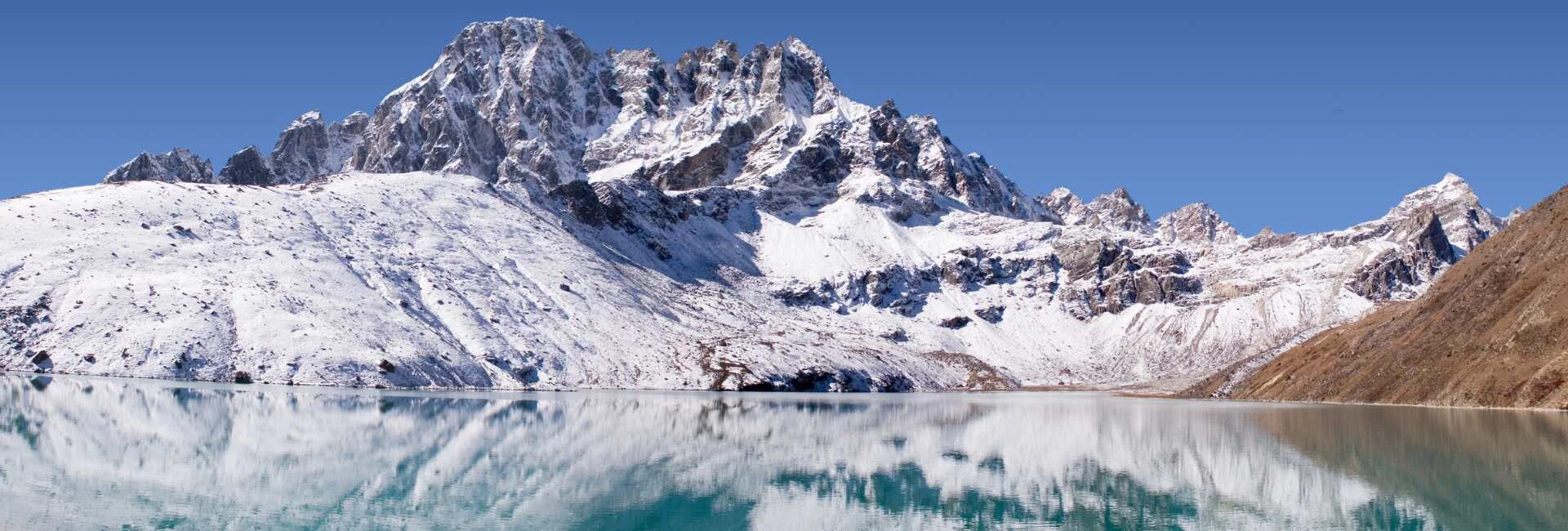
Most people who trek in Nepal end up on the Everest or Annapurna trails, sharing every lodge and viewpoint with hundreds of other walkers. The Dudh Pokhari trek is a different kind of trip. It leads to a high, sacred lake in Lamjung district, close to the Namun La pass, on an old Gurung trade route that once linked Lamjung with Manang.
The walk takes about nine days on the trail. You pass through forest and Gurung villages, camp under big skies, reach a lake that pilgrims have visited for generations and look across to Mt. Manaslu. It is a hard trek that suits fit, well-prepared walkers who want quiet. It is one of our off-the-beaten-path treks in Nepal, and our Dudh Pokhari trekking package page has the trip outline. Below we cover the route, itinerary, cost, permits and best time for 2027.
One clarification first: this guide is about the Lamjung lake. It is not the Dudh Pokhari at Gokyo or Dudhkunda in Solukhumbu.
What Is Dudh Pokhari? Location, Meaning and Why It Is Sacred
Where it is
Dudh Pokhari lies in Lamjung district in central Nepal, in the high country between the Annapurna and Manaslu regions. The Marsyangdi River flows through the same district on its way to the plains. The lake sits near the Namun La pass, which people on both sides used for centuries to cross between Lamjung and the Manang side.
In Nepali, dudh means milk and pokhari means pond or lake, so the name translates as Milk Lake. Published heights vary by source. We work with about 4,560 m and treat every altitude in this guide as approximate.
Cultural and religious importance
Hindus and Buddhists both hold the lake sacred. Every August, around the Janai Purnima full moon, pilgrims walk up to the water to make offerings. That regular traffic is the reason the footpaths here are well established, even though foreign trekkers are rare.
Local history adds another layer. A legend says the Tamu people, now known as Gurung, came into this area from Tibet through Namun Bhanjyang about three thousand years ago. The district is also called Tamuwan, and the old palace of the Tamu king is said to be visible even now. Khaling Rai communities also live in the area, so you meet more than one culture on the way.
We ask every trekker to treat the lake as a place of worship, not only a viewpoint. If you want to see more Gurung villages in this part of Nepal, look at our Ghalegaun Trek.
Dudh Pokhari in Lamjung vs Gokyo and Dudhkunda
Nepal has more than one lake with this name, and that confuses a lot of trekkers. The third Gokyo lake in the Everest region is often called Dudh Pokhari, and Dudhkunda is in Solukhumbu.
Those lakes are in a different region, with different access roads, permits and trails. If Gokyo is what you want, see our Everest Gokyo Trekking page. This trek goes to the Lamjung lake only.
Dudh Pokhari Trek Route and Itinerary
Our route starts from Besisahar and Ghale Gaon, climbs through Rabrachu and Thorju to Dudh Pokhari, crosses the Namun La pass, and comes down the Marsyangdi River valley to Khudi. Some other operators start from Siklis (Sikles) or walk the route in reverse, so itineraries you find elsewhere may look different from ours.
Day | Route | Overnight |
|---|---|---|
1 | Arrive in Kathmandu, airport pickup, transfer to hotel, briefing at our office | Hotel, Kathmandu |
2 | Guided sightseeing: Durbar Square, Swayambhunath, Boudhanath, Pashupatinath | Hotel, Kathmandu |
3 | Drive to Besisahar and Kapur Gaun, then walk to Ghale Gaon (2,016 m) | Ghale Gaon |
4 | Ghale Gaon to Rabrachu (3,100 m) | Tented camp |
5 | Rabrachu to Thorju (4,500 m) | Tented camp |
6 | Rest and acclimatization at Thorju, with Manaslu views | Tented camp |
7 | Early start to Dudh Pokhari (about 4,560 m), time at the lake | Tented camp |
8 | Cross Namun La pass via Dafe Kharka (4,000 m) | Tented camp |
9 | Forest walk down to Danaque (2,300 m) | Tented camp |
10 | Walk beside the Marsyangdi River to Ghermu | Tented camp |
11 | Walk to Khudi | Tented camp |
12 | Drive back to Kathmandu | Hotel, Kathmandu |
13 | Transfer to the airport for departure | None |
Altitudes are approximate. We may adjust days for weather, trail conditions and group pace. Our standard plan is 13 days from arrival to departure, with about nine days on the trail.
Days 1 to 3: Kathmandu and the road to Ghale Gaon. You spend the first two days in Kathmandu. We meet you at the airport, check your gear at our office on day 1, and on day 2 a guide takes you around the valley's main heritage sites. Day 3 is a long travel day. You drive to Besisahar and on to Kapur Gaun, then walk up to Ghale Gaon at 2,016 m, a first taste of village life in Lamjung.
Days 4 to 6: Up to Thorju. The trail leaves the villages behind and climbs through forest to Rabrachu at 3,100 m, a gain of about 1,100 m from Ghale Gaon. The next day is the steepest of the trek. You climb about 1,400 m to Thorju at 4,500 m, where Mt. Manaslu comes into view. We take this day slowly and then rest at Thorju on day 6, because the body needs time at this height.
Day 7: Dudh Pokhari. You set out early for the lake, which sits at roughly the same height as Thorju. Plan to spend time at the water, watch the pilgrims if you are there at a festival time, and stay quiet and respectful. You sleep in camp again.
Days 8 to 11: Over Namun La and down the Marsyangdi. On day 8 you cross the Namun La pass by way of Dafe Kharka at 4,000 m. The descent is long. On day 9 you walk through forest down to Danaque at 2,300 m, which is about 1,700 m below Dafe Kharka. Days 10 and 11 follow the Marsyangdi River to Ghermu and then Khudi, the same valley the Annapurna Circuit uses, with waterfalls along the way.
Days 12 and 13: Back to Kathmandu. A drive from Khudi returns you to the capital on day 12, and on day 13 we take you to the airport for your flight home.
Highlights along the way
- Forest and village trails: You walk through forest above Gurung villages, starting from Ghale Gaon.
- A sacred lake: Dudh Pokhari is the centrepiece, a place of pilgrimage for Hindus and Buddhists.
- Mountain views: From Thorju you can look across to Mt. Manaslu and other snow peaks. We cannot promise weather or visibility.
- River and waterfalls: The descent follows the Marsyangdi River, with waterfalls along the way.
Variations
- Reverse direction: Some groups walk the route the other way, which changes how quickly you gain altitude. Ask us if you prefer this.
- Shorter or longer plans: Operators run this trek in roughly 9 to 14 days. We can add rest or buffer days to our 13-day plan.
- Combining treks: Some travellers add an Annapurna or Manaslu-region trek, such as the Annapurna Circuit Trek or the Manaslu Circuit Trek.
- Comparing routes: Weighing up the big circuits? Read our Manaslu Circuit vs Annapurna Circuit comparison.
Difficulty, Altitude and Fitness: Is This Trek for You?
We rate this trek very strenuous. Most days involve several hours of steady walking, the trail is remote, and the highest camps sit around 4,500 m, where nights are cold and sleep is often light. There are few teahouses, so most nights above Ghale Gaon are in tented camps. Our crew pitches the tents and cooks, but you still walk every step yourself.
Acclimatization. Altitude affects everyone, whatever their fitness. The climb from Rabrachu to Thorju is steep, so we go slowly and build in a rest day at Thorju. Common warning signs are a headache that does not clear, nausea, poor sleep and unusual tiredness. Our guides check every trekker each day and will stop the group or descend if needed. Read our guide to high altitude sickness before you travel.
Training. Start at least 8 to 12 weeks before departure. Mix cardio, such as running, cycling or stair climbing, with hill walks on consecutive days while carrying a loaded daypack. Wear your boots in well before you fly.
Weather. Expect cold nights, strong wind and possible snow near the pass, even in the main seasons. A clear morning can turn to cloud by afternoon.
Who should think twice. We do not recommend this trek for anyone with no hiking experience or no experience above 3,000 m, or anyone with a heart or lung condition and no medical clearance. Tell us your history and we will say honestly whether this trek or a gentler one fits.
Dudh Pokhari Trek Cost in 2026-2027
We quote the Dudh Pokhari trek cost for each departure, because several things move the price: the size of your group, the category of hotel in Kathmandu, the type of transport, the number of porters and crew, and any change to the itinerary. A camping trek also needs more staff and equipment than a lodge trek, which is part of the cost. For a quote on your dates and group size, send us an inquiry.
Included in our package:
- All ground transport, including airport pickup and drop
- Breakfast, lunch and dinner during the trek
- Lodge or tented camp accommodation on the trail, and hotel nights in Kathmandu
- A fluent English-speaking guide with a government licence
- Food, transport, accommodation, salary and equipment for guides and porters
- Trekking permit, TIMS card, monastery fees and entry fees
- Travel insurance for our staff
- Down sleeping bag and down jacket if you do not have your own
Not included:
- Lunch and dinner in Kathmandu and Pokhara
- Drinks such as beer, soft drinks and alcohol, and sweets such as chocolate
- Your own travel and rescue insurance, which is essential and should cover helicopter evacuation
- Nepal entry visa
- Personal trekking equipment other than the items above, and tips
Ways to save: travel in a small group, book early, bring your own gear and stay flexible on dates. We will not cut safety items such as guide quality, camping equipment or insurance to lower the price.
Best Time to Trek to Dudh Pokhari
Spring and autumn are the two seasons we recommend, and each has its own feel.
Spring (March-May). March is cold, and snow is possible near the pass. April and May bring warmer days, and flowers may bloom in the forests at lower elevations. Afternoon haze and cloud are common, so views are often best early in the day.
Autumn (September-November). September can still bring monsoon showers. October usually offers the most stable weather, and November is colder with clearer air.
Monsoon (June-August). Rain, leeches, slippery trails and landslide risk make the trek difficult. The exception is the Janai Purnima pilgrimage in August, when local pilgrims visit the lake. We do not recommend regular treks then.
Winter (December-February). Snow can block the high sections and the pass may be impassable. We do not recommend winter departures.
Not sure which month suits you? See our Nepal trekking information guide.
How to Get There and What to Pack
From Kathmandu you drive to Besisahar, continue to Kapur Gaun, and walk to Ghale Gaon (2,016 m). The drive takes up much of day 3. Road quality changes with the season and recent weather, so we check conditions before each departure.
Permit process. We arrange your trekking permit and TIMS card through our registered agency. You only need to send your passport details before you travel. The Annapurna Conservation Area is managed by NTNC, and the Nepal Tourism Board lists current visitor rules.
Short packing list for cold, high camps: For the full list, see our trekking equipment guide.
- Broken-in trekking boots and warm socks
- Layers: base layer, fleece, down jacket, waterproof shell
- Warm hat, gloves, sun hat and sunglasses
- Sleeping bag rated for well below freezing (we provide a down sleeping bag and jacket if you do not have one)
- Trekking poles, headlamp, water bottles and purification
- Sunscreen, lip balm and a personal first-aid kit
Is the Dudh Pokhari Trek Safe and Open Now?
Nepal saw serious flash floods in 2026: in the Rasuwa/Trishuli corridor in August and in the Budhigandaki valley in Gorkha in October. Lamjung lies next to the Manaslu region, so we do not assume anything about local trail or road conditions.
Our answer on safety We operate this trek subject to weather and road updates, and our team checks conditions on the route before every departure. No high-altitude trek is risk-free, and we never claim otherwise. Contact us for the latest status of the Besisahar, Marsyangdi valley and Ghale Gaon sections before you book.
How we manage risk:
- Daily monitoring: We track weather, road and trail reports through local contacts and our guides.
- Guide reports: Guides on or near the route report conditions before each group departs.
- Emergency protocols: Each group has a communication plan, a first-aid kit and a clear decision path for descent. Our emergency support line is open 24/7 on +977 9851126351.
- Evacuation support: We coordinate helicopter evacuation when needed, through your insurer. Make sure your policy covers it.
If conditions are not safe, we will tell you and propose a change. For general advice, read our Nepal Travel Safety & Security Guide.
Nepal Trekking Packages: Book a Dudh Pokhari Trek with Confidence
Outshine Adventure Pvt. Ltd. is a Nepal-based company, government registered (no. 77339/067/068), holding Tourism License 1223/067 and associated with TAAN. Our Nepal trekking packages include:
- Private treks: your own guide, your pace, your dates.
- Small-group departures: shared costs with a limited group size. Check our upcoming trips page for dates.
- Custom itineraries: reverse routes, extra rest days or combinations with other regions. Start with our Tailor-made Trip form.
Our standards: licensed local guides, tested camping gear and freshly cooked meals, with guides and porters who are fed, housed, insured and paid properly.
What our trekkers say:
"we are delighted with everything: the treatment received by Gokul and his team" - Eva Santamaria, Spain, Manaslu Circuit, October 2026 (TripAdvisor)
"Gokul and Outshine Adventure team organized everything perfectly" - John P, United States, Makalu Base Camp Trek, May 2026 (Trustpilot)
Read more traveller feedback on our client reviews page.
Get a Custom Dudh Pokhari Trek Plan
Responsible Trekking and Supporting Local Communities
Dudh Pokhari is a living pilgrimage site, so how you behave there matters. We follow a few simple rules, in line with our responsible tourism commitments:
- Respect the lake: no swimming, no littering and modest dress and behaviour.
- Carry out your waste: we pack out all non-biodegradable rubbish.
- Hire and buy locally: we use local guides and porters and buy supplies from local villages where possible.
- Be a good guest: ask before taking photos of people or ceremonies, and avoid loud noise at the lake.
We also set aside 10% of our earnings for Junkiri Nepal, a nonprofit that provides health care, clothing and education to people in need.
Plan Your Dudh Pokhari Trek With Us
A quiet sacred lake, village trails and a high pass: this trek is for people who are happy to work for their views. It is very strenuous, and we would rather tell you that now than on day five.
If you are planning spring 2027 or autumn 2027, tell us your dates, experience and group size, and we will go through the route, current conditions and cost with you. Call +977 1 4701444, message Gokul on WhatsApp at +977 9851126351, or use our contact page. You can also browse all our Nepal trekking packages.
Get a Custom Dudh Pokhari Trek Plan
Frequently Asked Questions
Where is Dudh Pokhari trek?
Dudh Pokhari is a sacred lake in Lamjung district, Nepal, between the Annapurna and Manaslu regions. It lies near the Namun La pass on an old Gurung trade route linking Lamjung and Manang. Our route starts from Besisahar and Ghale Gaon. It is not the Gokyo or Dudhkunda lake in the Everest region.
How difficult is the Dudh Pokhari trek?
The Dudh Pokhari trek is very strenuous. Expect remote trails, long walking days, cold tented camps and a high pass. You need good fitness, time to acclimatize and ideally some previous high-altitude experience. We review every trekker's background before booking and give an honest recommendation, including gentler alternatives.
How many days does it take?
Our standard Dudh Pokhari itinerary is 13 days from arrival in Kathmandu to departure, with about nine days on the trail. Other operators run it in roughly 9 to 14 days, depending on route and rest days. We can adjust the plan to your schedule.
What is the Dudh Pokhari trek cost?
We quote the Dudh Pokhari trek cost for each departure, because it depends on group size, hotel category, transport and itinerary changes. Our price includes guide, porters, camping crew, meals on trek, permits, TIMS and ground transport. Flights, visa, travel insurance, drinks and tips are extra. Send us your dates for a quote.
What is the best time for the Dudh Pokhari trek?
Spring (March-May) and autumn (September-November) are the best seasons. October usually has the most stable weather, and spring brings warmer days. Monsoon brings rain, leeches and landslide risk, and winter snow can block the high sections. Mountain weather can still change fast.
What permits do I need?
You need an ACAP permit and a TIMS card, and you must trek with a licensed guide through a registered agency. We arrange all permits and include them in the package price. Fees are set by the authorities and change, so we confirm current amounts when we send your quote.
Is the Dudh Pokhari trek open after the 2026 floods?
Flash floods hit the Rasuwa/Trishuli corridor in August 2026 and the Budhigandaki valley in Gorkha in October 2026. We check roads and trails around Besisahar, the Marsyangdi valley and Ghale Gaon before every departure and will tell you of any change. Contact us for the latest status before you book.
Is it the same as Dudh Pokhari at Gokyo?
No. The third Gokyo lake and Dudhkunda in Solukhumbu share similar names but are in the Everest region. Dudh Pokhari in Lamjung is near Namun La, between the Annapurna and Manaslu regions. Permits, access, difficulty and scenery differ, so check the district before you book.