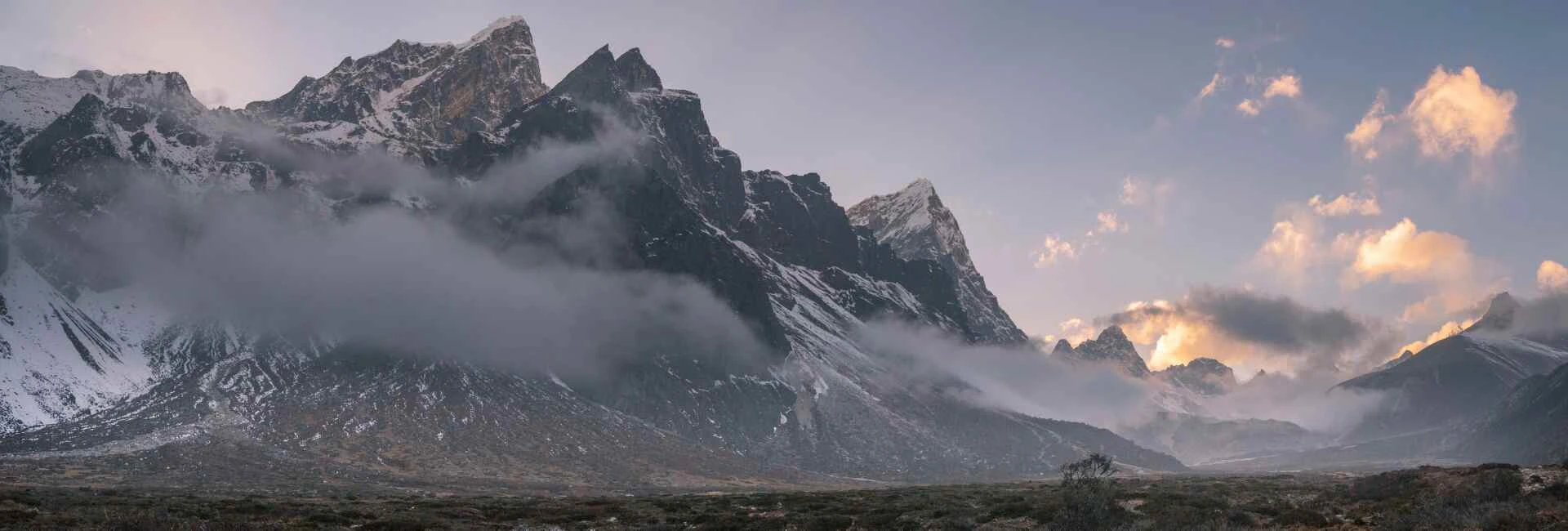
Somewhere around day five or six of the Everest Base Camp trek, every itinerary forces the same pause. One rest day at Namche Bazaar (3,440 m) isn't enough on its own, so before trekkers push past 4,400 meters toward Lobuche and Gorak Shep, the body gets one more mandatory break. That break happens in one of two villages sitting almost side by side: Dingboche or Pheriche.
They're roughly 30 to 40 minutes apart on flat ground. They do the exact same physiological job. And yet trekkers who've stayed in both describe them as genuinely different places, one brighter and busier, one quieter and colder. That contrast is what makes this comparison worth writing, and worth reading before you book.
Quick Answer
- Dingboche is the more popular choice on the way up: slightly higher, sunnier, busier, and home to the Nangkartshang Peak side hike, the best acclimatization climb on this stretch of trail.
- Pheriche is the quieter option: a touch lower, windier, smaller, and the location of the Himalayan Rescue Association clinic, the oldest and most important medical post above Namche Bazaar.
- Most itineraries route trekkers through Dingboche going up and Pheriche coming down, so the honest answer to "which one should I pick" is usually: both, just in different directions.
Meet the Two Villages
Dingboche
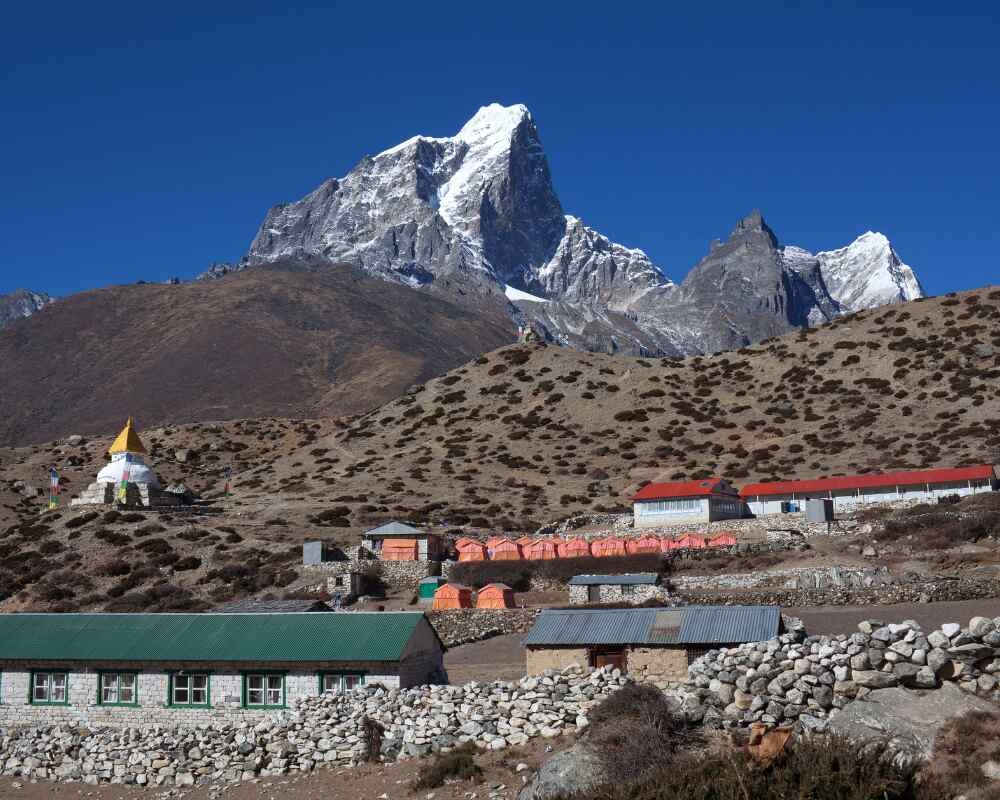
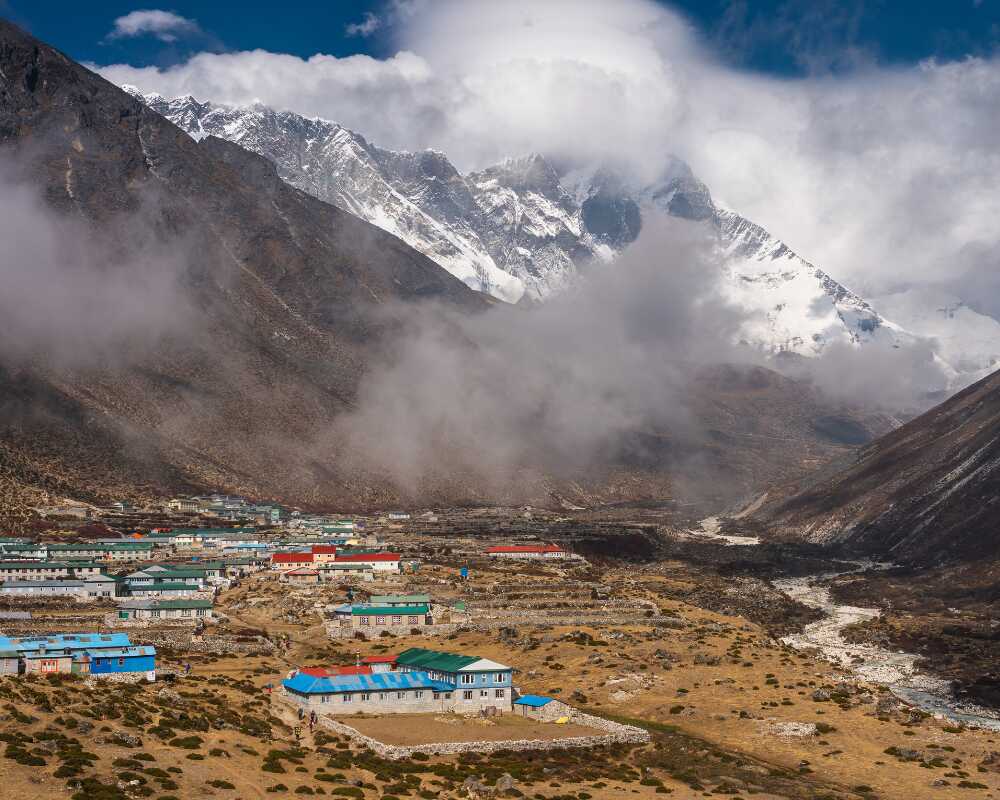
Dingboche is a Sherpa settlement sitting at 4,410 meters in the open, sun-facing Imja Valley, encircled by stone-walled potato fields and framed by some of the most photographed peaks in the Khumbu: Ama Dablam, Lhotse, and Island Peak. The valley is wide enough that sunlight reaches the village for most of the day, which gives Dingboche a noticeably warmer, brighter feel than its neighbor just down the trail. It's also the busier of the two acclimatization stops. More teahouses line the main path, a wider range of food is on offer including a bakery or two, and the dining halls stay lively well into the evening as trekking groups pass through. What really sets Dingboche apart, though, is what sits just above it: the Nangkartshang Peak hike, a demanding but rewarding climb to roughly 5,083 meters that delivers some of the best panoramic views on the entire route. Because of that combination, an open valley, strong side hike, and lively village atmosphere, most standard EBC itineraries route trekkers through Dingboche for the second acclimatization night on the way up, right before the trail pushes higher toward Lobuche.
Pheriche
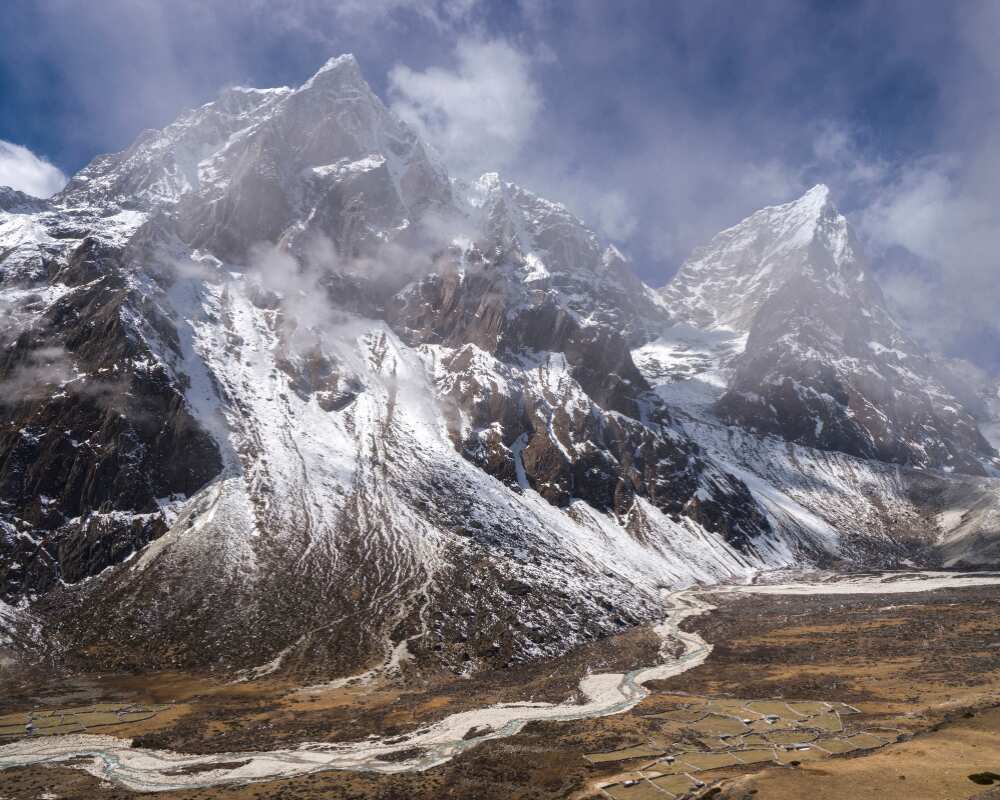
Pheriche sits just a short walk from Dingboche, at 4,371 meters, but the setting couldn't feel more different. It occupies a narrower, flatter basin that channels wind straight down off the surrounding ridgelines, so afternoons here turn sharp and cold even though the village sits marginally lower in elevation. The atmosphere matches the landscape: fewer teahouses, simpler food, and a noticeably quieter pace than Dingboche's busier lanes. What Pheriche lacks in liveliness, it makes up for in one crucial way, it's home to the Himalayan Rescue Association clinic, the oldest and most established trailside medical post in the entire Khumbu region, staffed by volunteer doctors who run free daily talks on altitude sickness throughout the trekking season. That combination of a quieter setting and serious medical infrastructure is exactly why most itineraries save Pheriche for the descent, giving trekkers a calmer place to recover after the demanding push to Kala Patthar and Everest Base Camp, with expert help close by if anyone needs it.
Dingboche vs Pheriche: The Core Comparison
| Factor | Dingboche | Pheriche |
|---|---|---|
| Altitude | 4,410 m (14,468 ft) | 4,371 m (14,340 ft) |
| Distance apart | 3 to 4 km, 30 to 40 minutes on flat ground | Same |
| Valley type | Open, sun-facing Imja Valley | Narrower, wind-funneled Khumbu Khola valley |
| Weather feel | Warmer by day, better sun exposure | Colder, sharp afternoon wind |
| Oxygen availability | Roughly 60 percent of sea level | Roughly 60 percent of sea level |
| Route position | Main trail toward Lobuche via Dughla | Alternate trail toward Lobuche via the glacier moraine |
| Signature side hike | Nangkartshang Peak, approximately 5,083 m | Shorter ridge walks, no equivalent peak hike |
| Views | Ama Dablam, Lhotse, Island Peak panorama | Valley views, fewer standout vantage points |
| Medical care | Small local health post only | Himalayan Rescue Association clinic, daily AMS talks |
| Crowd levels | Busier, more trekking groups | Noticeably quieter |
| Teahouse range | More lodges, bakeries, at least one high-end option | Fewer lodges, more basic overall |
| Room cost | Roughly $3 to $30 per night | Similar range, generally more basic |
| Hot showers / Wi-Fi | Available at most lodges, $3 to $8 | Available at fewer lodges, less reliable |
| Typical itinerary role | Acclimatization night on the ascent | Overnight stop on the descent |
The table tells you what differs. The sections below explain why each of those differences actually exists, and which ones are worth factoring into your decision.
Altitude and Location
Dingboche sits at 4,410 meters. Pheriche sits at 4,371 meters. That's a 40-meter gap, which sounds precise on paper but is functionally meaningless for acclimatization. Your body doesn't register 40 meters of difference between two teahouse beds. What it registers is the elevation gain you push through during the day, which is exactly why the side hike, not the sleeping altitude, ends up being the real deciding factor between these two villages.
The two villages also sit on slightly different threads of the same trail network. Dingboche connects onward to Lobuche via Dughla, the more heavily trafficked route. Pheriche connects via an alternate path closer to the Khumbu glacier moraine, which is part of why it sees noticeably less foot traffic even though both eventually meet the same trail higher up. If you want the full elevation profile for this stretch, our Everest Base Camp Trekking itinerary page lays out the day-by-day altitude gain.
Weather and Village Feel
Despite sitting almost next to each other, Dingboche and Pheriche don't feel remotely alike once you're actually standing in them.
Dingboche sits in the open, sun-facing Imja Valley. It catches direct light through most of the day, the valley is wide enough that wind doesn't funnel through it, and the whole place feels brighter and warmer than its neighbor. Pheriche, on the other hand, sits in a narrower basin that channels wind straight down off the surrounding peaks. Afternoons there turn sharp and cold fast, even though the village sits marginally lower in elevation.
Ask any trekker who has stayed in both, and you'll hear the same two descriptions come up:
- Dingboche: bright, open, and warm by day
- Pheriche: quiet, sheltered valley walls, but colder and windier in the afternoon
That's not a minor detail. After five straight days of trekking, how a rest day feels matters almost as much as what it accomplishes.
The Acclimatization Hike
If there's one thing that actually tips the scale between these two villages, it's this.
Nangkartshang Peak, Dingboche's Signature Hike
- Summit altitude: approximately 5,083 m (16,676 ft)
- Elevation gain: roughly 650 to 725 m from the village
- Round-trip distance: about 7 to 8 km
- Round-trip time: 4 to 6 hours
- Trail character: a steady, occasionally steep zigzag through open, treeless terrain, no teahouses along the way, so you carry your own water and snacks
Nangkartshang is one of the best acclimatization hikes in the entire Khumbu, and it earns that reputation twice over. First, it follows "climb high, sleep low" almost textbook-perfectly: push above 5,000 meters for a few hours, then return to sleep at Dingboche's 4,410 meters. Second, the summit view is genuinely spectacular, a full sweep of Ama Dablam, Lhotse, Island Peak, and the Imja Valley all at once. Plenty of trekkers rank it right alongside Kala Patthar as one of the best viewpoints of the entire trip.
Groups often split naturally on this hike. Trekkers who are more fatigued or feeling the altitude turn back around the 4,600-meter mark, while stronger walkers push on to the summit flags. Guides pay close attention to how people handle it, because it doubles as a live read on how everyone will cope higher up the trail.
Pheriche's Quieter Options
Pheriche simply doesn't have an equivalent. Its acclimatization options are shorter ridge walks above the village, or a there-and-back day toward Dingboche itself. None of them come close to Nangkartshang for elevation gain, drama, or photo value. If the hike itself is a priority for you, this is the clearest point in Dingboche's favor, no contest. Trekkers who specifically want strong acclimatization hikes built into every rest day are usually better served by an itinerary like our Everest High Pass Trek, which links several of these climbs together.
Medical Care
This is where Pheriche pulls ahead, and it's worth understanding properly rather than as a footnote.
The Himalayan Rescue Association (HRA) has run a seasonal aid post in Pheriche since 1973, making it the oldest and most established trailside clinic in the entire Khumbu region. It's staffed by volunteer doctors during the spring and autumn seasons, and it treats altitude sickness, respiratory infections, frostbite, and general trail injuries. Every afternoon in season, the doctors run a free public talk on acute mountain sickness, covering symptoms, prevention, and when descent becomes necessary.
Here's the thing worth knowing: guides recommend attending that talk regardless of which village you're sleeping in that night, because the walk between Dingboche and Pheriche takes well under an hour. Historically, this kind of on-the-ground screening and education measurably cut AMS-related deaths in the region after the post opened, simply by catching early symptoms before they escalate into something dangerous.
Dingboche, by comparison, has a smaller local health post. Anything serious gets referred down to Pheriche or evacuated by helicopter. So if you or anyone in your group has a history of altitude sensitivity, or you just want the reassurance of sleeping near round-the-clock medical infrastructure, Pheriche has the real edge here. For a deeper look at symptoms, prevention, and when to descend, see our full high altitude sickness guide.
Crowds, Teahouses, and Village Life
Dingboche is the livelier stop. More teahouses, more food variety including bakeries, and at least one higher-end lodge with private cabins. Room prices generally run $3 to $30 depending on the lodge and season, with hot showers and Wi-Fi available at most places for a few dollars extra. The dining halls are lively, heated by yak-dung stoves, and it's an easy place to fill a full acclimatization day even if you're not hiking, simply because there's more village to explore.
Pheriche is the opposite experience on purpose. Fewer lodges, simpler food, less reliable Wi-Fi given the smaller footprint. If a crowded dining hall at 4,400 meters sounds exhausting rather than social, Pheriche is the better place to actually rest rather than just stop moving.
Views
Dingboche wins this one cleanly. The open valley and the Nangkartshang viewpoint deliver wide panoramas of Ama Dablam, Lhotse, Island Peak, and Lobuche East. Pheriche sits in a flatter, more enclosed basin, so while the mountain views are still solid, it doesn't have the same standout vantage points from the village itself.
How Itineraries Actually Route You Through Both
Here's the detail that reframes the whole "vs" question. Most standard 12 to 14 day EBC itineraries route trekkers through Dingboche on the ascent for the second acclimatization night, then route the descent through Pheriche for an overnight stop. So most trekkers experience both villages within the same trip, just heading in opposite directions.
The real question isn't "which one should I pick." It's "what is each one actually for." Dingboche gives you the acclimatization hike, the views, and the lively rest day. Pheriche gives you the quiet recovery stop and the medical safety net on the way back down. Most itineraries are already built to give you both.
A Few Practical Notes for Either Village
- Pack for wind and cold regardless.Even Dingboche's better sun exposure doesn't cancel out sub-zero nights above 4,300 meters. Bring the same layers for both. Our essential trekking gear guide covers exactly what to pack and what to skip.
- Use the rest day actively, not passively. A short uphill walk followed by a return to the same elevation does more for acclimatization than lying in a sleeping bag all day. This is the same "climb high, sleep low" logic behind the Nangkartshang hike, and it applies even on a shorter Pheriche-side outing. See our guide to high altitude sickness for the full reasoning.
- Attend the HRA altitude talk if your schedule allows it, even if you're not sleeping in Pheriche that night. It's a short walk away and free.
- Watch for symptoms honestly. Headaches, disturbed sleep, mild nausea, and loss of appetite are common at this altitude and usually resolve with rest and hydration. Worsening symptoms, especially confusion, unsteady walking, or breathlessness at rest, mean it's time to descend, regardless of which village you're in.
- Don't overthink the choice. Because the two villages sit so close together, the itinerary you book will usually decide this for you anyway. Use this comparison to know what to expect in each one, not to agonize over a booking decision.
If you're still mapping out the full itinerary and where each rest day fits, our Everest Base Camp Trek guide and Complete EBC Guide walk through the entire route day by day.
Where the Trail Actually Splits
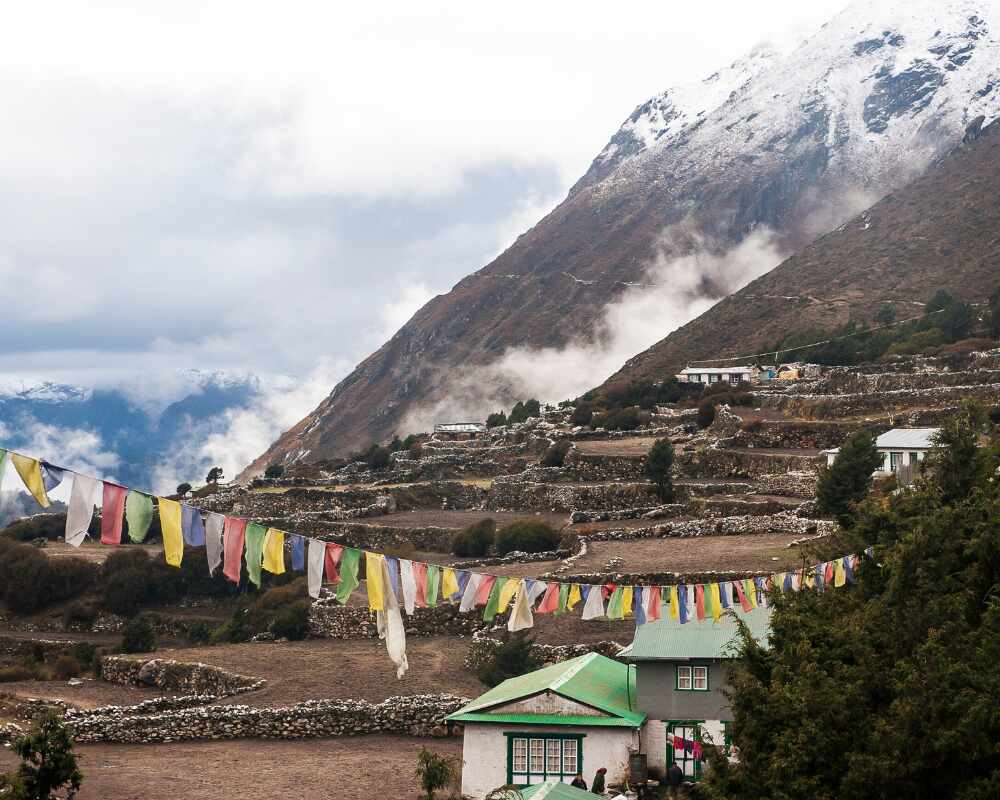
This is a detail most guides gloss over, and it helps to know it before you're standing at the fork wondering which way your porter went.
Coming from Tengboche, the trail to both villages runs together for most of the day. It passes through Pangboche, then climbs to the small settlement of Shomare, usually the lunch stop, and continues to Orsho at around 4,190 meters. It's just past Orsho that the trail actually forks. The right-hand branch climbs steeply for about an hour into Dingboche. The left-hand branch stays lower and flatter, following the valley floor into Pheriche.
A few practical points about the split:
- The fork sits close enough to both villages that trekking groups sometimes switch plans on the day itself if the weather turns or someone is struggling with the pace.
- Whichever branch you take on the way up, both paths reconnect just past Dingboche and Pheriche on the way to Dughla and Lobuche, so neither choice adds or removes distance to the rest of the trek.
- The Dingboche branch has a noticeably steeper final climb, while the Pheriche branch stays gentler right to the door of the teahouse, which matters if you're already feeling the altitude by that point in the day.
How to Choose Your EBC Itinerary Length
The Dingboche-or-Pheriche question is really a smaller piece of a bigger one: how many days should your itinerary actually be. Here's how that decision plays out in practice.
| Itinerary length | What it includes | Best suited for |
|---|---|---|
| 10 to 11 days | Reduced acclimatization, sometimes a helicopter return | Very fit, previously acclimatized trekkers only, generally not recommended |
| 12 days | Full route, both acclimatization days at Namche and Dingboche, no buffer day | Most first-time trekkers with standard holiday allowance |
| 14 days | Same trekking route as the 12-day version, plus Kathmandu arrival, departure, and a weather buffer day | Trekkers who want breathing room for Lukla flight delays or a slower pace |
| 16 to 20 days | Extended route with side trips such as Gokyo Lakes, Chhukung Valley, or the Three Passes | Trekkers who want to add extra acclimatization days, extra side hikes, or a quieter alternate route |
A few things worth knowing before you pick a length:
- Skipping the Dingboche or Pheriche acclimatization day is the single most common mistake on rushed itineraries. Trekkers who skip it consistently struggle more on the days that follow, once the trail pushes past 4,900 meters toward Lobuche.
- The safe ascent rate above 3,000 meters is roughly 300 to 500 meters of sleeping-altitude gain per day, with a rest day built in for every 1,000 meters gained. That's the real math behind why both the Namche and Dingboche or Pheriche rest days exist, not scheduling convenience.
- A longer itinerary buys you flexibility, not just comfort. Extra days absorb Lukla flight delays, bad weather, or a slower pace if altitude hits you harder than expected, without forcing you to cut a rest day to stay on schedule.
If you're weighing exactly how many days to book, this is worth deciding before you lock in your route, since it shapes how much time you get at Dingboche and Pheriche either way. Our best time to trek in Nepal guide and Nepal trekking rules and permits breakdown are both useful reading before you lock in dates, and you can browse every length and route on our featured trips page.
Side Trips You Can Take From Dingboche
Nangkartshang Peak gets most of the attention, but it isn't the only option from Dingboche. If you have an extra day, or you're on a longer itinerary, a few other side trips are worth knowing about:
- Chhukung Valley: a 3 to 4 hour walk east from Dingboche along the Imja Khola, through stone-walled potato fields and yak pasture, to the seasonal settlement of Chhukung at 4,730 meters. It's a popular acclimatization stop for trekkers heading toward Island Peak or the Kongma La pass.
- Chhukung Ri: a strenuous climb from Chhukung up to around 5,550 meters, widely regarded as one of the best-value acclimatization climbs in the entire Khumbu, with close-up views of Lhotse's south wall, Makalu, and Ama Dablam.
- Island Peak Base Camp: a half-day walk from Chhukung to around 5,100 meters, where the technical climbing route up Imja Tse (Island Peak) begins. Worth the walk even if you have no plans to climb, purely for the scale of the glacier and the peak up close. If you do want to climb, our Island Peak Climbing package builds this route directly into the itinerary.
- Ama Dablam Base Camp: a shorter, lower-altitude option at around 4,570 meters, offering a close-up view of Ama Dablam itself, sometimes called the Matterhorn of the Himalayas.
- Nangkartshang Peak: covered in detail above, and still the most efficient single-day option if you only have one extra day to spend.
Most of these require an extra night, either in Chhukung itself or as a long day trip back to Dingboche, so they suit longer itineraries better than a standard 12-day schedule. If your trip includes a Three Passes route via our Everest High Pass Trek or an Island Peak add-on, Chhukung and its side trips are usually already built into the plan. Trekkers looking for a different kind of acclimatization altogether, one built around a technical peak rather than a side hike, sometimes pair this stretch with our Mera Peak Climbing package instead.
The Verdict: Which Is Better
Neither village is objectively better. They're built for slightly different jobs, and the honest answer depends on what you actually need from your rest day.
- Choose Dingboche if you want the strongest acclimatization hike on this stretch of trail, the best panoramic views, a livelier village with more food and lodging options, and easy access to side trips like Chhukung Valley if your itinerary allows it.
- Choose Pheriche if you want a quieter, more restful stop, you're concerned about altitude sensitivity and want to be near the HRA clinic, or you're on the descent and want a gentler village to recover in after summiting Kala Patthar and reaching Base Camp.
The real takeaway isn't which village wins. It's that each one does its job well, and a good itinerary uses both for exactly what they're best at.
- If you're not sure, don't force a choice. Most itineraries, including Outshine's, already route you through Dingboche on the way up and Pheriche on the way down, which means you get the acclimatization hike when your legs are freshest and the quiet recovery stop when you need it most.
How Outshine Built These Two Nights Into Our Everest Itineraries
Outshine's standard Everest Base Camp itinerary sends trekkers to Dingboche on the way up, followed by a dedicated acclimatization day that includes a day trip into the Chhukung Valley and back before continuing on to Lobuche, Gorak Shep, and Base Camp. On the way down, after Kala Patthar, the route brings trekkers back through Pheriche for the night before heading on to Namche Bazaar and Lukla.
That routing isn't arbitrary. Building the acclimatization night at Dingboche means trekkers get the elevation-gain benefit of the Chhukung Valley side trip while they're still fresh and moving well, rather than saving a harder hike for later in the trip when fatigue has built up. Routing the descent through Pheriche gives tired trekkers a quieter village to recover in right after the two hardest days of the trek, summiting Kala Patthar and reaching Base Camp, with the HRA clinic close by if anyone needs it.
In short, Outshine's itinerary already builds in both villages exactly the way most operators do: Dingboche for the climb up and the acclimatization work, Pheriche for the quieter overnight on the way back down. You don't have to choose between them when you book with Outshine, the route is already designed to give you what each one is best at. For the full day-by-day breakdown, see the Everest Base Camp Trek itinerary on our site.
FAQs
Is Dingboche or Pheriche higher? Dingboche, by about 40 meters. Dingboche sits at 4,410 m while Pheriche sits at 4,371 m, a difference too small to change acclimatization value on its own.
Can I skip the second acclimatization stop entirely? Not safely. Altitude gain past 4,000 meters is exactly where acute mountain sickness risk climbs fastest, and skipping a scheduled rest day at either village significantly raises that risk.
Do I need to choose between Dingboche and Pheriche? Usually not. Most EBC itineraries use Dingboche on the ascent and Pheriche on the descent, so trekkers experience both villages rather than picking one over the other.
Which village has better views? Dingboche generally wins here, with more open panoramas of Ama Dablam, Lhotse, and Island Peak, thanks to its wider valley position and the Nangkartshang Peak viewpoint.
Is Pheriche safer if I'm worried about altitude sickness? Pheriche has an edge for peace of mind specifically because of the Himalayan Rescue Association clinic and its daily altitude talks, though both villages sit within a safe acclimatization range when the itinerary includes proper rest days.
How long is the Nangkartshang Peak hike from Dingboche? Most trekkers complete the round trip in 4 to 6 hours, gaining roughly 650 to 725 meters to reach the summit viewpoint at about 5,083 meters before returning to sleep at Dingboche.
What should I do if I feel unwell in either village? Report symptoms to your guide immediately rather than pushing through them. For anything beyond mild headache or fatigue, the HRA clinic in Pheriche is the nearest dedicated medical facility, and descent remains the most effective treatment for worsening altitude sickness.
Are teahouses better in Dingboche or Pheriche? Dingboche has more lodges, a wider range of food including bakeries, and at least one higher-end option with private cabins. Pheriche's facilities are more basic and the village is quieter overall.