Most people picture Nepal as a country of steep trails and mountain passes, which makes sense given how much of its tourism runs on trekking. But there's a quieter version of the same country waiting for anyone who isn't looking to climb anything at all: monastery courtyards in Pharping, incense drifting over the ghats at Pashupatinath, and a lakeside town where the biggest decision of the day is whether to meditate before or after breakfast.
That's the shape of this six-day retreat. No steep ascents, no altitude to worry about, no gear list beyond comfortable clothes and a water bottle. Just a slower way to move through Kathmandu, Pokhara, and the spiritual town of Pharping, built around meditation, short yoga sessions, and enough unstructured time to actually notice where you are.
It's also a trip that surprises people who assume "retreat" means sitting in one place for six days. This one moves, geographically and in mood, from a quiet hillside meditation town to a busy capital city to a lake resort to a mountaintop at sunrise, and each shift changes what the practice feels like. Here's what the six days actually look like, why the route is built the way it is, who it suits, and what to know before booking one.
Quick Summary: The Retreat at a Glance
Before getting into the day-by-day detail, here's the overall shape of the trip in one table.
| Category | Details |
|---|---|
| Duration | 6 days, 5 nights |
| Destinations | Pharping, Kathmandu, Pokhara |
| Difficulty | Easy; no trekking or technical activity involved |
| Maximum altitude | 1,345 m (Kathmandu) |
| Group size | 1–15 |
| Accommodation | 3-star hotels, guesthouses, or monastery-style stays depending on location |
| Meals | Breakfast included daily; vegetarian meals available and dietary needs accommodated |
| Best seasons | March–May and September–November |
| Starting price | From around USD 1,200 per person |
Why This Route Was Built the Way It Is
Retreats built purely around a resort or a single ashram have a certain appeal, but they also mean seeing one version of Nepal and missing the rest. This itinerary takes a different approach: instead of parking you in one location for six days, it moves through three places that each contribute something different to the experience, and the sequencing isn't random.
Pharping comes first because it's genuinely one of the quietest, most spiritually significant places in the Kathmandu Valley, and starting there rather than in the middle of a busy capital city gives you a softer entry point. It's a small town built around meditation caves, monasteries, and centuries of Buddhist and Hindu practice, largely unbothered by the traffic and noise that define central Kathmandu. Arriving tired from a long flight and immediately being placed somewhere calm, rather than in the middle of Thamel's motorbike horns and market stalls, changes how the whole week starts.
Kathmandu comes second, once you've had a night to settle, because the city itself is worth experiencing on its own terms rather than rushing through it. It's also where the retreat's cultural weight sits, since Kathmandu is where Hindu and Buddhist tradition visibly overlap in a way that's rare anywhere else in the world.
Pokhara comes last, and it's the emotional high point of the trip geographically as well as spiritually. Trading the density of Kathmandu for open lake views and a direct line of sight to the Annapurna range gives the retreat a sense of expansion right when a lot of people are ready for it, and it sets up the sunrise session at Sarangkot as the trip's natural climax rather than an afterthought.
What This Retreat Actually Involves
This isn't a yoga only program in the sense of back-to-back asana sessions from morning to night. It's closer to a wellness and cultural itinerary, where meditation, prayer, mindfulness, and quiet reflection sit alongside temple visits, a scenic mountain flight, and a proper sunrise over the Himalaya. Some days lean more toward meditation and stillness, others toward culture and light sightseeing, and there's built-in free time throughout rather than a packed schedule.
That structure is deliberate. A retreat that tries to fill every hour with programmed activity tends to produce the same fatigue as a rushed sightseeing tour, just with more incense. Leaving space between sessions is what actually lets the meditation and mindfulness work land, rather than becoming one more item to check off.
The Kind of Practice You Can Expect
The word "yoga" in the title covers more ground than a studio class back home. Across the six days, expect a mix of the following, depending on location and the day's programming:
- Guided meditation sessions, both seated and walking, in settings ranging from a monastery courtyard to a hillside at dawn
- Mindfulness and breathwork exercises, particularly at Sarangkot, where the format is closer to conscious breathing and observation than formal asana
- Optional prayer or reflection sessions in Pharping, tied to the town's Buddhist meditation tradition
- Light physical yoga sessions where the schedule allows, generally gentle rather than intense or fast-paced
- Quiet, unstructured time built into most afternoons for personal reflection, journaling, or simply resting
None of this requires flexibility, strength, or prior practice. The retreat is intentionally accessible rather than performance-oriented, which is part of why it works for such a wide range of travelers.
Who This Retreat Is For
This trip is built for people who want the atmosphere of Nepal without the physical demands of trekking, whether that's because of time constraints, fitness level, injury, age, or simply preferring a slower kind of travel. No prior yoga or meditation experience is needed, and the pace is genuinely relaxed rather than relaxed in the way marketing copy often claims but the schedule doesn't reflect.
It also works particularly well for solo travelers. The group size stays capped at fifteen, which keeps things intimate rather than turning into a tour-bus experience, and the built-in structure of the day means you're never left figuring out logistics alone, even if you came without a companion. Couples and small groups of friends find it works just as well, since there's enough free time each day to split off and do your own thing before regrouping.
Where this retreat isn't the right fit: if you're specifically looking for an intensive yoga teacher training, a silent Vipassana-style retreat with no sightseeing, or a physically demanding combination of trekking and yoga. Those exist in Nepal too, just under different itineraries.
6 Day Yoga and Meditation Retreat Itinerary
Here's a day-by-day breakdown of how the retreat unfolds, since the shape of each day varies more than a typical sightseeing tour.
| Day | Location | Focus |
|---|---|---|
| 1 | Kathmandu to Pharping | Arrival, private transfer, settling in, optional evening prayer or meditation session |
| 2 | Pharping to Kathmandu | Morning meditation in Pharping, then cultural visits to Pashupatinath and Boudhanath Stupa, free evening in Thamel |
| 3 | Kathmandu to Pokhara | Scenic mountain flight to Pokhara, visit to Phewa Lake and the Lakeside district |
| 4 | Pokhara | Pre-dawn drive to Sarangkot for sunrise meditation, free time to explore Pokhara, evening wellness session |
| 5 | Pokhara to Kathmandu | Return flight to Kathmandu, free afternoon, evening walk through Thamel for last-minute shopping |
| 6 | Departure | Breakfast, airport transfer, final departure |
The pace is intentionally light. Days 2 and 4 are the fullest, mixing meditation with cultural sightseeing, while days 1, 3, and 5 leave real space for rest, journaling, or just sitting somewhere quiet with a cup of tea.
Day 1–2: Settling In at Pharping, Then Kathmandu's Sacred Sites
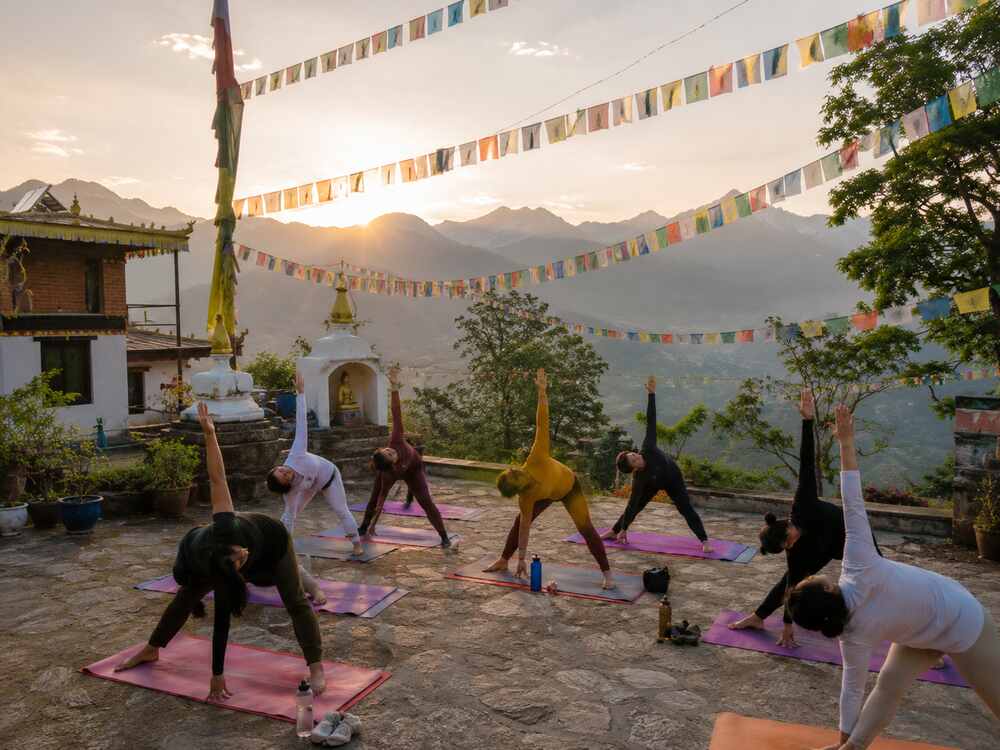
The first day is short by design. You land, get picked up, and are driven straight to Pharping rather than spending your first night adjusting to Kathmandu's noise. Pharping sits on the edge of the valley, known for meditation caves associated with Guru Rinpoche and a cluster of monasteries that draw both local practitioners and long-term foreign students. If your arrival timing allows, there's an optional evening session, but there's no pressure to do anything beyond rest on day one.
Day two starts with morning meditation in Pharping's quiet setting before the group heads into Kathmandu itself. The cultural centerpiece here is the pairing of Pashupatinath, one of the most sacred Hindu temples in the world and a major cremation site on the Bagmati River, with Boudhanath, one of the largest Buddhist stupas anywhere, its whitewashed dome and painted eyes visible from streets away. Seeing both in the same day is a fast, visceral introduction to how thoroughly Hindu and Buddhist practice coexist in Nepal, rather than existing as separate, siloed traditions. The evening is left open in Thamel, Kathmandu's tourist and market district, for anyone who wants to explore, shop, or simply people-watch.
Day 3–4: Pokhara, Phewa Lake, and the Sarangkot Sunrise
Day three trades Kathmandu's density for a short domestic flight to Pokhara, and on a clear day the views out the window rival anything you'll see on the ground. Pokhara itself is built around Phewa Lake, with a laid-back Lakeside district of cafes, small shops, and mountain views that make it feel like a different country from Kathmandu, despite being only a thirty-minute flight away.
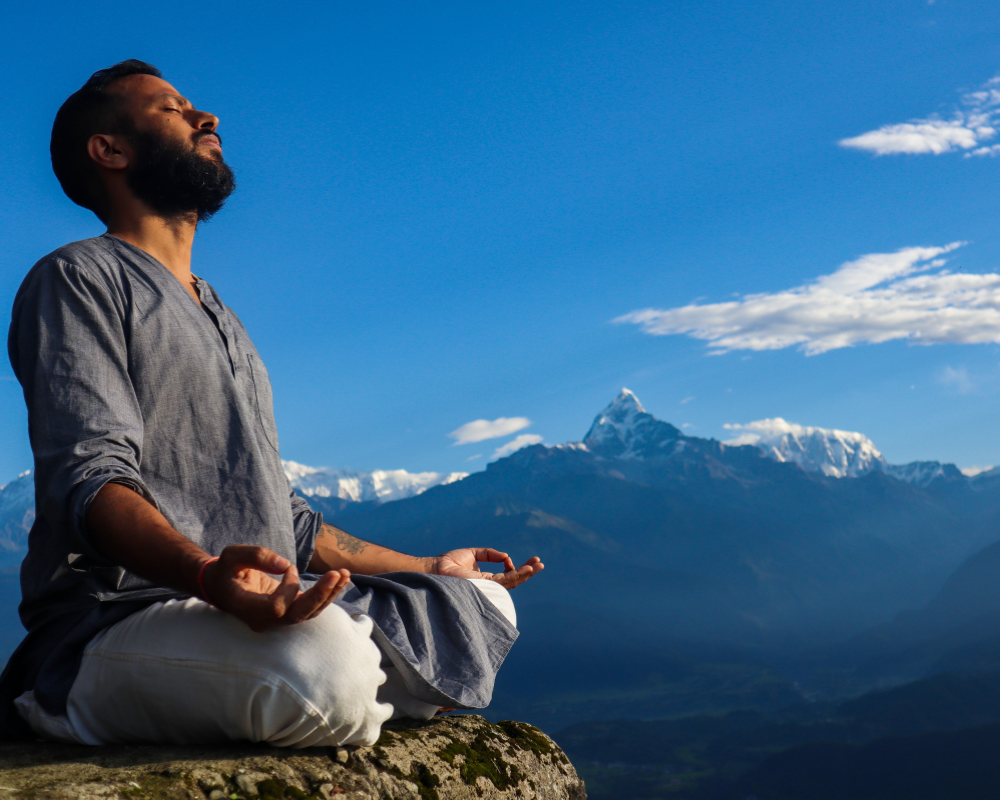
Day four is the retreat's centerpiece. A pre-dawn drive up to Sarangkot puts you above the valley in time to watch first light hit the Annapurna range, including Machapuchare's distinctive fishtail peak. The format up there isn't a formal yoga class, it's closer to guided breathwork and quiet observation, and most people who've done this retreat point to this exact moment as the one they remember most clearly. After returning for breakfast, the rest of the day is left open, with an evening wellness and meditation session built in for reflection before moving on.
Day 5–6: Back to Kathmandu and Departure
The return flight to Kathmandu on day five leaves the afternoon free, typically used for a last walk through Thamel, picking up handicrafts, prayer flags, or pashmina as souvenirs before the trip wraps up. Day six is straightforward: breakfast, transfer to the airport, and departure, with the retreat formally closing wherever your flight timing allows for last-minute reflection.
What Yoga and Meditation Actually Do for You
The physical case for yoga is fairly well established: regular practice improves flexibility, strengthens core and balance, and tends to improve sleep quality over time. What's less talked about, and arguably the bigger draw for people booking a retreat specifically, is the mental side. Slower, breath focused movement combined with meditation has a measurable effect on reducing stress and anxiety, largely by shifting the nervous system out of a constant low-grade alert state that most people carry around without noticing until they step away from it.
Meditation on its own, separate from any physical practice, has its own well-documented effects: improved focus and attention span, better emotional regulation, and for a lot of practitioners, a noticeable reduction in rumination and repetitive negative thinking. None of this requires years of practice to start experiencing; even a handful of guided sessions over a week can produce a real, if temporary, shift in how calm and present you feel.
Doing this somewhere like Pharping or Sarangkot rather than a studio back home changes the experience in a way that's hard to quantify but easy to notice once you're there. There's less to distract you, no commute to squeeze the session into, and the pace of the whole trip supports the practice instead of working against it. For a lot of people that combination is what makes the retreat feel fundamentally different from a regular yoga class rather than just a longer version of one.
The Role of Place in Contemplative Practice
There's a reason meditation retreats tend to happen somewhere specific rather than anywhere convenient. Environment genuinely affects how easily the mind settles. A monastery courtyard with centuries of quiet use behind it, or a hillside at dawn with no traffic noise and an unbroken horizon, does some of the work that effort alone has to do in a busier setting. That's not mysticism, it's simply removing the sensory clutter that normally competes for attention. Nepal's combination of genuinely sacred sites, low ambient noise outside the capital, and dramatic natural scenery gives this kind of retreat an advantage that's difficult to replicate somewhere purpose-built but generic.
What to Know Before You Book
A few practical details make a real difference to how the week actually feels, so it's worth going in with the right expectations rather than discovering them mid-trip.
- No prior yoga or meditation experience is required, and the pace is accessible for a wide range of ages and fitness levels, including travelers who wouldn't consider themselves particularly active
- Meals are vegetarian by default across the included breakfasts, with dietary restrictions and allergies accommodated if flagged to the operator in advance
- Accommodation is typically twin-share across hotels and guesthouses, with single rooms available for a supplement depending on availability at each stop
- Bring comfortable, loose clothing for meditation and light activity, a light jacket for cooler mornings and evenings, sun protection, a reusable water bottle, and any personal medication; yoga mats are provided for included sessions, though you're welcome to bring your own if you have one you prefer
- Travel insurance covering medical assistance in Nepal is required, and most nationalities need a visa to enter, so it's worth checking current entry requirements and visa-on-arrival rules for your passport well ahead of time
- Temple and monastery visits call for modest dress, generally covered shoulders and knees, and removing shoes where indicated; it's good practice to ask before photographing people, ceremonies, or specific religious activities
Weather and What to Pack For It
Temperature swings more than people expect between Kathmandu, Pharping, and Pokhara, and between morning and afternoon within each city. Mornings and evenings run noticeably cooler, especially outside the peak spring and autumn windows, so layering matters more than any single heavy item. A light fleece or jacket for early starts, like the Sarangkot sunrise drive, breathable clothing for daytime warmth, and a scarf or shawl that doubles as temple-appropriate cover are usually enough to handle the range without overpacking.
How This Compares to a Longer Retreat
Six days is enough for a genuine reset without requiring a long block of vacation time, but it's worth knowing what a longer version of the same idea looks like in case your schedule allows for more. Some operators, including the same team behind this itinerary, also run extended versions that combine the wellness and cultural elements with actual trekking, most commonly a Poon Hill add-on that stretches the trip to around thirteen days and introduces a genuine physical component alongside the meditation and yoga.
| Feature | 6-Day Retreat | 13-Day Retreat with Poon Hill Trek |
|---|---|---|
| Physical demand | Easy, no trekking | Moderate, includes multi-day trekking |
| Focus | Meditation, mindfulness, culture | Meditation and yoga combined with a trekking itinerary |
| Best for | First-timers, limited time, low physical demand preference | Travelers wanting to combine wellness practice with a trekking experience |
| Destinations | Pharping, Kathmandu, Pokhara | Adds the Poon Hill trekking region to the standard route |
| Starting price | From around USD 1,200 | From around USD 1,325 |
Neither version is objectively better, it comes down to how much physical activity you actually want folded into the wellness side of the trip. If the idea of adding a moderate trek sounds appealing rather than exhausting, the longer version is worth a look; if the appeal of this trip is specifically that it isn't physically demanding, the six-day version delivers that more cleanly.
Best Time to Go
Spring, March through May, and autumn, September through November, are the strongest windows for this retreat. Both seasons bring milder weather and the clearest odds of an unobstructed mountain view at Sarangkot, which matters more here than on most itineraries since that sunrise is a genuine centerpiece of the trip rather than a bonus.
Outside those windows, the retreat still runs, and for a lot of the itinerary, particularly the Pharping and Kathmandu portions, weather matters less since much of the experience happens indoors or in a sheltered courtyard setting. Winter brings colder mornings and a real chance of the Sarangkot view being obscured by haze or cloud, while the June to August monsoon adds humidity and the possibility of the mountain flight to Pokhara being delayed by weather, which is worth factoring in if your dates are tight.
Frequently Asked Questions
Do I need any yoga or meditation experience? No. The retreat is designed for complete beginners as much as experienced practitioners, and sessions stay accessible rather than technical throughout.
Is yoga practiced every day? Not in a formal studio sense every day. The program mixes yoga, meditation, prayer, and mindfulness depending on the location, so Sarangkot, for instance, is centered on breathwork and meditation rather than a structured asana class.
Is this trip physically demanding? No. It's a wellness and cultural itinerary at a relaxed pace, not a trek. Some walking is involved during sightseeing, but nothing strenuous, and no prior fitness is required.
Is the Kathmandu to Pokhara flight included? It depends on the specific package and booking terms, so it's worth confirming what's included before you book rather than assuming.
Is this suitable for solo travelers? Yes. The small group size and relaxed pace make it a comfortable option for people traveling alone, with local support throughout and enough structure that you're never left figuring things out on your own.
Can the itinerary be customized? Generally yes, based on travel dates, group size, accommodation preference, dietary needs, and available time.
What if I want more physical activity alongside the wellness elements? Longer versions of the same route exist that add trekking, most commonly a Poon Hill extension bringing the trip to around thirteen days, for anyone who wants meditation and a moderate trek in the same package.
Ready to Slow Down in Nepal
Six days is enough time to genuinely reset without needing to plan a longer trip around it, and the mix of Pharping's stillness, Kathmandu's temples, and that sunrise over Pokhara gives the retreat more texture than a standard wellness package usually has. The route itself does a lot of the work: starting quiet, building through culture, and ending on a mountaintop at dawn is a hard sequence to improve on for a first-time retreat in Nepal.
If the pace and structure sound like what you're after, Outshine Adventure runs this exact itinerary and can walk you through dates, group sizes, dietary needs, and any changes you'd want to make to the program, including the option to extend it into a longer trekking-and-wellness combination if six days ends up feeling too short.
For Spanish-speaking travelers, Outshine Adventure also runs this same style of yoga and meditation retreat through its Spanish-language site, Viajar a Nepal, with Spanish-speaking guides available throughout the trip. Two packages are currently listed there:
- Retiro de Yoga, Meditación y Bienestar de 6 Días en Nepal
- Retiro de Yoga en Nepal y Trekking a Poon Hill | 13 Días
.webp)