Last updated: August 30, 2026
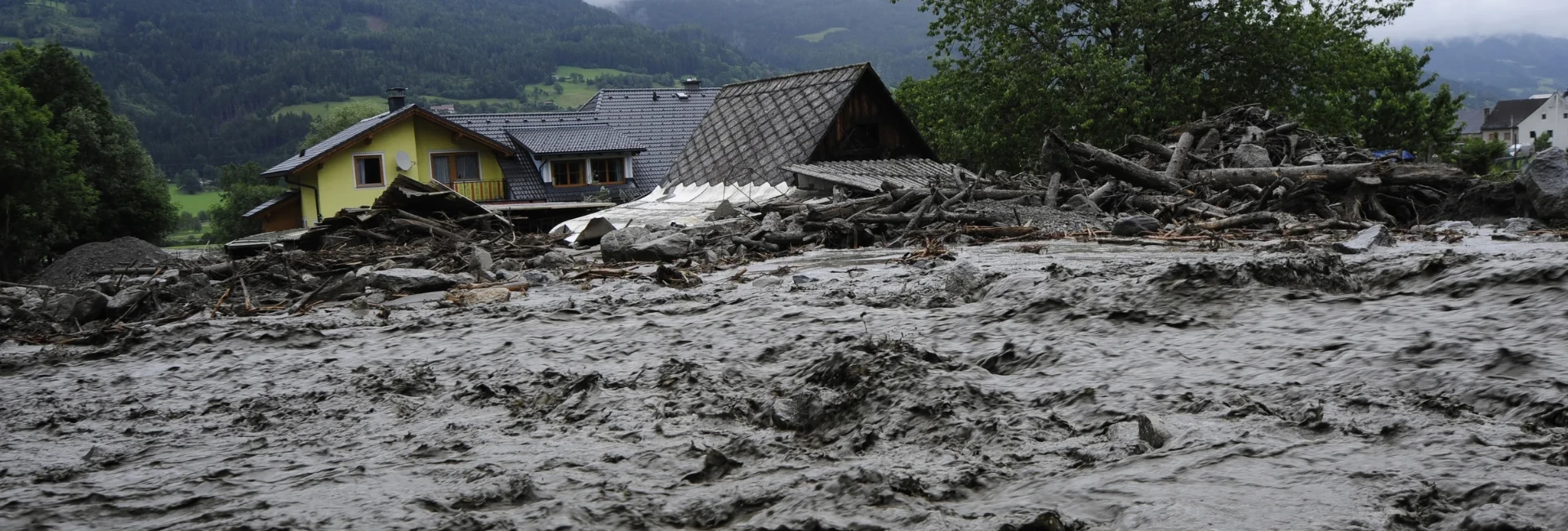
On the morning of August 26, 2026, a devastating flash flood swept down the Bhote Koshi and Trishuli river valleys from the Nepal China border into Rasuwa, Nuwakot, Dhading, Gorkha, Tanahun, Chitwan, and both Nawalparasi districts. Bodies have been recovered as far as 240 kilometers downstream, some even reaching Indian territory. Nearly a week on, the Nepal Police, the Nepali Army, and the National Disaster Risk Reduction and Management Authority (NDRRMA) are still leading one of the largest rescue, recovery, and identification operations in Nepal's recent history.
This article brings together verified, official information on the current death toll, the ongoing rescue and relief operations, how the government is identifying and managing the deceased, and the correct, government endorsed way to donate to flood victims.
Nepal Flood 2026: Official Death Toll and Missing Persons
According to Nepal Police bulletin 10275, issued at 2:00 pm on Sunday, August 30, 2026, the confirmed death toll in Nepal has reached 768, with 2,502 people still listed as missing. Deputy Inspector General Abi Narayan Kafle, spokesperson for Nepal Police, said bodies have been recovered from eight districts, with the largest numbers found in Chitwan and Nawalparasi East, since floodwaters carried many victims far downstream from the point of impact in Rasuwa.
On the Tibet side of the border, Chinese authorities have confirmed at least 16 deaths, with 546 people reported missing in Gyirong County, including foreign nationals.
Key official figures as of this weekend:
- More than 4,500 people have been rescued across the affected districts, according to figures shared by Prime Minister Balendra Shah.
- At least 466 people were injured, most now being treated at hospitals near the disaster zone, with the Nepali government offering free treatment for the injured.
- Among the missing in Nepal are 28 police officers, 13 Armed Police Force personnel, 44 Nepali Army personnel, 15 customs office employees, and 4 immigration office employees.
- Nepal Police say identification is being complicated by the state of many bodies, since a large number have been recovered as mutilated, partial, or severed remains after being buried in mud and water for two to three days.
Authorities have repeatedly stressed that these figures are provisional and will keep changing as search operations continue, communication is restored to cut off areas, and DNA based identification proceeds.
Rescue and Relief Efforts: What Nepal Police, the Army, and NDRRMA Are Doing
The Nepal government mobilized a massive security response within hours of the flood. According to official figures, more than 10,000 security personnel have been deployed for search, rescue, and relief, made up of roughly 4,200 from the Nepali Army, 4,200 from the Armed Police Force, and 4,800 from Nepal Police, supported by helicopters and medical teams.
The Council of Ministers declared the flood hit areas a disaster zone for three months under the Disaster Risk Reduction and Management Act, 2074 (2017), which allows the government to fast track relief, resources, and rebuilding decisions.
To keep the response organized, the government formed 12 coordination teams covering distinct areas of the disaster response, including:
- Search, rescue, and relief, led by the Nepali Army
- Emergency medical response, led by the Ministry of Health
- Management of the deceased, involving Nepal Police, the Armed Police Force, the Home Ministry, and the Ministry of Culture, Tourism and Civil Aviation
- International aid and donor coordination, led by the Finance Ministry
- Transportation and connectivity, restoring roads, bridges, and airport operations
- Tracing families who have lost contact with relatives, involving Nepal Police, the Armed Police Force, and the Army
On the ground, the Nepal Roads Department has begun installing bailey bridges to replace collapsed crossings, since at least 32 bridges and nearly 25 miles of road were swept away, including the entire route from Betrawati in Nuwakot to the Rasuwagadhi border crossing. The Nepali Army delivered eight tonnes of relief supplies to Rasuwa within the first two days. The government has also launched a psychosocial counseling and telemedicine program for migrant workers and families affected by the disaster.
Because its own capacity was stretched, Nepal's Ministry of Foreign Affairs requested targeted international support. Nepal initially turned down offers of full foreign search and rescue teams, citing coordination difficulties from the 2015 earthquake response, but later allowed specialist experts from India, China, Australia, and South Korea to assist with tunnel rescues, DNA testing, and forensic examination.
Hydropower Project Rescue: How Many Workers Are Saved and How Many Remain Trapped
One of the most difficult parts of this disaster has been the rescue of workers trapped inside hydropower tunnels along the Trishuli corridor. The flood affected 14 hydropower and solar projects with a combined capacity of about 748 megawatts, and many workers were underground when the water hit.
According to the Independent Power Producers' Association, Nepal (IPPAN), 934 people connected to 11 hydropower projects went missing in the disaster. As of the most recent update, Nepal's NDRRMA has put the figure at 933 hydropower workers among the missing, and the government says more than 100 workers may still be alive and trapped inside multiple flooded tunnels.
Rescue progress reported so far includes:
- About 361 workers rescued from hydropower sites, according to IPPAN's own tracking.
- The Prime Minister's Office reported that 350 people were pulled from a single flooded tunnel in Rasuwa, with rescuers shown crawling through thick, mud saturated passages to reach survivors, while efforts continued to reach more than 100 people still trapped there.
- Four employees were safely rescued from the Rasuwagadhi Hydropower Project.
- Two workers were rescued from a tunnel at another site by a specially deployed Nepali Army team, with searches continuing for others still unaccounted for.
- Rescue efforts are now focused heavily on the Trishuli 3A and 3B hydropower projects, along with the 216 MW Upper Trishuli-1 project, where soldiers have worked through frozen mud to pull out survivors.
- At the smaller Chilime Hydropower project, 8 people including employees remain out of contact, with 6 believed to be inside a mud filled tunnel that rescue teams have not yet been able to enter.
Rescuers are pumping air into some tunnels and drilling manholes to reach workers who may still be alive, but heavy rain, rising river levels, and unstable terrain have repeatedly slowed operations. India and China have sent tunnel rescue specialists to support the Nepali Army in this effort.
Nepal Police Websites: How to Trace Missing Family Members and Unidentified Bodies
For families searching for loved ones, Nepal Police maintains official, government run channels rather than relying on social media posts or unverified lists:
- Nepal Police Unidentified Dead Bodies Portal (udb.nepalpolice.gov.np): This official Nepal Police website lists details of unidentified bodies recovered after disasters and accidents, so families can check descriptions, photographs, and recovery locations to help with identification.
- BIPAD Portal, run by NDRRMA: The government's official disaster coordination and emergency reference portal, used to track incidents, rescues, and district level data.
- Nepal Police missing persons register: Families can file a report and search existing records through Nepal Police's official channels.
- Emergency helpline: Nepal Police can be reached directly at 100 for emergencies, missing person reports, and coordination with district offices.
- District Administration Offices and Chief District Officers (CDOs): In Rasuwa, Nuwakot, Dhading, and other affected districts, families can coordinate directly with the CDO for the latest local information.
Families outside Nepal are advised to also contact their nearest embassy or consulate in Kathmandu, since several governments, including those of India, the United States, and Australia, have set up their own coordination lines with Nepal Police to track their citizens.
DNA Sampling and the Burial of Unidentified Flood Victims
Because so many bodies have decomposed or been carried long distances by floodwater, Nepal has begun a formal process of preserving DNA samples before burying bodies that cannot be visually identified.
Prime Minister Balendra Shah confirmed that only bodies that cannot be identified will be managed by the government, after DNA and other identifying evidence has been preserved. The government issued an emergency directive under Section 22(a) of the Nepal Police Act, 1955, which governs the handling of unidentified and unclaimed bodies when normal storage and identification procedures cannot cope with the scale of a disaster.
According to health officials and Nepal Police:
- At a temporary holding facility near the Chitwan Association of Industries complex, medical teams have extracted DNA samples from batches of recovered bodies before transferring them for burial at Devghat.
- At Bharatpur Hospital, DNA sampling of remains at the temporary holding center has been completed for an initial batch, allowing those bodies to be moved for burial.
- Of 669 bodies recovered as of one recent count, 211 were mutilated, partial, or severed remains, making visual identification extraordinarily difficult, while only 20 had been formally identified at that stage.
- Police teams clean recovered remains, conduct inquests, and take detailed photographs before attempting to match them against missing person reports.
Officials say a DNA sample taken from unidentified remains can later be compared with a sample from a biological relative, which means families who register their own DNA with authorities may still receive an identification and closure even after a burial has taken place. The process depends on having both a usable sample from the remains and a reference sample from family members, so it does not guarantee every case will be resolved, but it is intended to prevent unidentified victims from being lost to the records entirely.
Prime Minister Disaster Relief Fund: The Official Way to Donate
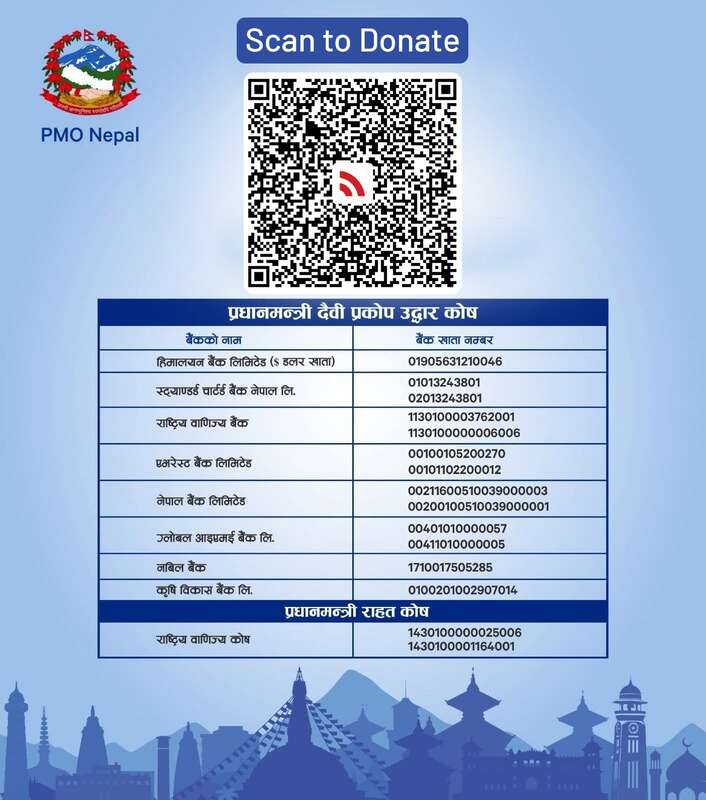
The Government of Nepal has made a formal appeal to all citizens, organizations, and institutions to channel financial support through the Prime Minister's Natural Disaster Relief Fund (Prime Minister Daivi Prakop Uddhar Kosh) and the Prime Minister's Relief Fund, both operated under the Office of the Prime Minister and Council of Ministers.
Donations can be made:
- Online through the official portal at pmdrf.nchl.com.np, which accepts domestic and international cards.
- Through designated bank accounts at multiple commercial banks inside Nepal, with official QR codes published by the government for each.
- Through a dedicated US dollar account at Himalayan Bank for donors sending money from abroad, along with a SWIFT transfer option for large donations that a card issuer will not process.
- In person, with the Finance Minister personally receiving institutional donations of Rs 1 crore and above, while individuals can hand over cash contributions directly at the Ministry of Finance.
By law, the fund can only be spent on rescue, treatment, relief, rehabilitation, and infrastructure restoration, not on administrative costs, and its accounts are audited annually. Donations to the fund are officially confirmed as non-refundable, so the government asks donors to verify the amount and currency carefully before completing any transfer.
If you are able, please consider donating as generously as you can through the official Prime Minister's Natural Disaster Relief Fund at pmdrf.nchl.com.np, or through the government's officially published bank accounts and QR codes attached above. Every rupee given through this channel is tracked, audited, and legally required to go toward rescue, relief, rehabilitation, and reconstruction, nothing else.
Tax Benefits on Donations to the PM Disaster Relief Fund
Donations made to the Prime Minister's Disaster Relief Fund carry a real financial benefit for taxpayers in Nepal. Under Section 12B (Dafa 12Kha) of the Income Tax Act, 2058, any person who contributes an amount in a given income year to the Prime Minister's Natural Disaster Relief Fund and Reconstruction Fund established by the Government of Nepal may deduct that amount when computing their taxable income for that year.
In practical terms, this means individuals and businesses in Nepal do not just help flood victims when they donate through the official fund, they also reduce their taxable income for that year under Nepali law. Donors are advised to keep the official donation voucher or receipt issued after payment, since this is the documentation required to claim the deduction.
Why the Government Wants Donations Routed Through One Door, Not Random Pages
Following the flood, the Government of Nepal introduced what officials are calling a "one door policy" for relief collection and distribution. Under this policy, all cash and material donations, whether from individuals, companies, donor agencies, or foreign organizations, are expected to go through the Prime Minister's Disaster Relief Fund and officially designated collection points, rather than through independent social media campaigns.
The Ministry of Finance has explicitly stated that private groups and individuals are not permitted to independently collect relief funds or materials for this disaster. Officials have described unauthorized social media donation drives as illegal, and the Home Ministry has been directed to shut such campaigns down.
There are practical reasons the government, and increasingly the public, trust this single official channel over scattered private pages:
- Accountability: The fund is government audited every year and can legally only be spent on rescue, relief, rehabilitation, and reconstruction.
- Equitable distribution: An integrated system involving civil administration, the Nepali Army, Nepal Police, and provincial and local governments ensures relief reaches every affected household, rather than concentrating in one area while another village is left out.
- Fraud prevention: The Nepal Police Cyber Bureau has issued specific warnings about fake QR codes and cloned relief pages using the fund's name and branding to trick well meaning donors. Authorities have repeatedly asked the public to never scan a QR code that simply arrives in a chat message and to only use the QR sheet and account numbers published directly by the Prime Minister's Office.
- Traceability for donors: Payments routed through the official fund, or handed to the Chief District Officer of an affected district, or delivered to designated Nepali Army collection points, can be tracked back to an accountable government channel, unlike a personal bank account or private wallet.
For overseas donors sending money via SWIFT transfer, the government has asked that the payment reference clearly state the purpose, for example "Rasuwa or Bhotekoshi flood relief, 26 August 2026," so contributions can be properly logged against this specific disaster.
Hami Nepal and Other People's Groups: How Volunteer Organizations Are Helping
Alongside the government's official channel, several Nepali citizen led and volunteer organizations have mobilized quickly, generally working in coordination with Nepal Police, the Nepali Army, and local administration rather than collecting relief independently, in line with the one door policy.
- Hami Nepal, a well known youth led non-profit founded after the 2015 earthquake, has built a strong public reputation for transparent, direct aid delivery in past disasters, including the Kagbeni and Sindhupalchok floods and the Kavre floods, where it distributed items such as solar lights to affected families. The organization is known for connecting donors directly with people in need and for publishing detailed expenditure figures rather than spending on administrative overhead. Following the government's one door directive for this disaster, groups like Hami Nepal are expected to funnel volunteer manpower, logistics support, and any collected material aid through officially recognized channels such as army collection points and district administration offices.
- Sewa International and the Hindu Swayamsevak Sangh mobilized volunteers and relief workers within a day of the flood, sending a team to Nuwakot to assess urgent needs on the ground, coordinate with local communities, and help move relief materials into areas cut off by damaged roads and bridges.
- The Federation of Contractors' Association of Nepal appealed to its members nationwide to provide vehicles such as minitrucks and pickups, coordinating with the Ministry of Physical Infrastructure to help transport relief materials and rescue flood victims to safety in Rasuwa, Nuwakot, and other affected districts.
These groups play an important role in the response, particularly for reaching remote communities quickly and mobilizing volunteers, but the government has been clear that for this specific disaster, financial contributions should ultimately be routed to the Prime Minister's Disaster Relief Fund so that every rupee is tracked, audited, and distributed through the coordinated one door system.
Worldwide Donations and International Aid Pledged So Far
The scale of the disaster has drawn a fast, substantial international response alongside domestic giving.
Domestic donations:
- The Prime Minister's Natural Disaster Relief Fund had raised over Rs 5.44 billion (रू 5,440,000,000) by August 29, according to official figures, with the Finance Ministry recording nearly Rs 2 arba deposited across ten commercial banks within just the first 36 hours.
- By August 30, Prime Minister Balendra Shah said Rs 5.04 billion had been deposited across nine commercial bank accounts, along with a further US$1.8 million deposited at Himalayan Bank and Laxmi Bank specifically for international donors.
- Nepal's Prime Minister and his full Cabinet pledged to donate one month's salary each to the fund, and a contribution from government employees' pay has also been announced.
International pledges and aid:
- The World Bank, India, China, and the United States have committed to pledge a combined 229 million US dollars toward Nepal's own relief fund, according to the UN Resident Coordinator's office in Kathmandu.
- The United Nations released 2.5 million US dollars from its Central Emergency Response Fund (CERF) to help get relief efforts moving quickly, with further support pledged by Switzerland, Australia, and the United Kingdom.
- The European Union allocated 2 million euros in humanitarian relief and activated its Copernicus satellite surveillance system to support recovery and damage assessment.
- The Asian Development Bank issued a 5 million US dollar grant for humanitarian assistance.
- Welthungerhilfe provided 2 million euros from its emergency relief fund.
- China sent 50 tonnes of emergency relief supplies to Nepal, transported on two military transport aircraft.
Officials have noted that pledged support from friendly governments arrives through separate diplomatic and institutional channels and is generally counted apart from the domestic Prime Minister's Fund figures, though both streams are being coordinated by the government's international aid and donor team.
Official Sources to Follow for Real Time Updates
Because figures on deaths, missing persons, and rescues are changing daily, it is important to follow official channels rather than unverified social media posts. For the latest verified information, follow these official sources on a routine basis:
- Nepal Police (nepalpolice.gov.np) for official bulletins on deaths, missing persons, and identification of bodies.
- Nepal Police Unidentified Dead Bodies Portal (udb.nepalpolice.gov.np) for records of unidentified remains.
- NDRRMA and the BIPAD Portal for disaster coordination updates, rescue counts, and river level warnings.
- Ministry of Home Affairs (moha.gov.np) for the official disaster relief appeal and government directives.
- Prime Minister's Disaster Relief Fund portal (pmdrf.nchl.com.np) for the official, verified way to donate.
- Department of Hydrology and Meteorology for official river and weather monitoring, especially for anyone in or near Rasuwa, Nuwakot, and Dhading.
Checking these government sources on a regular routine, rather than relying on forwarded messages or unofficial pages, is the most reliable way to get accurate updates on rescue operations, safety warnings, and the status of missing family members.
Frequently Asked Questions
What is the current official death toll in the Nepal flood 2026? As of the Nepal Police bulletin issued at 2:00 pm on August 30, 2026, the confirmed death toll in Nepal stands at 768, with 2,502 people still listed as missing. These figures are updated regularly and are expected to change as recovery work continues.
How many hydropower workers are still trapped? According to NDRRMA and the Independent Power Producers' Association, Nepal, 934 people connected to 11 hydropower projects were reported missing, with about 361 rescued so far and more than 100 workers believed to still be trapped, mainly at the Trishuli 3A and 3B project tunnels.
What is the only official way to donate to Nepal flood relief? The Government of Nepal has asked all donors to use the Prime Minister's Natural Disaster Relief Fund and Prime Minister's Relief Fund, accessible through the official portal at pmdrf.nchl.com.np, designated bank accounts, or the Himalayan Bank US dollar account for donors abroad. Private, independent collection of relief funds is not permitted for this disaster.
Is a donation to the Prime Minister Disaster Relief Fund tax deductible? Yes. Under Section 12B of Nepal's Income Tax Act, 2058, contributions to the Prime Minister's Natural Disaster Relief Fund and Reconstruction Fund can be deducted when computing taxable income for that year, provided the donor keeps the official donation receipt.
How can I find out if a family member is on the list of unidentified bodies? Families can check the Nepal Police Unidentified Dead Bodies Portal at udb.nepalpolice.gov.np, contact Nepal Police directly on the emergency number 100, or reach out to the Chief District Officer in the affected district. Families outside Nepal should also contact their nearest embassy in Kathmandu.
Why are unidentified bodies being buried instead of held for identification? With mortuary and holding capacity overwhelmed by the scale of the disaster, the government issued an emergency directive under Section 22(a) of the Nepal Police Act, 1955, allowing unidentified and unclaimed bodies to be buried after DNA samples and other identifying evidence are preserved, so that families may still receive identification and closure later through DNA matching.
Conclusion: A Nation Standing Together, and Why Your Donation Still Matters
The Bhotekoshi flood of August 26, 2026 has become one of the most demanding disaster responses Nepal has faced in years, and the scale of the response has matched the scale of the loss. Nepal Police, the Nepali Army, and the Armed Police Force have worked around the clock for days, crawling through mud filled tunnels to pull out survivors, recovering the deceased with care and dignity, and holding the country's search and rescue effort together across Rasuwa, Nuwakot, Dhading, Chitwan, and neighboring districts under extraordinarily difficult conditions. Their courage, discipline, and sheer physical endurance through this crisis deserve genuine recognition and gratitude.
Prime Minister Balendra Shah and the full Council of Ministers have led this response from the front, declaring the affected districts a disaster zone, launching the coordinated one door relief system, and pledging their own monthly salaries to the Prime Minister's Disaster Relief Fund. The many government ministries, coordination committees, health teams, and road crews working behind the scenes have kept relief moving even as roads, bridges, and communication lines were washed away, and that effort deserves to be acknowledged.
Just as important has been the response of ordinary Nepali citizens. From families sending whatever they could afford to the relief fund, to volunteer organizations such as Hami Nepal, Sewa International, the Hindu Swayamsevak Sangh, and the Federation of Contractors' Association mobilizing people and vehicles within hours of the flood, this has been a response driven as much by citizens as by the state. Friendly nations including India, China, the United States, the World Bank, the European Union, the Asian Development Bank, the United Nations, and many others have also pledged substantial support, standing with Nepal at a moment of genuine national grief. To everyone who has already given, whether a large institutional pledge or a small personal contribution, thank you. Your generosity is already reaching families who have lost everything.
But the need is far from over. Thousands of families remain without homes, hundreds of hydropower workers are still trapped or unaccounted for, and the rebuilding of roads, bridges, and infrastructure will take months, if not years. If you are able, please consider donating as generously as you can through the official Prime Minister's Natural Disaster Relief Fund at pmdrf.nchl.com.np, or through the government's officially published bank accounts and QR codes. Every rupee given through this channel is tracked, audited, and legally required to go toward rescue, relief, rehabilitation, and reconstruction, nothing else. Families searching for missing relatives should continue relying on Nepal Police's official portals and the 100 helpline rather than unverified social media posts, and everyone should keep checking official sources such as Nepal Police, NDRRMA's BIPAD Portal, and the Ministry of Home Affairs for the latest confirmed numbers, since this situation is still evolving day by day.
Nepal has shown, once again, that when disaster strikes, its security forces, its government, its citizens, and its friends around the world stand together. Give what you can, give it through the official channel, and be part of the collective effort helping Nepal recover.

.webp)